If you have any questions, you are always welcome to contact us. We'll get back to you as soon as possible, withing 24 hours on weekdays.
Customer service
All questions about your order, return and delivery must be sent to our customer service team by e-mail at yourstore@yourdomain.com
Sale & Press
If you are interested in selling our products, need more information about our brand or wish to make a collaboration, please contact us at press@yourdomain.com
Help
If you have any questions, you are always welcome to contact us. We'll get back to you as soon as possible, withing 24 hours on weekdays.
Customer service
All questions about your order, return and delivery must be sent to our customer service team by e-mail at yourstore@yourdomain.com
Sale & Press
If you are interested in selling our products, need more information about our brand or wish to make a collaboration, please contact us at press@yourdomain.com
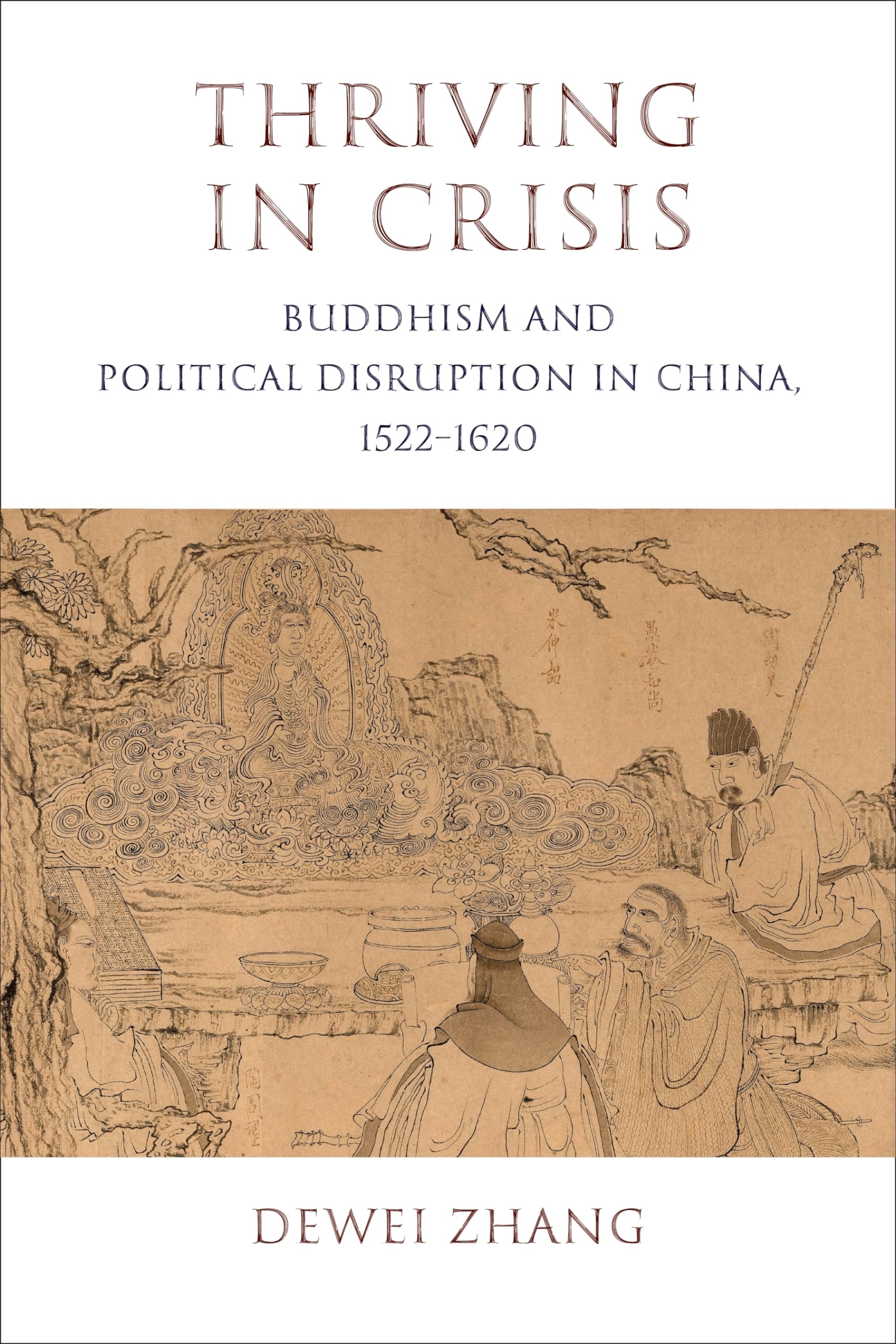
Late imperial Chinese Buddhism was long dismissed as having declined from the glories of Buddhism during the Sui and Tang dynasties (581907). In recent scholarship, a more nuanced picture of late Mingera Buddhist renewal has emerged. Yet this alternate conception of the history of Buddhism in China has tended to focus on either doctrinal contributions of individual masters or the roles of local elites in Jiangnan, leaving unsolved broader questions regarding the dynamics and mechanism behind the evolution of Buddhism into the renewal.Thriving in Crisis is a systematic study of the late Ming Buddhist renewal with a focus on the religious and political factors that enabled it to happen. Dewei Zhang explores the history of the boom in enthusiasm for Buddhism in the JiajingWanli era (15221620), tracing a pattern of advances and retrenchment at different social levels in varied regions. He reveals that the Buddhist renewal was a dynamic movement that engaged a wide swath of elites, from emperors and empress dowagers to eunuchs and scholarofficials. Drawing on a range of evidence and approaches, Zhang contends that the late Ming renewal was a politically driven exception to a longerterm current of disfavor toward Buddhism and that it failed to establish Buddhism on a foundation solid enough for its future development. A groundbreaking interdisciplinary study, Thriving in Crisis provides a new theoretical framework for understanding the patterns of Buddhist history in China.
⚠️ WARNING (California Proposition 65):
This product may contain chemicals known to the State of California to cause cancer,
birth defects, or other reproductive harm.
For MAP (Minimum Advertised Price) violations and Intellectual Property (IP) or Trademark concerns, please contact:
support@ergodebooks.com
⚠️ California Proposition 65 Warning: Some products sold on this website may expose you to chemicals known to the State of California to cause cancer, birth defects, or other reproductive harm. For more information, visit www.P65Warnings.ca.gov.