If you have any questions, you are always welcome to contact us. We'll get back to you as soon as possible, withing 24 hours on weekdays.
Customer service
All questions about your order, return and delivery must be sent to our customer service team by e-mail at yourstore@yourdomain.com
Sale & Press
If you are interested in selling our products, need more information about our brand or wish to make a collaboration, please contact us at press@yourdomain.com
Help
If you have any questions, you are always welcome to contact us. We'll get back to you as soon as possible, withing 24 hours on weekdays.
Customer service
All questions about your order, return and delivery must be sent to our customer service team by e-mail at yourstore@yourdomain.com
Sale & Press
If you are interested in selling our products, need more information about our brand or wish to make a collaboration, please contact us at press@yourdomain.com
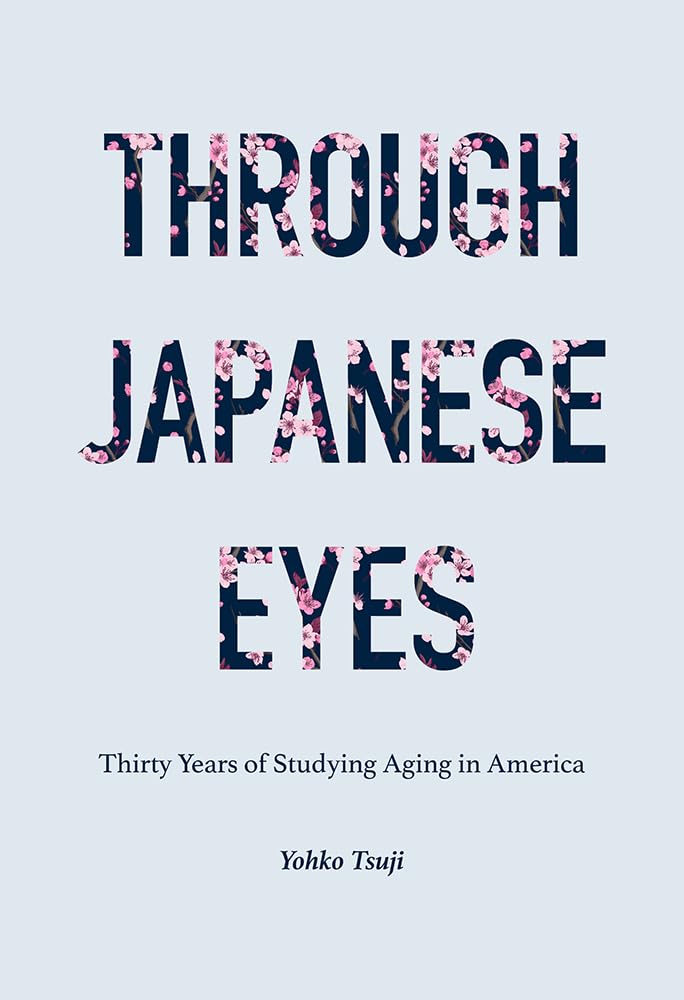
In Through Japanese Eyes, based on her thirtyyear research at a senior center in upstate New York, anthropologist Yohko Tsuji describes old age in America from a crosscultural perspective. Comparing aging in America and in her native Japan, she discovers that notable differences in the panhuman experience of aging are rooted in cultural differences between these two countries, and that Americans have strongly negative attitudes toward aging because it represents the antithesis of cherished American values, especially independence. Tsuji reveals that American culture, despite its seeming lack of guidance for those aging, plays a pivotal role in elders lives, simultaneously assisting and constraining them. Furthermore, the authors lengthy period of research illustrates major changes in her interlocutors lives, incorporating their declines and death, and significant shifts in the culture of aging in American society as Tsuji herself gets to know American culture and grows into senescence herself.Through Japanese Eyes offers an ethnography of aging in America from a crosscultural perspective based on a lengthy period of research. It illustrates how older Americans cope with the gap between the ideal (e.g., independence) and the real (e.g., needing assistance) of growing older, and the changes the author observed over thirty years of research.
⚠️ WARNING (California Proposition 65):
This product may contain chemicals known to the State of California to cause cancer,
birth defects, or other reproductive harm.
For MAP (Minimum Advertised Price) violations and Intellectual Property (IP) or Trademark concerns, please contact:
support@ergodebooks.com
⚠️ California Proposition 65 Warning: Some products sold on this website may expose you to chemicals known to the State of California to cause cancer, birth defects, or other reproductive harm. For more information, visit www.P65Warnings.ca.gov.