If you have any questions, you are always welcome to contact us. We'll get back to you as soon as possible, withing 24 hours on weekdays.
Customer service
All questions about your order, return and delivery must be sent to our customer service team by e-mail at yourstore@yourdomain.com
Sale & Press
If you are interested in selling our products, need more information about our brand or wish to make a collaboration, please contact us at press@yourdomain.com
Help
If you have any questions, you are always welcome to contact us. We'll get back to you as soon as possible, withing 24 hours on weekdays.
Customer service
All questions about your order, return and delivery must be sent to our customer service team by e-mail at yourstore@yourdomain.com
Sale & Press
If you are interested in selling our products, need more information about our brand or wish to make a collaboration, please contact us at press@yourdomain.com
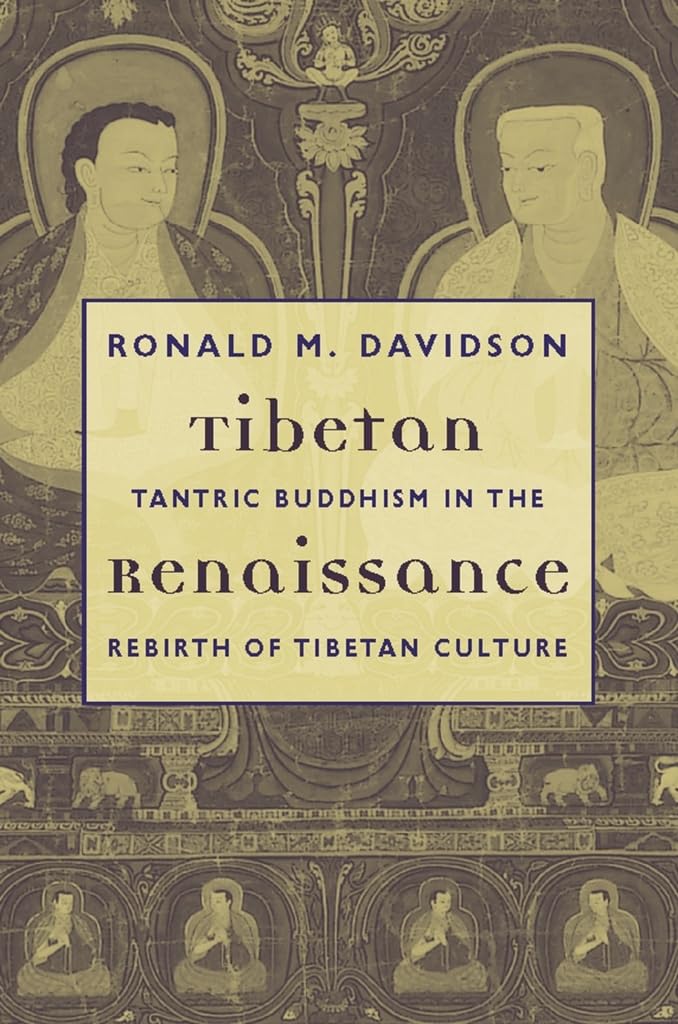
How did a society on the edge of collapse and dominated by wandering bands of armed men give way to a vibrant Buddhist culture, led by yogins and scholars? Ronald M. Davidson explores how the translation and spread of esoteric Buddhist texts dramatically shaped Tibetan society and led to its rise as the center of Buddhist culture throughout Asia, replacing India as the perceived source of religious ideology and tradition. During the Tibetan Renaissance (9501200 C.E.), monks and yogins translated an enormous number of Indian Buddhist texts. They employed the evolving literature and practices of esoteric Buddhism as the basis to reconstruct Tibetan religious, cultural, and political institutions. Many translators achieved the de facto status of feudal lords and while not always loyal to their Buddhist vows, these figures helped solidify political power in the hands of religious authorities and began a process that led to the Dalai Lama's theocracy. Davidson's vivid portraits of the monks, priests, popular preachers, yogins, and aristocratic clans who changed Tibetan society and culture further enhance his perspectives on the tensions and transformations that characterized medieval Tibet.
⚠️ WARNING (California Proposition 65):
This product may contain chemicals known to the State of California to cause cancer,
birth defects, or other reproductive harm.
For MAP (Minimum Advertised Price) violations and Intellectual Property (IP) or Trademark concerns, please contact:
support@ergodebooks.com
⚠️ California Proposition 65 Warning: Some products sold on this website may expose you to chemicals known to the State of California to cause cancer, birth defects, or other reproductive harm. For more information, visit www.P65Warnings.ca.gov.