
Title
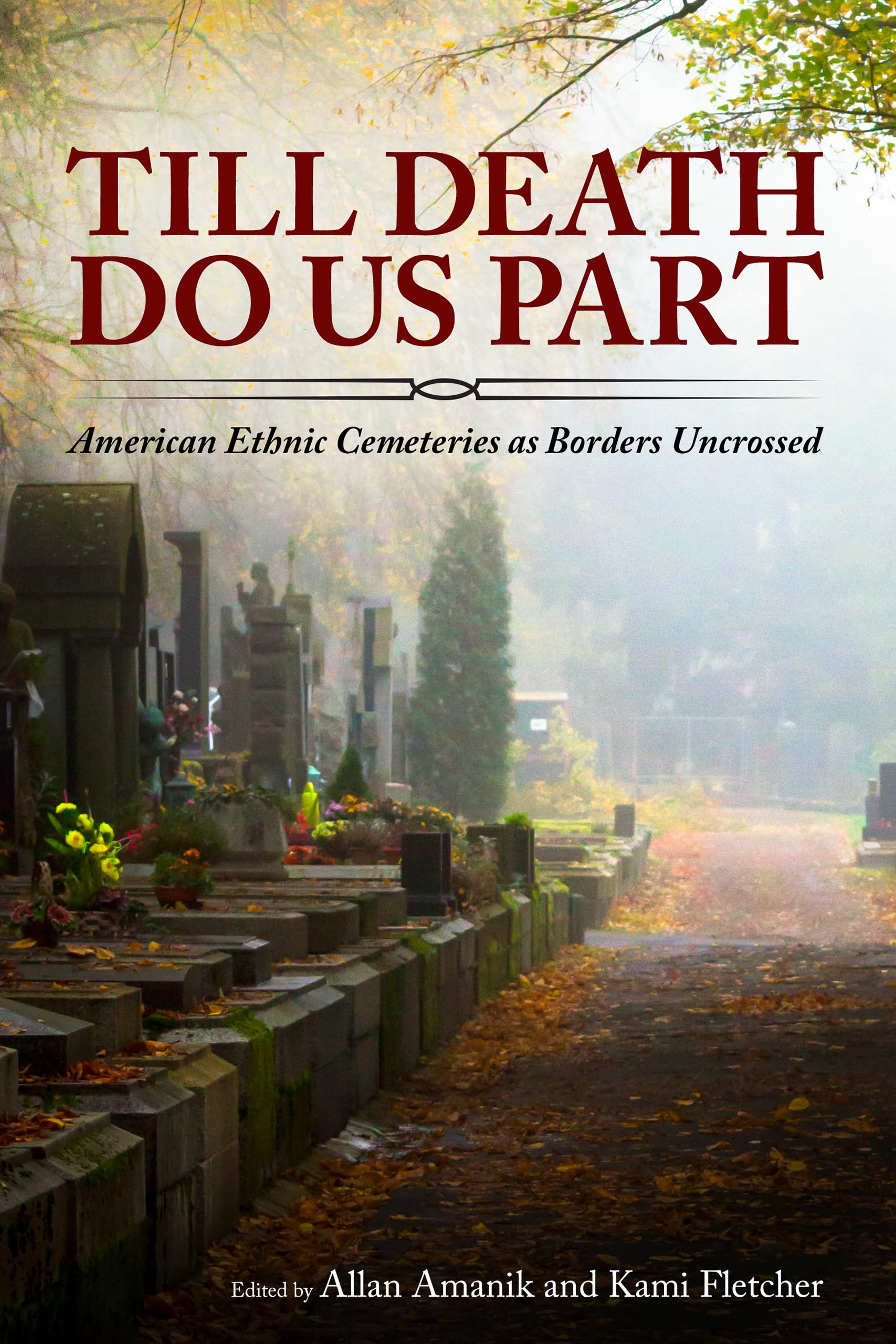
Till Death Do Us Part: American Ethnic Cemeteries as Borders Uncrossed,Used
Sold by Ergodebooks, an authorized reseller.
Returns accepted within 30 days | support@ergodebooks.com
Shipping Information
- Free Standard Shipping — United States only
- Processing Time: 3–5 business days
- Estimated Delivery: 6–10 business days after dispatch
- Double-boxed, fully insured & discreetly packaged
- Tracking number sent via email once dispatched
Returns & Refund
Returns accepted within 30 days of delivery.
Damaged or Defective Item
Free return shipping + replacement or full refund
Wrong Item Received
Free return shipping + replacement or full refund
Change of Mind
Return shipping at customer's expense · 25% restocking fee applies
Payment Option

Contributions by Allan Amanik, Kelly B. Arehart, Sue Fawn Chung, Kami Fletcher, Rosina Hassoun, James S. Pula, Jeffrey E. Smith, and Martina Will de ChaparroTill Death Do Us Part: American Ethnic Cemeteries as Borders Uncrossed explores the tendency among most Americans to separate their dead along communal lines rooted in race, faith, ethnicity, or social standing and asks what a deeper exploration of that phenomenon can tell us about American history more broadly.Comparative in scope, and regionally diverse, chapters look to immigrants, communities of color, the colonized, the enslaved, rich and poor, and religious minorities as they buried kith and kin in locales spanning the Northeast to the Spanish American Southwest. Whether African Americans, Muslim or Christian Arabs, Indians, mestizos, Chinese, Jews, Poles, Catholics, Protestants, or various whites of European descent, one thing that united these Americans was a drive to keep their dead apart. At times, they did so for internal preference. At others, it was a function of external prejudice.Invisible and institutional borders built around and into ethnic cemeteries also tell a powerful story of the ways in which Americans have negotiated race, culture, class, national origin, and religious difference in the United States during its formative centuries.
⚠️ WARNING (California Proposition 65):
This product may contain chemicals known to the State of California to cause cancer, birth defects, or other reproductive harm.
For more information, please visit www.P65Warnings.ca.gov.
- Q: What is the length, width, and height of the book? A: The book measures six point fourteen inches in length, zero point seventy-five inches in width, and nine point twenty-five inches in height.
- Q: How many pages does the book have? A: The book contains two hundred ninety-eight pages, providing a comprehensive exploration of American ethnic cemeteries.
- Q: What type of binding does this book have? A: The book is available in paperback binding, making it flexible and easy to handle.
- Q: Who are the authors contributing to this book? A: The book features contributions from multiple authors, including Allan Amanik, Kelly B. Arehart, and Martina Will de Chaparro.
- Q: What is the main theme of the book? A: The main theme revolves around the separation of the dead along communal lines based on race, faith, ethnicity, and social standing.
- Q: Is this book suitable for a general audience? A: Yes, this book is suitable for a general audience, especially those interested in American history and ethnic studies.
- Q: How do I read this book effectively? A: To read this book effectively, consider focusing on each chapter’s unique perspective on different ethnic communities' burial practices.
- Q: Is there a specific age group this book is intended for? A: The book is intended for adults and older teens, as it discusses complex themes related to race and history.
- Q: Can this book be used for academic research? A: Yes, this book can be used for academic research, particularly in fields such as sociology, history, and cultural studies.
- Q: How should I store this book to keep it in good condition? A: Store the book in a cool, dry place away from direct sunlight to preserve its quality and prevent fading.
- Q: Are there any specific cleaning instructions for the book? A: To clean the book, simply dust it lightly with a soft cloth; avoid using water or cleaning solutions.
- Q: What should I do if the book arrives damaged? A: If the book arrives damaged, contact the seller for a return or exchange according to their return policy.
- Q: Is there a warranty for this book? A: Generally, books do not come with a warranty, but you can check the seller's return policy for any specific guarantees.
- Q: What if I don't find the content engaging? A: If you find the content not engaging, consider skimming through the chapters to find topics that interest you more.
- Q: How does this book compare to other history books? A: This book offers a unique perspective by focusing on ethnic cemeteries, setting it apart from traditional history books that may cover broader topics.
- Q: Is this book suitable for beginners in history studies? A: Yes, this book is suitable for beginners as it presents complex themes in an accessible manner, inviting readers to explore further.