If you have any questions, you are always welcome to contact us. We'll get back to you as soon as possible, withing 24 hours on weekdays.
Customer service
All questions about your order, return and delivery must be sent to our customer service team by e-mail at yourstore@yourdomain.com
Sale & Press
If you are interested in selling our products, need more information about our brand or wish to make a collaboration, please contact us at press@yourdomain.com
Help
If you have any questions, you are always welcome to contact us. We'll get back to you as soon as possible, withing 24 hours on weekdays.
Customer service
All questions about your order, return and delivery must be sent to our customer service team by e-mail at yourstore@yourdomain.com
Sale & Press
If you are interested in selling our products, need more information about our brand or wish to make a collaboration, please contact us at press@yourdomain.com
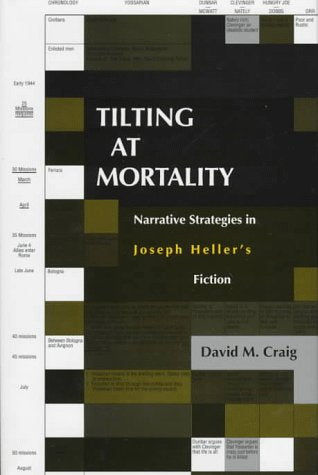
While most studies of Joseph Heller focus on his two primary works, Catch22 and Something Happened, Tilting at Mortality considers Heller's entire career, including his latest work, Closing Time. David Craig pursues two complementary tracks: first, he explores the evolution of Heller's essential subject, human mortality; and second, he delineates Heller's artistic development as a novelist. Mortality in particular the death of children or, alternatively, of wounded innocents provides Heller with his core story. Each novel emerges as another gesture of comic defiance, each constituting a strident, insistent, angry, sometimes eloquent protest against mortality. Craig's approach yoking subject matter and narrative strategies distinguishes this book from others about Heller's work, which essentially thematize. By contrast, Craig uses Heller's abiding concern with mortality to open previously unexplored areas of his fiction. He examines unpublished writings, especially short stories written in the 1940s, for the way in which they anticipate the novels; looks at aspects of Heller's novels that have never been studied; links more systematically Heller's narrative methods and strategies to his authorial intentions; and traces the development of such characteristic concerns as writers and artists, their artistic artifacts, as well as Heller's own authorial selfconsciousness. Craig's book scrutinizes Heller's entire career by examining each novel on its own terms and not by measuring it against Catch22.
⚠️ WARNING (California Proposition 65):
This product may contain chemicals known to the State of California to cause cancer,
birth defects, or other reproductive harm.
For MAP (Minimum Advertised Price) violations and Intellectual Property (IP) or Trademark concerns, please contact:
support@ergodebooks.com
⚠️ California Proposition 65 Warning: Some products sold on this website may expose you to chemicals known to the State of California to cause cancer, birth defects, or other reproductive harm. For more information, visit www.P65Warnings.ca.gov.