
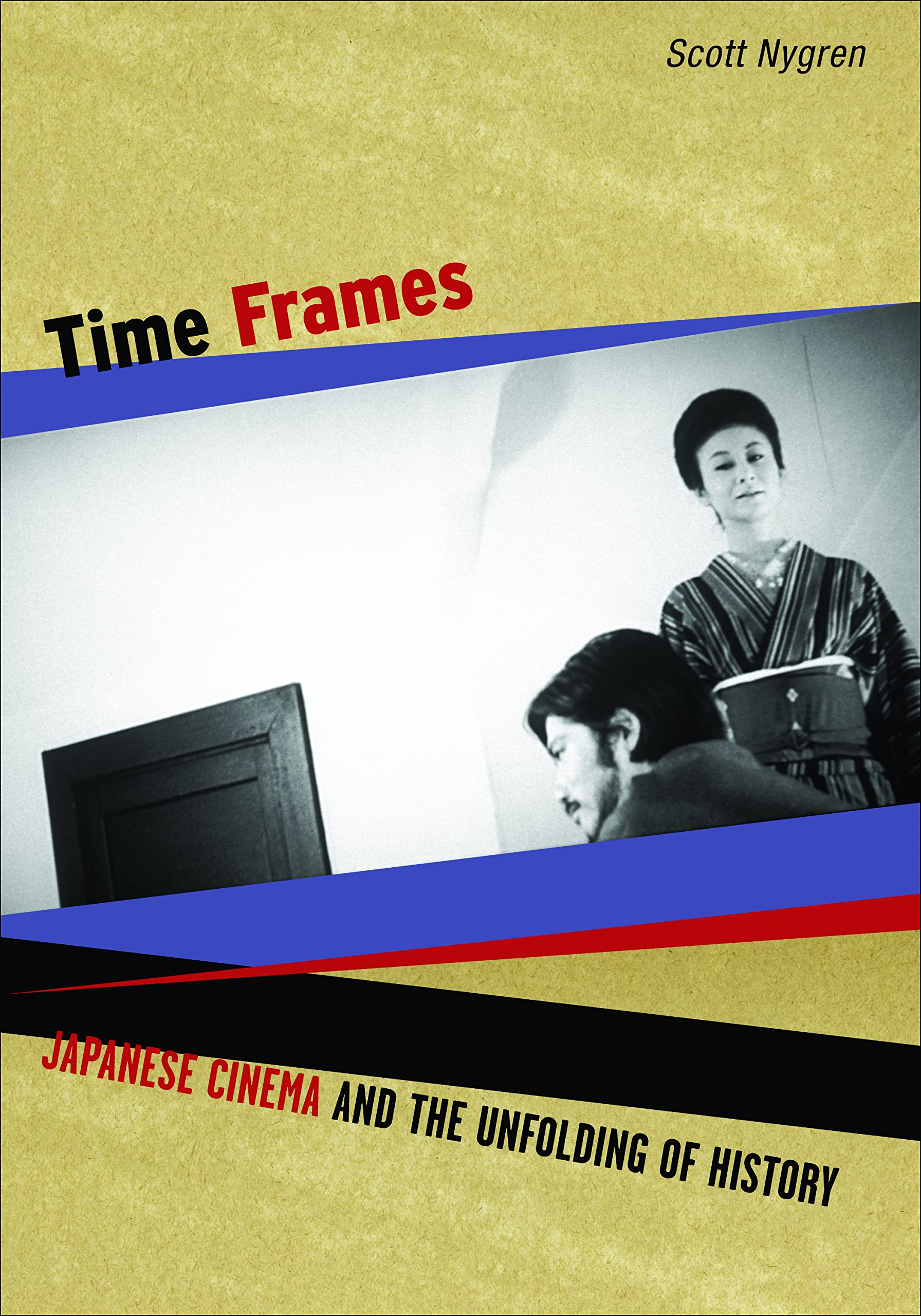
Title
Time Frames: Japanese Cinema And The Unfolding Of History,Used
Sold by Ergodebooks, an authorized reseller.
Returns accepted within 30 days | support@ergodebooks.com
Shipping Information
- Free Standard Shipping — United States only
- Processing Time: 3–5 business days
- Estimated Delivery: 6–10 business days after dispatch
- Double-boxed, fully insured & discreetly packaged
- Tracking number sent via email once dispatched
Returns & Refund
Returns accepted within 30 days of delivery.
Damaged or Defective Item
Free return shipping + replacement or full refund
Wrong Item Received
Free return shipping + replacement or full refund
Change of Mind
Return shipping at customer's expense · 25% restocking fee applies
Payment Option

Until 1951, when Kurosawas Rashomon won the Golden Lion award for best film at the Venice Film Festival, Japanese cinema was isolated from world distribution and the international discourse on film. After this historic event, however, Japanese cinema could no longer be ignored.In Time Frames, Scott Nygren explores how Japanese film criticism and history has been written both within and beyond Japan, before and after Rashomon. He takes up the central question of which, and whose, Japan do critics and historians mean when reviewing the countrys cinemaan issue complicated by assumptions about cultural purity, Japans appropriation of Western ideas and technologies, and the very existence of a West and an Orientalist nonWest.Deftly moving backward and forward from the pivotal 1951 festival, Nygren traces the invention of Japanese film history as a disciplinary mode of knowledge. His analysis includes such topics as the reconfiguration of prewar films in light of postwar recognition, the application of psychoanalytic theory to Japanese art and culture, and the intersection of kanji and cinema. He considers the historical inscription of 1950s Japan as the golden age of the humanist film, the identification of a Japanese New Wave and the implications of categorizing Japanese film through analogy to other national cinemas. Bringing the discussion to Japans reception of postmodernism, Nygren looks at the emergence of video art and anime and the end of Japanese film history as a meaningful concept in the rise of the Internet and globalization.Nygren highlights the creative exchange among North American, European, and Asian media, places Japanese film at the center of this discourse, and, ultimately, reveals its global role as a cultural medium, capable of transforming theory.Scott Nygren is associate professor of film and media studies at the University of Florida.
⚠️ WARNING (California Proposition 65):
This product may contain chemicals known to the State of California to cause cancer, birth defects, or other reproductive harm.
For more information, please visit www.P65Warnings.ca.gov.