
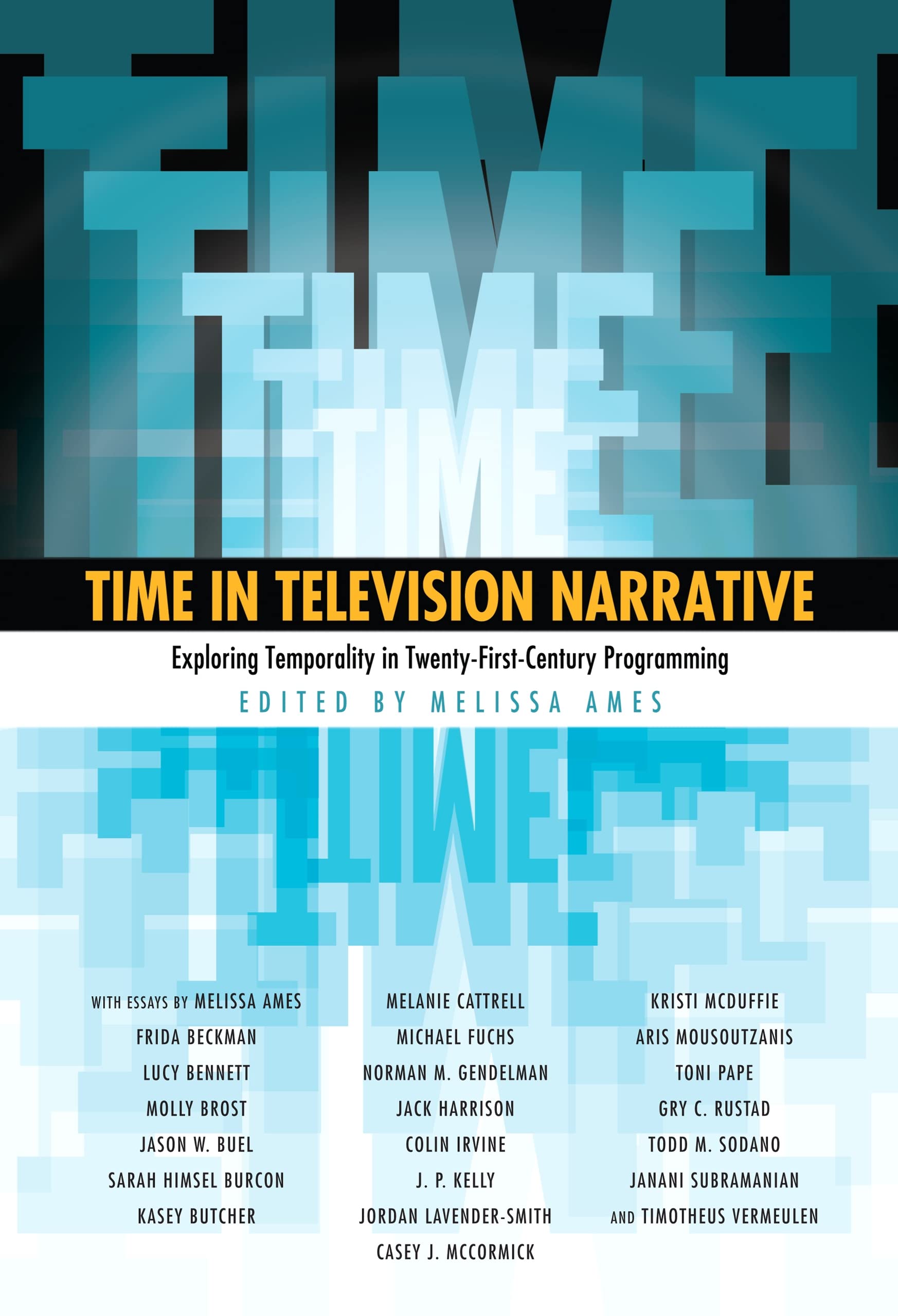
Title
Time In Television Narrative: Exploring Temporality In Twentyfirstcentury Programming,Used
Sold by Ergodebooks, an authorized reseller.
Returns accepted within 30 days | support@ergodebooks.com
Shipping Information
- Free Standard Shipping — United States only
- Processing Time: 3–5 business days
- Estimated Delivery: 6–10 business days after dispatch
- Double-boxed, fully insured & discreetly packaged
- Tracking number sent via email once dispatched
Returns & Refund
Returns accepted within 30 days of delivery.
Damaged or Defective Item
Free return shipping + replacement or full refund
Wrong Item Received
Free return shipping + replacement or full refund
Change of Mind
Return shipping at customer's expense · 25% restocking fee applies
Payment Option

This collection analyzes twentyfirstcentury American television programs that rely upon temporal and narrative experimentation. These shows play with time, slowing it down to unfold the narrative through time retardation and compression. They disrupt the chronological flow of time itself, using flashbacks and insisting that viewers be able to situate themselves in both the present and the past narrative threads. Although temporal play has existed on the small screen prior to the new millennium, never before has narrative time been so freely adapted in mainstream television. The essayists offer explanations for not only the frequency of time play in contemporary programming, but the implications of its sometimes disorienting presence.Drawing upon the fields of cultural studies, television scholarship, and literary studies, as well as overarching theories concerning postmodernity and narratology, Time in Television Narrative offers some critical suggestions. The increasing number of of television programs concerned with time may stem from any and all of the following: recent scientific approaches to quantum physics and temporality; new conceptions of history and posthistory; or trends in latecapitalistic production and consumption, in the new culture of instantaneity, or in the recent trauma culture amplified after the September 11 attacks. In short, these televisual time experiments may very well be an aesthetic response to the climate from which they derive. These essays analyze both ends of this continuum and also attend to another crucial variable: the television viewer watching this new temporal play.
⚠️ WARNING (California Proposition 65):
This product may contain chemicals known to the State of California to cause cancer, birth defects, or other reproductive harm.
For more information, please visit www.P65Warnings.ca.gov.