
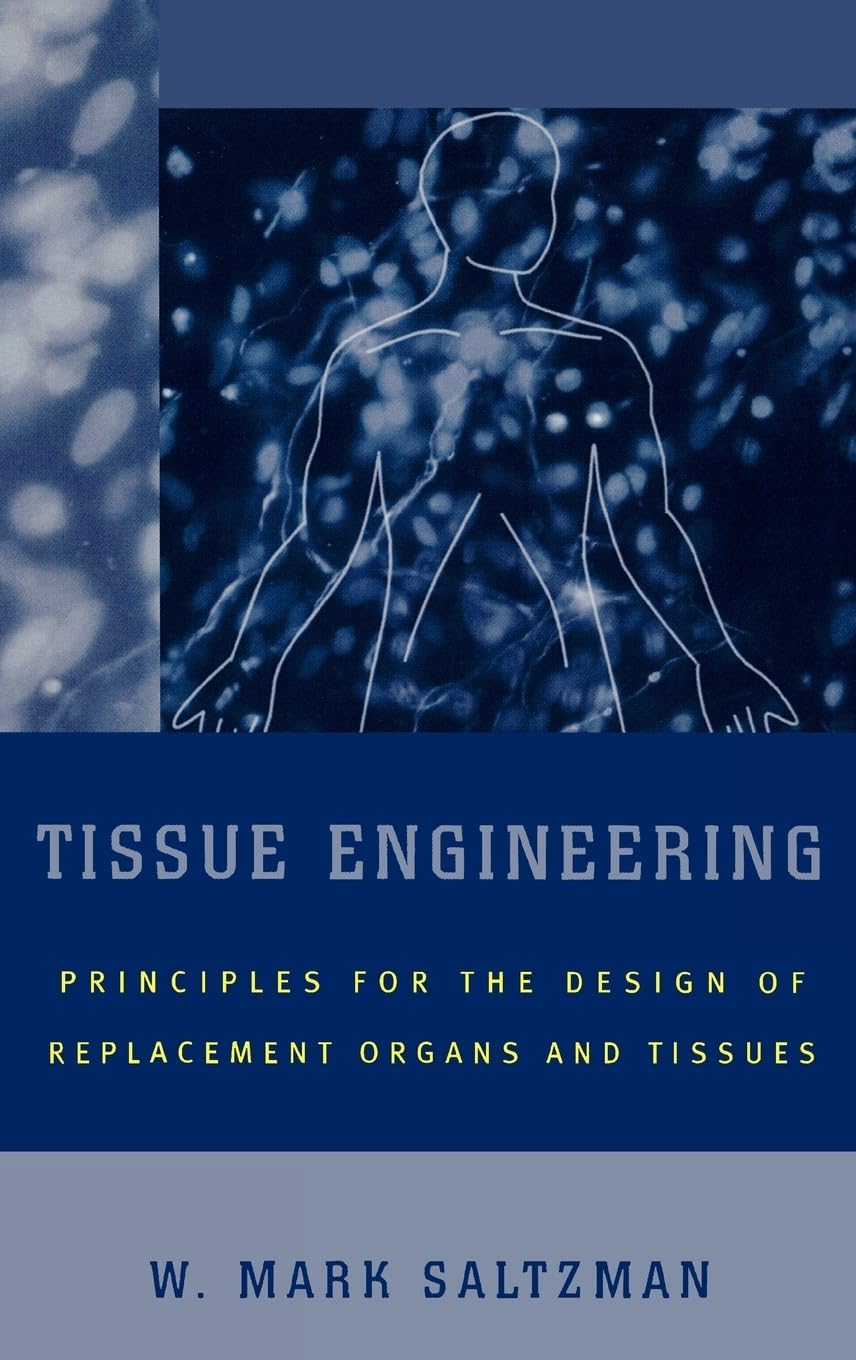
Title
Tissue Engineering: Engineering Principles For The Design Of Replacement Organs And Tissues
Sold by Ergodebooks, an authorized reseller.
Returns accepted within 30 days | support@ergodebooks.com
Shipping Information
- Free Standard Shipping — United States only
- Processing Time: 3–5 business days
- Estimated Delivery: 6–10 business days after dispatch
- Double-boxed, fully insured & discreetly packaged
- Tracking number sent via email once dispatched
Returns & Refund
Returns accepted within 30 days of delivery.
Damaged or Defective Item
Free return shipping + replacement or full refund
Wrong Item Received
Free return shipping + replacement or full refund
Change of Mind
Return shipping at customer's expense · 25% restocking fee applies
Payment Option

Tissue Or Organ Transplantation Are Among The Few Options Available For Patients With Excessive Skin Loss, Heart Or Liver Failure, And Many Common Ailments, And The Demand For Replacement Tissue Greatly Exceeds The Supply, Even Before One Considers The Serious Constraints Of Immunological Tissue Type Matching To Avoid Immune Rejection. Tissue Engineering Promises To Help Sidestep Constraints On Availability And Overcome The Scientific Challenges, With Huge Medical Benefits. This Book Lays Out The Principles Of Tissue Engineering. It Will Be A Useful Reference Work For Those Associated With This Field And As A Textbook For Specialized Courses In The Subject. It Is A Companion Volume To Saltzman'S Oup Book On Drug Delivery.
⚠️ WARNING (California Proposition 65):
This product may contain chemicals known to the State of California to cause cancer, birth defects, or other reproductive harm.
For more information, please visit www.P65Warnings.ca.gov.
- Q: How many pages does this book have? A: This book has five hundred forty-four pages. It covers essential principles of tissue engineering in detail.
- Q: What are the dimensions of this book? A: The dimensions of this book are nine point twenty-one inches in length, six point fourteen inches in width, and one point nineteen inches in height.
- Q: What binding type does this book have? A: This book is bound in hardcover. This makes it durable and suitable for frequent reference.
- Q: Who is the author of this book? A: The author of this book is W. Mark Saltzman. He is well-regarded in the field of tissue engineering.
- Q: What is the main topic of this book? A: The main topic of this book is tissue engineering. It discusses engineering principles for designing replacement organs and tissues.
- Q: Is this book suitable for beginners? A: Yes, this book is suitable for beginners. It serves as a reference and textbook for specialized courses in tissue engineering.
- Q: Can this book be used as a textbook? A: Yes, this book can be used as a textbook. It's designed for courses related to tissue engineering principles.
- Q: What makes this book a useful reference? A: This book lays out core principles of tissue engineering, making it a valuable resource for professionals and students in the field.
- Q: Is this book relevant for medical professionals? A: Yes, this book is relevant for medical professionals. It addresses challenges and benefits in tissue engineering, which are crucial in healthcare.
- Q: How should I store this book? A: Store this book in a cool, dry place to maintain its condition. Avoid exposure to direct sunlight to prevent fading.
- Q: Can I lend this book to someone? A: Yes, you can lend this book to someone. Just ensure it's returned in good condition to preserve its quality.
- Q: What if this book arrives damaged? A: If this book arrives damaged, contact the seller for return or exchange options. Most sellers have policies for damaged goods.
- Q: Does this book contain illustrations? A: Yes, this book contains numerous line drawings. These illustrations help clarify complex concepts in tissue engineering.
- Q: Is there a glossary or index in the book? A: Yes, this book includes an index. This makes it easier to locate specific topics or terms related to tissue engineering.
- Q: What is the publication date of this book? A: The publication date is not specified. However, the book is published by Oxford University Press, a reputable academic publisher.
- Q: Is this book part of a series? A: Yes, it is a companion volume to Saltzman’s OUP book on drug delivery. This positions it well within a broader academic context.