
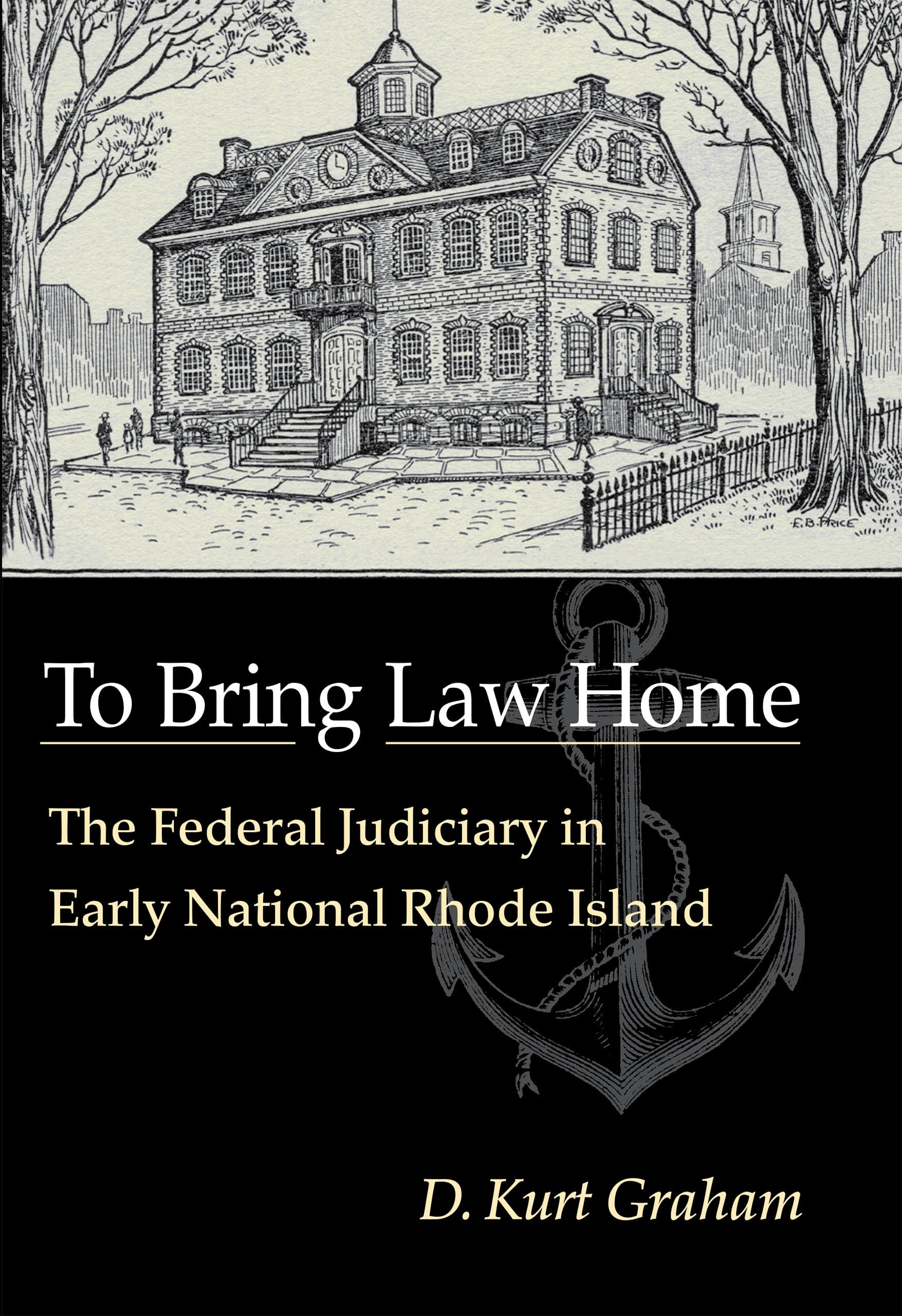
Title
To Bring Law Home: The Federal Judiciary in Early National Rhode Island,Used
Sold by Ergodebooks, an authorized reseller.
Returns accepted within 30 days | support@ergodebooks.com
Shipping Information
- Free Standard Shipping — United States only
- Processing Time: 3–5 business days
- Estimated Delivery: 6–10 business days after dispatch
- Double-boxed, fully insured & discreetly packaged
- Tracking number sent via email once dispatched
Returns & Refund
Returns accepted within 30 days of delivery.
Damaged or Defective Item
Free return shipping + replacement or full refund
Wrong Item Received
Free return shipping + replacement or full refund
Change of Mind
Return shipping at customer's expense · 25% restocking fee applies
Payment Option

In this original study, Kurt Graham sheds light on both an understudied institution and an underappreciated period in our nation's judicial history with an examination of the federal judiciarythe district and circuit courtsduring the early national period. Using Rhode Island as a case study, Graham argues that the federal judicial system exerted a significant nationalizing influence on the citizens and states of the new American nation.Graham illustrates how the federal judiciary brought a federal presence and national authority to bear in Rhode Island, a state that had resisted federal union longer than any other. Rhode Island represents an ideal example: in part because of its initial resistance to federal uniona condition that made the national presence more conspicuousand in part because of its heavy involvement in commerce. The national government's income came from customs duties, which gave Rhode Island and the federal courts there a significance they otherwise might not have had. The federal courts in Rhode Island highlight both the localized nature of national authority and the relative strength of the national government from its inception.The district and circuit courts have lived in the shadow of the U.S. Supreme Court and have been considered "inferior" courts in every sense. Beginning with Charles Warren's groundbreaking 1922 work, The Supreme Court in United States History, legal historians have focused on the significance of the Supreme Court, its decisions, and its justices. Because of this focus, the role of the lower courtswhich is where most of the federal judicial activity took place in the early republichas gone virtually unexplored. Graham contends that the lower federal courts were instrumental in establishing and maintaining national supremacy and in steadily enhancing the power of the national government. Legal historians and scholars of the early republic will appreciate this insightful book that opens a window onto an often overlooked aspect of U.S. history.
⚠️ WARNING (California Proposition 65):
This product may contain chemicals known to the State of California to cause cancer, birth defects, or other reproductive harm.
For more information, please visit www.P65Warnings.ca.gov.