
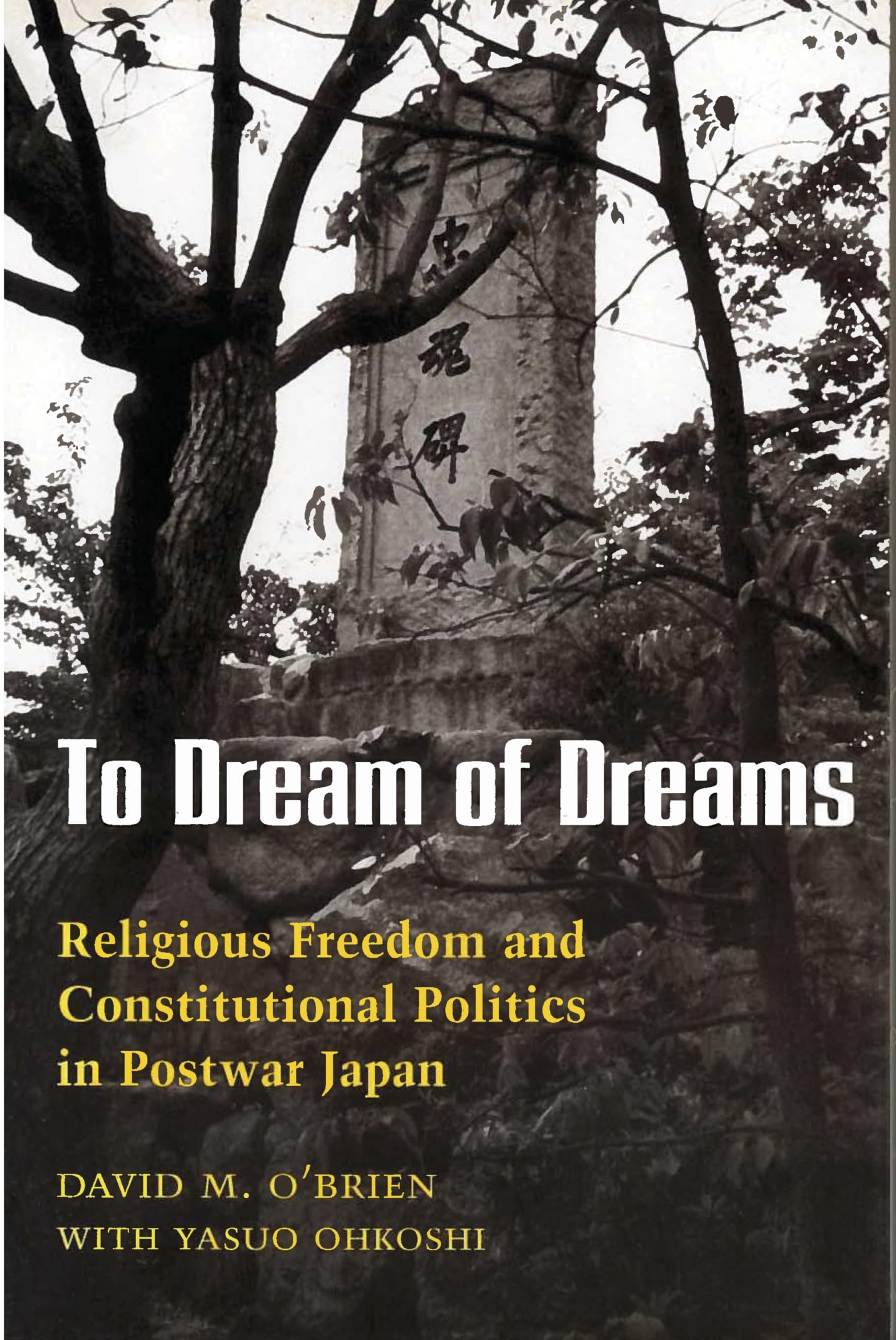
Title
To Dream Of Dreams: Religious Freedom And Constitutional Politics In Postwar Japan
Sold by Ergodebooks, an authorized reseller.
Returns accepted within 30 days | support@ergodebooks.com
Shipping Information
- Free Standard Shipping — United States only
- Processing Time: 3–5 business days
- Estimated Delivery: 6–10 business days after dispatch
- Double-boxed, fully insured & discreetly packaged
- Tracking number sent via email once dispatched
Returns & Refund
Returns accepted within 30 days of delivery.
Damaged or Defective Item
Free return shipping + replacement or full refund
Wrong Item Received
Free return shipping + replacement or full refund
Change of Mind
Return shipping at customer's expense · 25% restocking fee applies
Payment Option

Prior To World War Ii, State Shinto, Which Was Centered On The Worship Of The Emperor And Yasukuni Shrine'S Cult Of War Dead, Was Established In Support Of The Government And Militarism. Since The End Of The Occupation, Japanese Conservatives Have Sought To Restore State Shinto'S Institutions Even As Expanded Military Budgets Have Placed Japan Among The Top Five Countries In Defense Spending. This Timely Book Focuses On The Struggles Against Government Attempts To Revive The Emperor System And Japan'S Prewar Military Presence.Organized Around Case Studies And Based On Extensive Interviews, To Dream Treats The Operations Of The Japanese Court System Thoroughly And Uncovers Important Cases Regarding Religious Liberty That Remain Little Known Even Among Specialists On Modern Japanese History And Society. It Shows That Litigation Has Been Brought By Pacifists, Liberals, And Others Fiercely Opposed To Renewed Militarism And To Governmental Support For The Symbolism And Institutions Of State Shinto. Throughout, The Author Offers Important Information On The Composition Of Courts Involved And The Attitudes Of Specific Judges And Provides Translated Texts Of Significant Judicial Decisions, In The Process Dispelling The Stereotype Of The Japanese As Reluctant Litigants.
⚠️ WARNING (California Proposition 65):
This product may contain chemicals known to the State of California to cause cancer, birth defects, or other reproductive harm.
For more information, please visit www.P65Warnings.ca.gov.
- Q: What is the page count of this book? A: The book has two hundred eighty-eight pages. This length provides a comprehensive exploration of religious freedom and constitutional politics in postwar Japan.
- Q: What is the binding type of 'To Dream of Dreams'? A: This book is available in paperback binding. Paperback is lightweight and flexible, making it easy to handle and read.
- Q: Who is the author of this book? A: The author is David M. O'Brien. He provides in-depth insights into Japan's legal battles surrounding religious liberty.
- Q: What themes are explored in this book? A: The book covers themes of religious freedom and the revival of State Shinto in Japan. It examines historical and contemporary struggles over these issues.
- Q: Is this book suitable for academic use? A: Yes, this book is suitable for academic use. It includes case studies and interviews that provide valuable insights for researchers and students.
- Q: What is the target audience for this book? A: The target audience includes scholars, students, and general readers interested in Japanese history and politics. It is particularly relevant for those studying postwar Japan.
- Q: How should I care for this paperback book? A: To care for this paperback book, keep it in a dry, cool place. Avoid exposure to direct sunlight to prevent fading and damage to the cover.
- Q: Are there any special cleaning instructions for this book? A: No special cleaning instructions are needed for this book. Simply handle it with clean hands and store it properly to maintain its condition.
- Q: What if the book arrives damaged? A: If the book arrives damaged, contact the seller for a return or exchange. Most sellers have customer service policies to address such issues.
- Q: How does this book compare to other books on Japanese politics? A: This book provides unique case studies and interviews not found in many other texts on Japanese politics. It offers a detailed look at the legal aspects of religious freedom.
- Q: Is this book appropriate for beginners in Japanese history? A: Yes, this book is appropriate for beginners. It provides clear explanations of complex topics, making it accessible for those new to Japanese history.
- Q: What makes this book unique? A: This book is unique for its focus on litigation related to religious liberty in Japan. It highlights lesser-known cases and the role of the judiciary in these matters.
- Q: Does this book include any judicial decisions? A: Yes, the book includes translated texts of significant judicial decisions. These texts provide context and insight into the legal landscape of postwar Japan.
- Q: What is the significance of 'State Shinto' in this book? A: State Shinto is significant in the book as it represents the historical context of religious practices in Japan. The book discusses its revival and the political implications.
- Q: Is there an index or bibliography in this book? A: Yes, the book includes an index and bibliography. These resources are valuable for further research and referencing.