If you have any questions, you are always welcome to contact us. We'll get back to you as soon as possible, withing 24 hours on weekdays.
Customer service
All questions about your order, return and delivery must be sent to our customer service team by e-mail at yourstore@yourdomain.com
Sale & Press
If you are interested in selling our products, need more information about our brand or wish to make a collaboration, please contact us at press@yourdomain.com
Help
If you have any questions, you are always welcome to contact us. We'll get back to you as soon as possible, withing 24 hours on weekdays.
Customer service
All questions about your order, return and delivery must be sent to our customer service team by e-mail at yourstore@yourdomain.com
Sale & Press
If you are interested in selling our products, need more information about our brand or wish to make a collaboration, please contact us at press@yourdomain.com
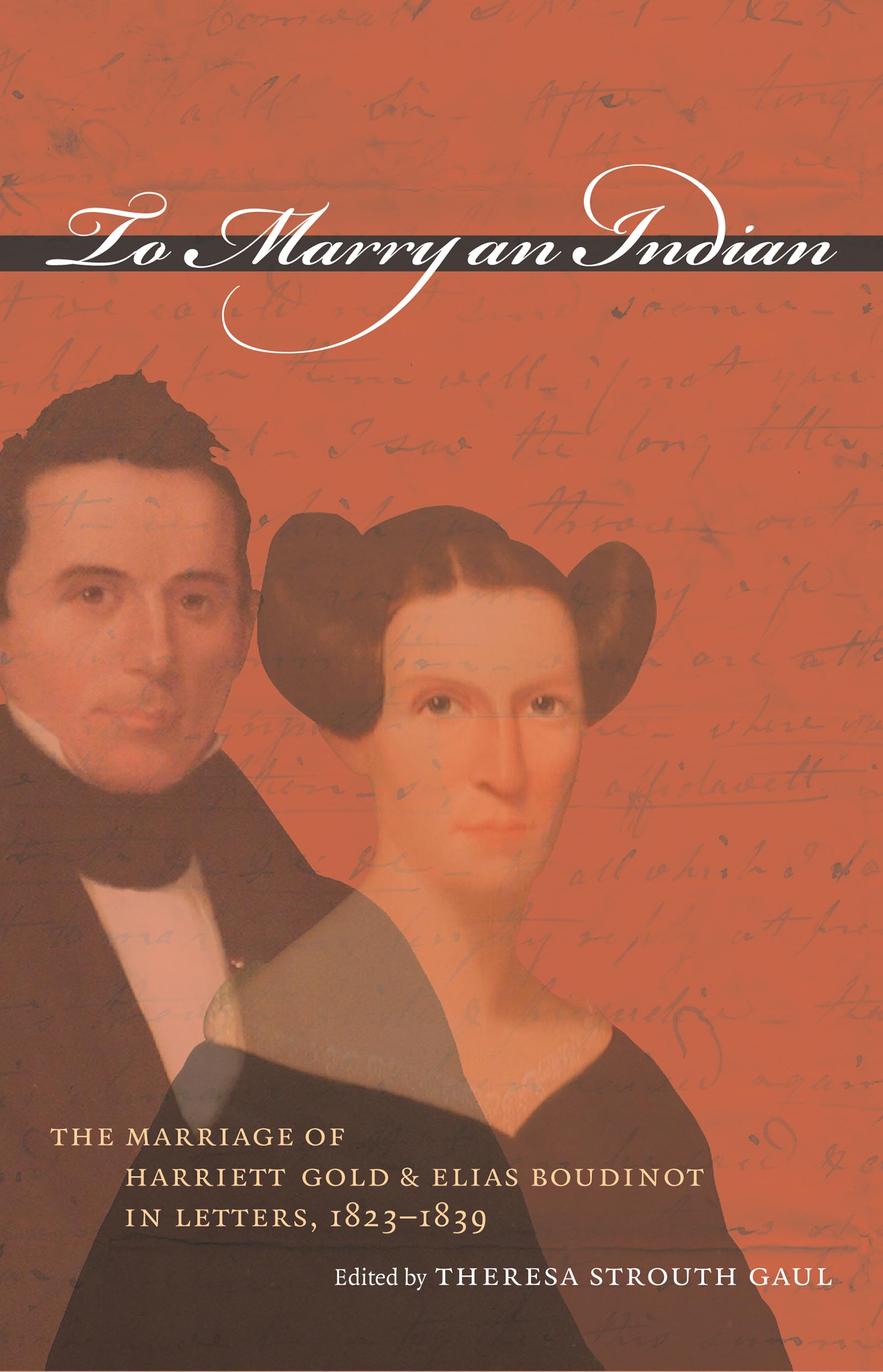
When nineteenyearold Harriett Gold, from a prominent white family in Cornwall, Connecticut, announced in 1825 her intention to marry a Cherokee man, her shocked family initiated a spirited correspondence debating her decision to marry an Indian. Eventually, Gold's family members reconciled themselves to her wishes, and she married Elias Boudinot in 1826. After the marriage, she returned with Boudinot to the Cherokee Nation, where he went on to become a controversial political figure and editor of the first Native American newspaper.Providing rare firsthand documentation of race relations in the early nineteenthcentury United States, this volume collects the Gold family correspondence during the engagement period as well as letters the young couple sent to the family describing their experiences in New Echota (capital of the Cherokee Nation) during the years prior to the Cherokee Removal. In an introduction providing historical and social contexts, Theresa Strouth Gaul offers a literary reading of the correspondence, highlighting the value of the epistolary form and the gender and racial dynamics of the exchange. As Gaul demonstrates, the correspondence provides a factual accompaniment to the many fictionalized accounts of contacts between Native Americans and Euroamericans and supports an increasing recognition that letters form an important category of literature.
⚠️ WARNING (California Proposition 65):
This product may contain chemicals known to the State of California to cause cancer,
birth defects, or other reproductive harm.
For MAP (Minimum Advertised Price) violations and Intellectual Property (IP) or Trademark concerns, please contact:
support@ergodebooks.com
⚠️ California Proposition 65 Warning: Some products sold on this website may expose you to chemicals known to the State of California to cause cancer, birth defects, or other reproductive harm. For more information, visit www.P65Warnings.ca.gov.