
Title
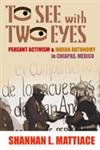
To See With Two Eyes: Peasant Activism And Indian Autonomy In Chiapas, Mexico,Used
Sold by Ergodebooks, an authorized reseller.
Returns accepted within 30 days | support@ergodebooks.com
Shipping Information
- Free Standard Shipping — United States only
- Processing Time: 3–5 business days
- Estimated Delivery: 6–10 business days after dispatch
- Double-boxed, fully insured & discreetly packaged
- Tracking number sent via email once dispatched
Returns & Refund
Returns accepted within 30 days of delivery.
Damaged or Defective Item
Free return shipping + replacement or full refund
Wrong Item Received
Free return shipping + replacement or full refund
Change of Mind
Return shipping at customer's expense · 25% restocking fee applies
Payment Option

Throughout Latin America, Native Peoples Have Long Been Viewed As Obstacles To Development. In Mexico, Beginning In The Late 1930S, The Government Organized Indigenous Peoples Into Peasant Organizations Tied To The Official Party In An Attempt To Assimilate Them Into Mestizo Society. The Unexpected Result Was The Emergence Of Political Consciousness Among Indians In Chiapas, Mexico.Since The 1994 Zapatista Uprising, Indigenous Peasants Increasingly Have Cast Their Demands Within A Framework Of Legal And Cultural Autonomy. In This Book, Based On Fieldwork In Eastern Chiapas With The Tojolabalmaya People, Shannan Mattiace Shows That On The Ground, The Struggle For Autonomy Is Integrally Related To Peasant Politics And Everyday Struggles For Survival. Her Years Of Fieldwork Prior To 1994, And After, Have Provided Her With Important Ethnographic Accounts And Extensive Interviews. To See With Two Eyes Will Be Of Interest To Scholars In Latin American Political Science, Anthropology, And History.'Mattiace Has Conducted Original Research On An Incredibly Important Topic. While She Is Particularly Interested In Chiapas, She Situates The Zapatista Experience In Broader Perspectiveanalyzing The Zapatistas Against Mexico'S Historical Record Of Popular Organizing, Contemporary Indigenous Movements In Other Parts Of Mexico, And Other Indigenous Movements In Latin America.'Professor Deborah Yashar, Princeton University
⚠️ WARNING (California Proposition 65):
This product may contain chemicals known to the State of California to cause cancer, birth defects, or other reproductive harm.
For more information, please visit www.P65Warnings.ca.gov.
- Q: What is the page count of the book? A: This book has two hundred twenty-two pages. It provides an in-depth exploration of indigenous activism in Chiapas, Mexico.
- Q: What is the binding type of this book? A: The binding type is paperback. This makes it lightweight and easy to handle for reading.
- Q: What are the dimensions of the book? A: The book measures six point zero two inches in length, zero point seven five inches in width, and nine point zero nine inches in height. These dimensions make it a convenient size for shelving.
- Q: How do I read this book? A: You can read this book as you would any paperback. Simply open it and start from the first page to explore the themes of indigenous autonomy.
- Q: Is this book suitable for academic research? A: Yes, this book is suitable for academic research. It is particularly valuable for scholars in Latin American political science, anthropology, and history.
- Q: Who is the author of this book? A: The author is Shannan L. Mattiace. She has conducted extensive fieldwork among the Tojolabal-Maya people of Chiapas.
- Q: How do I keep this book in good condition? A: To keep this book in good condition, store it in a dry, cool place away from direct sunlight. Avoid bending the spine or pages.
- Q: Are there any safety concerns with this book? A: No, there are no safety concerns with this book. It is a scholarly work intended for adult readers.
- Q: Can I lend this book to someone? A: Yes, you can lend this book to others. Just ensure they handle it carefully to maintain its condition.
- Q: What if the book arrives damaged? A: If the book arrives damaged, you should contact the seller for a return or exchange. Most retailers have customer service policies for such situations.
- Q: Is this book relevant for understanding contemporary indigenous movements? A: Yes, this book is relevant for understanding contemporary indigenous movements. It analyzes the Zapatista experience within broader indigenous struggles.
- Q: Does this book contain illustrations or images? A: No, this book does not contain illustrations or images. It focuses on textual analysis of political consciousness among indigenous peoples.
- Q: Is there a glossary or index in this book? A: No, this book does not have a glossary or index. It relies on narrative and fieldwork to convey its themes.
- Q: What genre does this book belong to? A: This book belongs to the genre of academic literature, specifically focusing on political science and anthropology.
- Q: Is this book suitable for a general audience? A: Yes, but it is primarily targeted at scholars and students. A general audience may need some background knowledge in the subject matter.