
Title
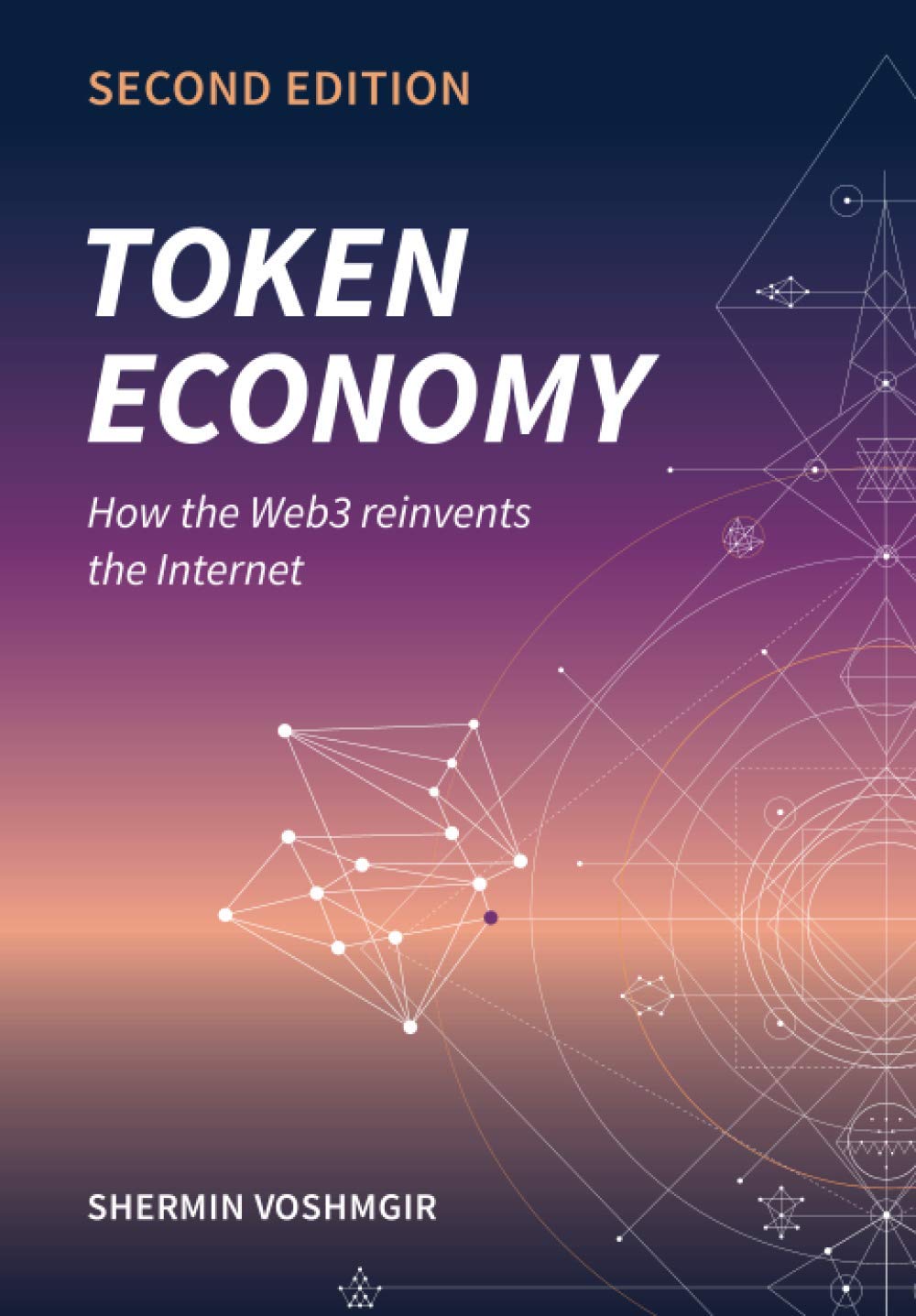
Token Economy: How the Web3 reinvents the Internet (Token Economy: How the Web3 reinvents the internet (English original & forei,New
Sold by Ergodebooks, an authorized reseller.
Returns accepted within 30 days | support@ergodebooks.com
Shipping Information
- Free Standard Shipping — United States only
- Processing Time: 3–5 business days
- Estimated Delivery: 6–10 business days after dispatch
- Double-boxed, fully insured & discreetly packaged
- Tracking number sent via email once dispatched
Returns & Refund
Returns accepted within 30 days of delivery.
Damaged or Defective Item
Free return shipping + replacement or full refund
Wrong Item Received
Free return shipping + replacement or full refund
Change of Mind
Return shipping at customer's expense · 25% restocking fee applies
Payment Option

This is the second edition of the book Token Economy originally published in June 2019. The basic structure of this second edition is the same as the first edition, with slightly updated content of existing chapters and four additional chapters: 'UserCentric Identities,' 'Privacy Tokens,' 'Lending Tokens,' and How to Design a Token System and more focus on the Web3. //Part one outlines the fundamental building blocks of the Web3, including the role of cryptography and usercentric digital identities. Part two explains Web3 applications like smart contracts, DAOs & tokens. The last two parts of the book focus on tokens as the atomic unit of the Web3, explaining the properties and functions of money and outlining the emerging field of decentralized finance (DeFi) that might power a potential future digital barter economy. Use cases such as asset tokens, purpose driven tokens, BAT (Basic Attention Token), social media tokens (Steemit, Hive and Reddit), privacy tokens, and stable tokens are explored, including the role of CBDCs (Central Bank Digital Currencies) and Facebook's Libra.//Tokens often referred to as cryptocurrencies can represent anything from an asset to an access right, such as gold, diamonds, a fraction of a Picasso painting or an entry ticket to a concert. Tokens could also be used to reward social media contributions, incentivize the reduction of CO2 emissions, or even ones attention for watching an ad. While it has become easy to create a token, which is collectively managed by a public Web3 infrastructure like a blockchain network, the understanding of how to apply these tokens is still vague. This book attempts to summarize existing knowledge about blockchain networks and other distributed ledgers as the backbone of the Web3, and contextualize the socioeconomic implications of the Web3 applications such as smart contracts, tokens, and DAOs to the concepts of money, economics, governance and decentralized finance (DeFi).//The industry keeps referring to Blockchain as different from Bitcoin, creating an artificial divide that is often misleading. There seems to be too little understanding about the fact that Bitcoin is a blockchain network, which is (a) globally managed by people who mostly do not know each other, and (b) enabled by the consensus protocol that (c) incentivizes all network actors for their contributions with a native token. The governance rules are tied to the minting of a native blockchain token. The Bitcoin token can, therefore, be seen as the currency of a distributed Internet tribe, called the Bitcoin network, where network actors are rewarded with Bitcoins, just as the Ether is the currency of the distributed Internet tribe Ethereum network, or Sia is the native currency of the Sia network. The Bitcoin network and other distributed ledgers all represent a collectively maintained public infrastructure and are the backbone of the next generation Internet, what the crypto community refers to as the Web3.
⚠️ WARNING (California Proposition 65):
This product may contain chemicals known to the State of California to cause cancer, birth defects, or other reproductive harm.
For more information, please visit www.P65Warnings.ca.gov.