
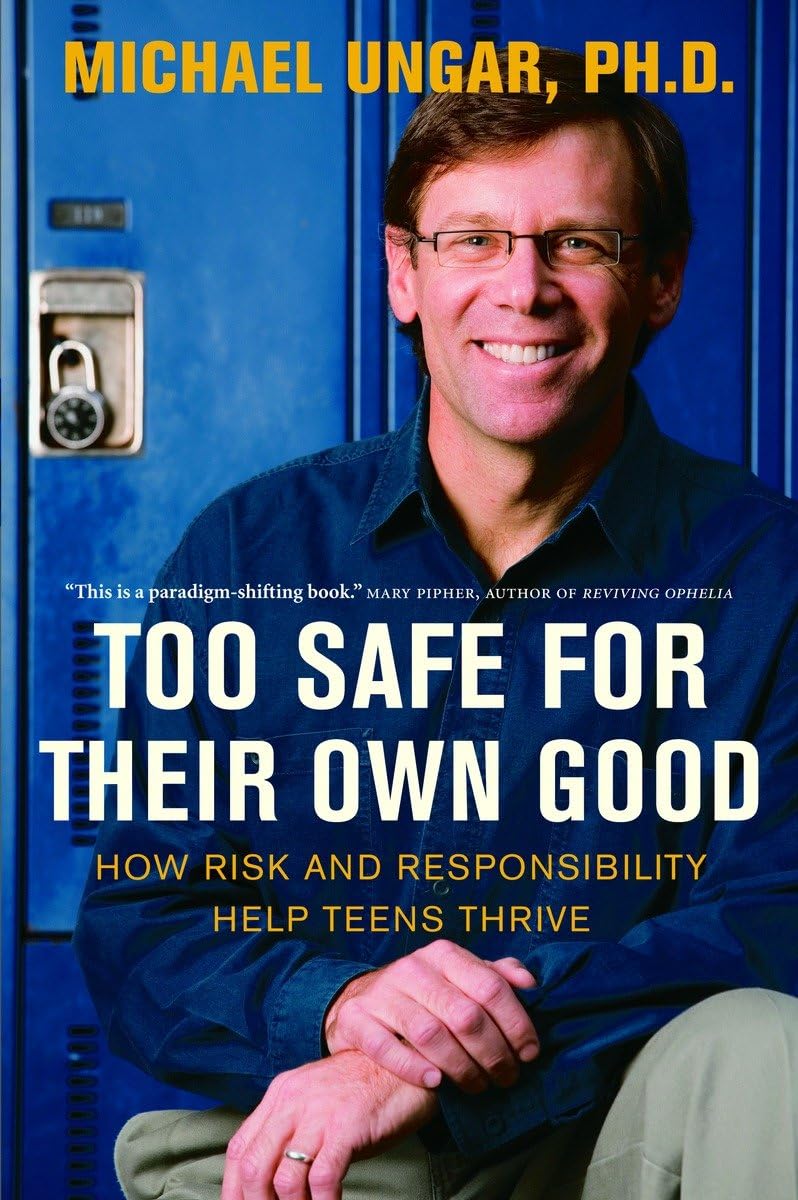
Title
Too Safe for Their Own Good: How Risk and Responsibility Help Teens Thrive,Used
Sold by Ergodebooks, an authorized reseller.
Returns accepted within 30 days | support@ergodebooks.com
Shipping Information
- Free Standard Shipping — United States only
- Processing Time: 3–5 business days
- Estimated Delivery: 6–10 business days after dispatch
- Double-boxed, fully insured & discreetly packaged
- Tracking number sent via email once dispatched
Returns & Refund
Returns accepted within 30 days of delivery.
Damaged or Defective Item
Free return shipping + replacement or full refund
Wrong Item Received
Free return shipping + replacement or full refund
Change of Mind
Return shipping at customer's expense · 25% restocking fee applies
Payment Option

Canadian children are safer now than at any other time in history. So why are we so fearful for them? When theyre young, we drive them to playdates, fill up their time with organized activity, and cocoon them from every imaginable peril. We think we are doing whats best for them. But as they grow into young adults and we continue to manage their lives, running interference with teachers and coaches, we are, in fact, unwittingly stunting them.Internationally respected social worker and family therapist Michael Ungar tells us why our mania to keep our kids safe is causing us to do the opposite: put them in harms way. By continuing to protect them from failure and disappointment, many of our kids are missing out on the risktakers advantage, the benefits that come from experiencing manageable amounts of danger. In Too Safe for Their Own Good, Ungar inspires parents to recall their own childhoods and the lessons they learned from being risktakers and responsibilityseekers, much to the annoyance of their own parents. He offers the support parents need in setting appropriate limits and provides concrete suggestions for allowing children the opportunity to experience the rites of passage that will help them become competent, happy, thriving adults.In many communities, we are failing miserably doing much more than keeping our children vacuumsafe. They are not getting the experiences they need to grow up well. An entire generation of children from middle class homes, in downtown row houses, apartment blocks, and copycat suburbs, whose good fortune it is to have sidewalks and neighbourhood watch programs, crossing guards, and playground monitors, are not being provided with the opportunities they need to learn how to navigate their way through lifes challenges. We dont intend any harm. Quite the contrary. In our mania to provide emotional life jackets around our kids, helmets and seatbelts, approved playground equipment, afterschool supervision, an endless stream of evening programming, and no place to hang out but the tiled flooring of our local mall, we parents are accidentally creating a generation of youth who are not ready for life. Our children are too safe for their own good.From Too Safe for Their Own Good
⚠️ WARNING (California Proposition 65):
This product may contain chemicals known to the State of California to cause cancer, birth defects, or other reproductive harm.
For more information, please visit www.P65Warnings.ca.gov.
- Q: What is the page count of this book? A: This book contains two hundred forty pages. It offers comprehensive insights into child psychology and parenting.
- Q: What is the binding type of the book? A: The book is available in paperback binding. This makes it lightweight and easy to handle for readers.
- Q: What are the dimensions of the book? A: The book measures six point zero one inches by zero point five eight inches by nine inches. These dimensions make it a convenient size for reading.
- Q: Who is the author of 'Too Safe for Their Own Good'? A: The author is Michael Ungar. He is an internationally respected social worker and family therapist.
- Q: What is the main theme of the book? A: The main theme revolves around the impact of overprotectiveness on children's development. It emphasizes the importance of allowing kids to experience manageable risks.
- Q: Is this book suitable for parents of teenagers? A: Yes, this book is particularly suitable for parents of teenagers. It provides insights into fostering independence and resilience in young adults.
- Q: How can I apply the concepts from this book? A: You can apply the concepts by gradually allowing your children to face challenges. This encourages their growth and helps them develop coping skills.
- Q: Is this book suitable for educators? A: Yes, educators can benefit from this book. It offers valuable perspectives on promoting student independence and responsibility.
- Q: What age group is this book intended for? A: This book is intended for parents and guardians of children and teenagers. It addresses issues relevant to various age stages.
- Q: How should I care for this book? A: To care for this book, keep it in a dry place and avoid exposure to direct sunlight. This will help maintain its condition over time.
- Q: Can I return the book if I am not satisfied? A: Yes, you can return the book if you are not satisfied, depending on the seller's return policy. Always check the specific guidelines before purchasing.
- Q: What if the book arrives damaged? A: If the book arrives damaged, contact the seller immediately for assistance. Most sellers have procedures in place for handling damaged items.
- Q: Is there a warranty for this book? A: No, books typically do not come with a warranty. However, review the seller's return policy for options if issues arise.
- Q: How can I find similar books about child psychology? A: You can find similar books by searching online retailers or visiting your local bookstore. Look for titles in the child psychology category.
- Q: Does this book include practical suggestions for parents? A: Yes, the book includes practical suggestions for parents. It provides concrete advice on setting limits and allowing children to take risks.