
Title

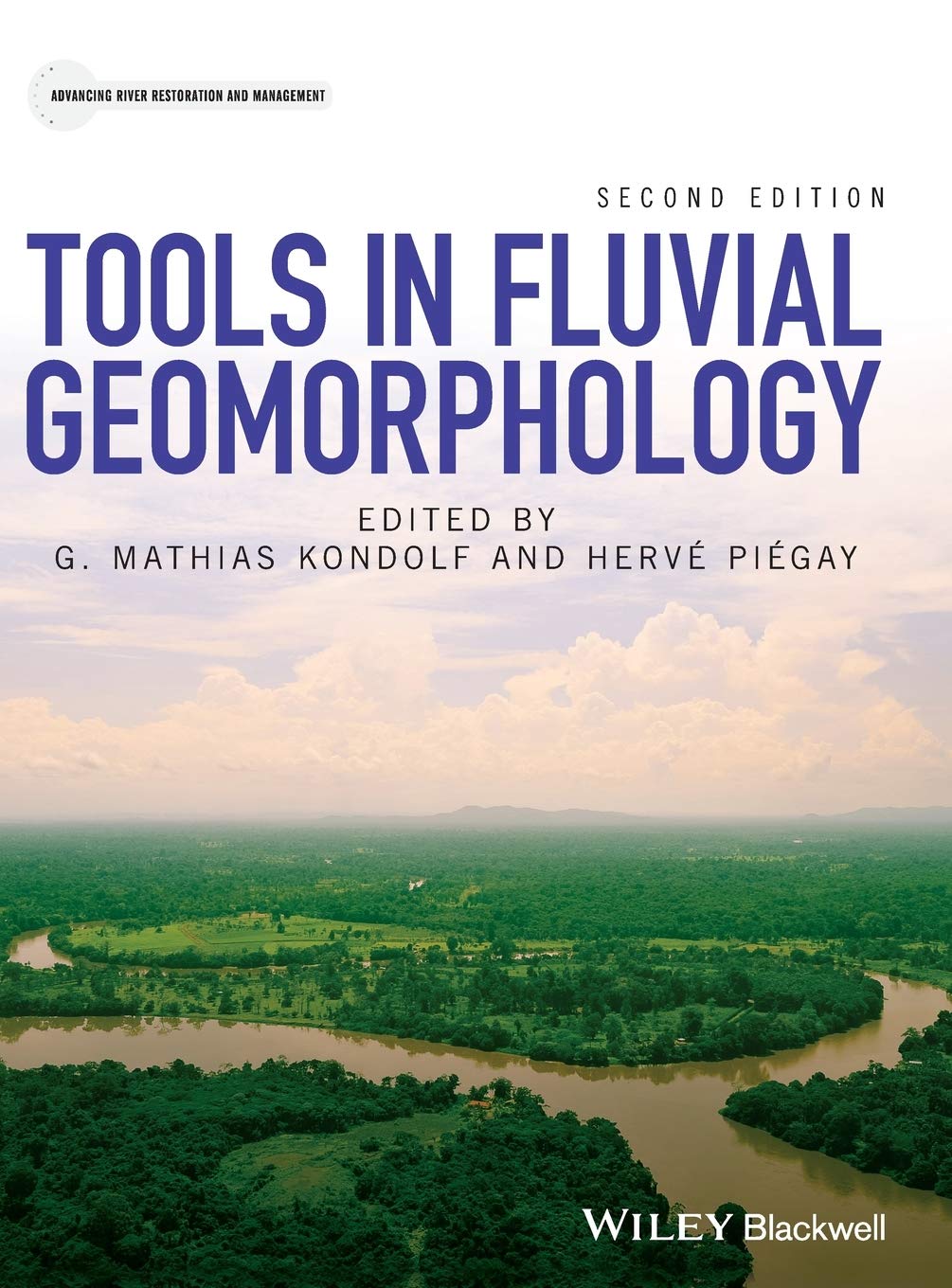
Tools in Fluvial Geomorphology (Advancing River Restoration and Management),Used
Sold by Ergodebooks, an authorized reseller.
Returns accepted within 30 days | support@ergodebooks.com
Shipping Information
- Free Standard Shipping — United States only
- Processing Time: 3–5 business days
- Estimated Delivery: 6–10 business days after dispatch
- Double-boxed, fully insured & discreetly packaged
- Tracking number sent via email once dispatched
Returns & Refund
Returns accepted within 30 days of delivery.
Damaged or Defective Item
Free return shipping + replacement or full refund
Wrong Item Received
Free return shipping + replacement or full refund
Change of Mind
Return shipping at customer's expense · 25% restocking fee applies
Payment Option

Fluvial Geomorphology studies the biophysical processes acting in rivers, and the sediment patterns and landforms resulting from them. It is a discipline of synthesis, with roots in geology, geography, and river engineering, and with strong interactions with allied fields such as ecology, engineering and landscape architecture. This book comprehensively reviews tools used in fluvial geomorphology, at a level suitable to guide the selection of research methods for a given question. Presenting an integrated approach to the interdisciplinary nature of the subject, it provides guidance for researchers and professionals on the tools available to answer questions on river restoration and management.Thoroughly updated since the first edition in 2003 by experts in their subfields, the book presents stateoftheart tools that have revolutionized fluvial geomorphology in recent decades, such as physical and numerical modelling, remote sensing and GIS, new field techniques, advances in dating, tracking and sourcing, statistical approaches as well as more traditional methods such as the systems framework, stratigraphic analysis, form and flow characterisation and historical analysis.This book: Covers five main types of geomorphological questions and their associated tools: historical framework; spatial framework; chemical, physical and biological methods; analysis of processes and forms; and future understanding framework. Provides guidance on advantages and limitations of different tools for different applications, data sources, equipment and supplies needed, and case studies illustrating their application in an integrated perspective.It is an essential resource for researchers and professional geomorphologists, hydrologists, geologists, engineers, planners, and ecologists concerned with river management, conservation and restoration. It is a useful supplementary textbook for upper level undergraduate and graduate courses in Geography, Geology, Environmental Science, Civil and Environmental Engineering, and interdisciplinary courses in river management and restoration.
⚠️ WARNING (California Proposition 65):
This product may contain chemicals known to the State of California to cause cancer, birth defects, or other reproductive harm.
For more information, please visit www.P65Warnings.ca.gov.