
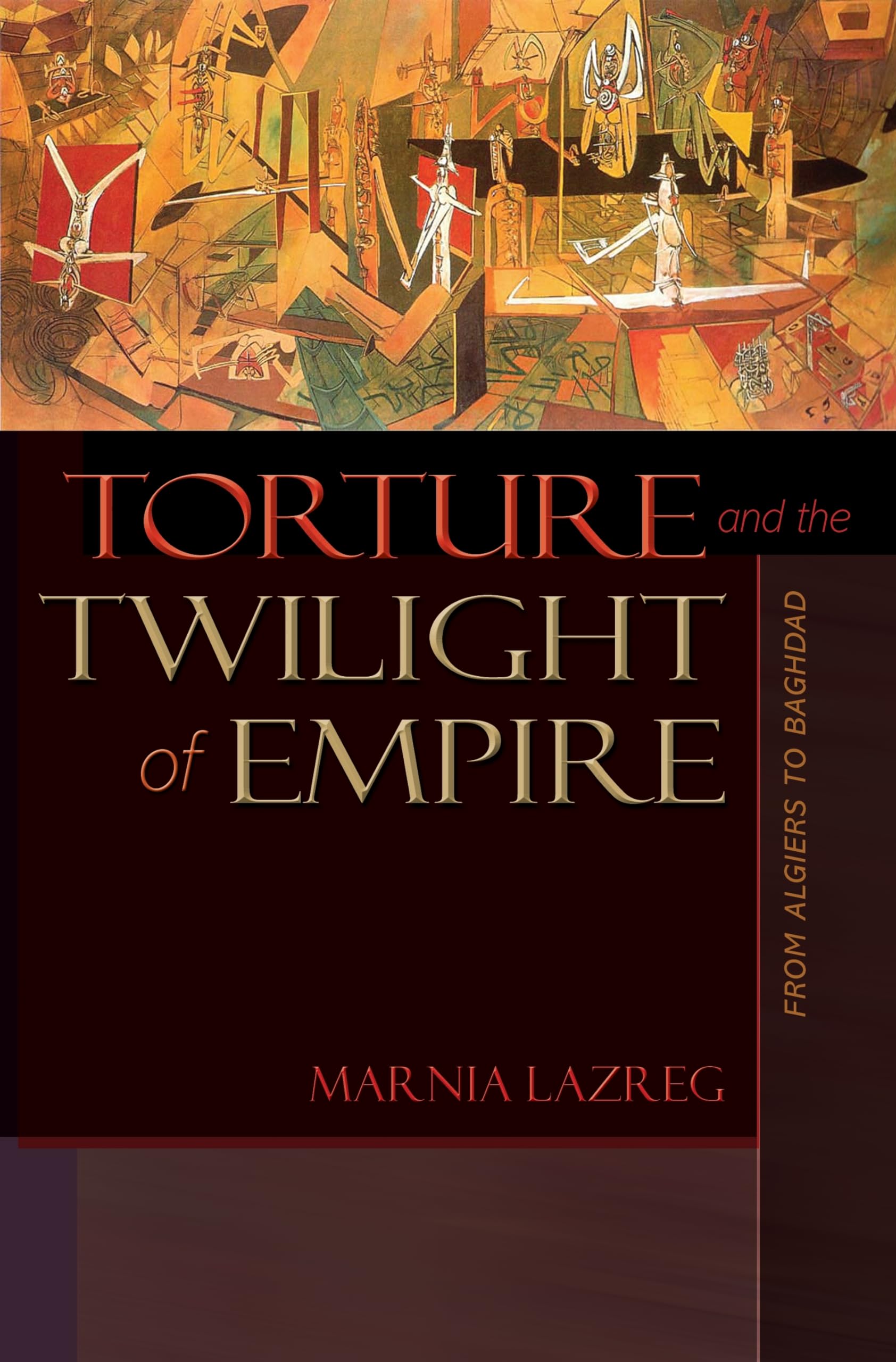
Title
Torture and the Twilight of Empire: From Algiers to Baghdad (Human Rights and Crimes against Humanity, 3),Used
Sold by Ergodebooks, an authorized reseller.
Returns accepted within 30 days | support@ergodebooks.com
Shipping Information
- Free Standard Shipping — United States only
- Processing Time: 3–5 business days
- Estimated Delivery: 6–10 business days after dispatch
- Double-boxed, fully insured & discreetly packaged
- Tracking number sent via email once dispatched
Returns & Refund
Returns accepted within 30 days of delivery.
Damaged or Defective Item
Free return shipping + replacement or full refund
Wrong Item Received
Free return shipping + replacement or full refund
Change of Mind
Return shipping at customer's expense · 25% restocking fee applies
Payment Option

Torture and the Twilight of Empire looks at the intimate relationship between torture and colonial domination through a close examination of the French army's coercive tactics during the Algerian war from 1954 to 1962. By tracing the psychological, cultural, and political meanings of torture at the end of the French empire, Marnia Lazreg also sheds new light on the United States and its recourse to torture in Iraq and Afghanistan.This book is nothing less than an anatomy of tortureits methods, justifications, functions, and consequences. Drawing extensively from archives, confessions by former torturers, interviews with former soldiers, and war diaries, as well as writings by JeanPaul Sartre, Albert Camus, and others, Lazreg argues that occupying nations justify their systematic use of torture as a regrettable but necessary means of saving Western civilization from those who challenge their rule. She shows how torture was central to guerre rvolutionnaire, a French theory of modern warfare that called for total war against the subject population and which informed a pacification strategy founded on brutal psychological techniques borrowed from totalitarian movements. Lazreg seeks to understand torture's impact on the Algerian populationespecially womenand also on the French troops who became their torturers. She explores the roles Christianity and Islam played in rationalizing these acts, and the ways in which torture became not only routine but even acceptable.Written by a preeminent historical sociologist, Torture and the Twilight of Empire holds particularly disturbing lessons for us today as we carry out the War on Terror.
⚠️ WARNING (California Proposition 65):
This product may contain chemicals known to the State of California to cause cancer, birth defects, or other reproductive harm.
For more information, please visit www.P65Warnings.ca.gov.
- Q: What is the page count of this book? A: This book has three hundred sixty pages. It provides an in-depth examination of torture's relationship with colonial domination.
- Q: What are the dimensions of this book? A: The dimensions of this book are six point twenty-six inches in length, one point five inches in width, and nine point five inches in height. These measurements make it a suitable size for easy handling.
- Q: What type of binding does this book have? A: This book is bound in hardcover. Hardcover binding ensures durability and a more substantial feel compared to paperback.
- Q: Who is the author of this book? A: The author of this book is Marnia Lazreg. She is a renowned historical sociologist specializing in the study of torture and colonialism.
- Q: What topics does this book cover? A: This book covers the relationship between torture and colonial domination, specifically during the Algerian war. It also discusses the implications of torture in the context of the War on Terror.
- Q: Is this book suitable for academic research? A: Yes, this book is suitable for academic research. It draws extensively from archives, interviews, and historical writings, making it a valuable resource for studies on torture and human rights.
- Q: How does this book explore the theme of torture? A: This book explores the theme of torture by examining its methods, justifications, and cultural implications. Lazreg analyzes how occupying nations rationalize torture as a means of control.
- Q: Can this book be used in college courses? A: Yes, this book can be used in college courses. It provides critical insights into human rights issues and colonial history, making it relevant for various academic fields.
- Q: What is the target audience for this book? A: The target audience for this book includes students, scholars, and anyone interested in human rights and colonial studies. It is particularly relevant for those studying sociology and history.
- Q: Are there any notable writers referenced in this book? A: Yes, notable writers referenced in this book include Jean-Paul Sartre and Albert Camus. Their works contribute to the discussion of torture and morality in the context of colonialism.
- Q: Does this book contain any graphic descriptions? A: Yes, this book contains graphic descriptions of torture. It provides a thorough examination of its methods and impact on individuals and societies.
- Q: Is this book appropriate for younger readers? A: No, this book is not appropriate for younger readers. Its content is complex and includes themes of violence and human rights abuses.
- Q: What lessons does this book offer for contemporary society? A: This book offers disturbing lessons about the use of torture in contemporary conflicts, particularly in the War on Terror. It encourages critical reflection on human rights practices.
- Q: How can I care for this book to maintain its condition? A: To maintain this book's condition, store it upright in a cool, dry place, and avoid exposure to direct sunlight. Handle it gently to preserve the binding.
- Q: What is the significance of the book's title? A: The title 'Torture and the Twilight of Empire' signifies the intersection of torture practices and the decline of colonial powers. It reflects on the historical implications of these actions.
- Q: How does this book contribute to the understanding of colonial history? A: This book contributes to the understanding of colonial history by highlighting the role of torture as a tool of control and its lasting effects on colonized populations.