
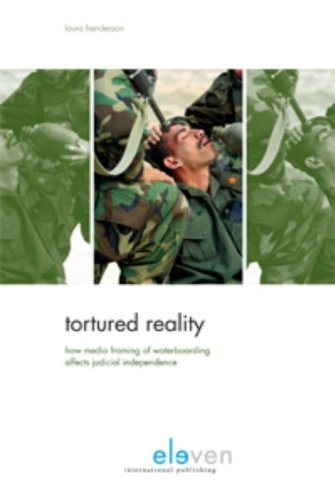
Title
Tortured Reality: How Media Framing Of Waterboarding Affects Judicial Independence,Used
Sold by Ergodebooks, an authorized reseller.
Returns accepted within 30 days | support@ergodebooks.com
Shipping Information
- Free Standard Shipping — United States only
- Processing Time: 3–5 business days
- Estimated Delivery: 6–10 business days after dispatch
- Double-boxed, fully insured & discreetly packaged
- Tracking number sent via email once dispatched
Returns & Refund
Returns accepted within 30 days of delivery.
Damaged or Defective Item
Free return shipping + replacement or full refund
Wrong Item Received
Free return shipping + replacement or full refund
Change of Mind
Return shipping at customer's expense · 25% restocking fee applies
Payment Option

Judicial independence is not just an abstract principle to which government systems, ensuring the rule of law, must adhere. It is also a concrete standard, set out in binding (as well as in some nonbinding) human rights documents and enforced by human rights courts all over the world. These documents and courts have developed legal norms relating to judicial independence. However, have they taken into account the shaky nature of the assumption that individuals and institutions can exert true agency, uninfluenced by their environments? Tortured Reality addresses this question by studying the particular issue of the effect of the frames employed in print news media on judicial independence. The research question is whether the print news media's framing of the practice of waterboarding influenced judicial opinions of this practice. If so, did this influence compromise judicial independence as defined in international human rights documents? The book concludes that the current protection offered by international human rights law against undue influence from the media on the judicial process is insufficient. Although these standards do address the media, they do not take into account the influence the media can have in shaping perceptions of law and that this affects how judges rule in individual cases. Moreover, these standards do not adequately deal with the potential use of the media by the government or actors in the private sector attempting to reduce judicial independence. Although it may be the case that humans might never achieve complete autonomy from the social structure, improvements upon the current state of affairs are possible. The book proposes that certain safeguards can mitigate the negative effects this process can have on the rule of law and the fundamental human right to a fair trial.
⚠️ WARNING (California Proposition 65):
This product may contain chemicals known to the State of California to cause cancer, birth defects, or other reproductive harm.
For more information, please visit www.P65Warnings.ca.gov.