
Title
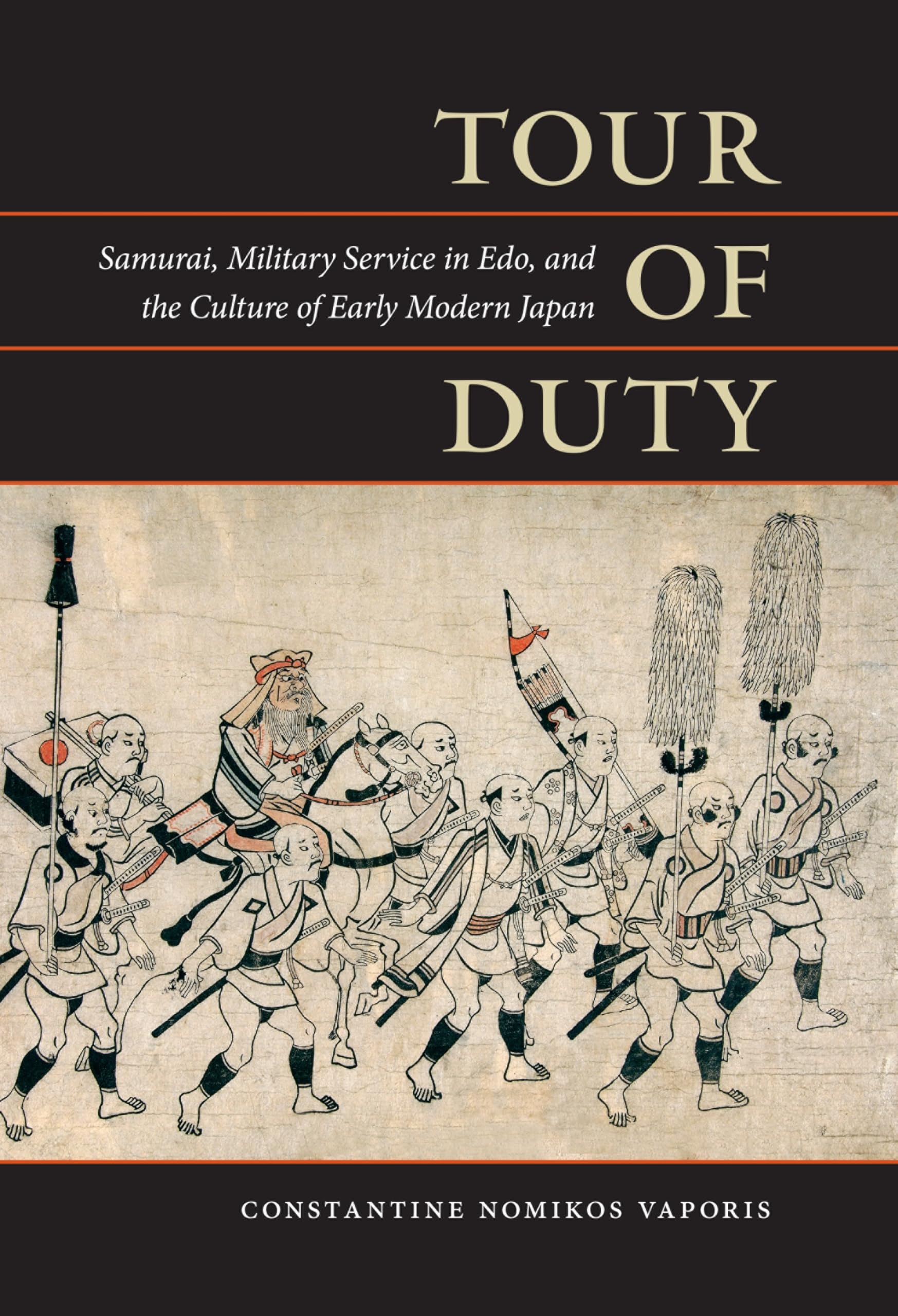
Tour Of Duty: Samurai, Military Service In Edo, And The Culture Of Early Modern Japan,Used
Sold by Ergodebooks, an authorized reseller.
Returns accepted within 30 days | support@ergodebooks.com
Shipping Information
- Free Standard Shipping — United States only
- Processing Time: 3–5 business days
- Estimated Delivery: 6–10 business days after dispatch
- Double-boxed, fully insured & discreetly packaged
- Tracking number sent via email once dispatched
Returns & Refund
Returns accepted within 30 days of delivery.
Damaged or Defective Item
Free return shipping + replacement or full refund
Wrong Item Received
Free return shipping + replacement or full refund
Change of Mind
Return shipping at customer's expense · 25% restocking fee applies
Payment Option

Alternate Attendance (Sankin Kotai) Was One Of The Central Institutions Of Edoperiod (16031868) Japan And One Of The Most Unusual Examples Of A System Of Enforced Elite Mobility In World History. It Required The Daimyo To Divide Their Time Between Their Domains And The City Of Edo, Where They Waited Upon The Tokugawa Shogun. Based On A Prodigious Amount Of Research In Both Published And Archival Primary Sources, Tour Of Duty Renders Alternate Attendance As A Lived Experience, For Not Only The Daimyo But Also The Samurai Retainers Who Accompanied Them. Beyond Exploring The Nature Of Travel To And From The Capital As Well As The Period Of Enforced Bachelorhood There, Constantine Vaporis Elucidatesfor The First Timethe Significance Of Alternate Attendance As An Engine Of Cultural, Intellectual, Material, And Technological Exchange.Vaporis Argues Against The View That Cultural Change Simply Emanated From The Center (Edo) And Reveals More Complex Patterns Of Cultural Circulation And Production Taking Place Between The Domains And Edo And Among Distant Parts Of Japan. What Is Generally Known As 'Edo Culture' In Fact Incorporated Elements From The Localities. In Some Cases, Edo Acted As A Nexus For Exchange; At Other Times, Culture Traveled From One Area To Another Without Passing Through The Capital. As A Result, Even Those Who Did Not Directly Participate In Alternate Attendance Experienced A World Much Larger Than Their Own. Vaporis Begins By Detailing The Nature Of The Trip To And From The Capital For One Particular Largescale Domain, Tosa, And Its Men And Goes On To Analyze The Political And Cultural Meanings Of The Processions Of The Daimyo And Their Extensive Entourages Up And Down The Highways. These Paradelike Movements Were Replete With Symbolic Import For The Nature Of Early Modern Governance. Later Chapters Are Concerned With The Physical And Social Environment Experienced By The Daimyos Retainers In Edo; They Also Address The Question Of Who Went To Edo And Why, The Network Of Physical Spaces In Which The Domainal Samurai Lived, The Issue Of Staffing, Political Power, And The Daily Lives And Consumption Habits Of Retainers. Finally, Vaporis Examines Retainers As Carriers Of Culture, Both In A Literal And A Figurative Sense. In Doing So, He Reveals The Significance Of Travel For Retainers And Their Identity As Consumers And Producers Of Culture, Thus Proposing A Multivalent Model Of Cultural Change.
⚠️ WARNING (California Proposition 65):
This product may contain chemicals known to the State of California to cause cancer, birth defects, or other reproductive harm.
For more information, please visit www.P65Warnings.ca.gov.
- Q: How many pages does this book have? A: This book has three hundred thirty-six pages. It offers an extensive exploration of cultural and historical themes in early modern Japan.
- Q: What is the binding type of the book? A: The book is paperback bound. This type of binding is lightweight and flexible, making it easy to carry.
- Q: What are the dimensions of this book? A: The dimensions of the book are six point one inches in length, zero point seventy-one inches in width, and nine point one inches in height. These measurements make it a convenient size for reading.
- Q: How do I read this book? A: You can read this book by following its chapters sequentially. It is designed for general audiences interested in Japanese history and culture.
- Q: Is this book suitable for academic study? A: Yes, this book is suitable for academic study. It is based on extensive research and provides insights into Edo-period Japan.
- Q: Who is the author of this book? A: The author of the book is Constantine Nomikos Vaporis. He is known for his expertise in Japanese history.
- Q: How should I store this book? A: Store the book in a cool, dry place away from direct sunlight. This will help preserve its condition over time.
- Q: Can this book be used as a reference? A: Yes, this book can be used as a reference. It contains rich historical details and analysis of Edo-period cultural practices.
- Q: What if the book arrives damaged? A: If the book arrives damaged, you should contact the seller for a return or exchange. Most sellers provide a return policy for such issues.
- Q: Is this book appropriate for children? A: This book is not specifically targeted at children. It contains complex themes related to history and culture that may require adult guidance.
- Q: Does this book include illustrations or maps? A: No, this book does not include illustrations or maps. It focuses on textual analysis and narrative.
- Q: What is the main theme of the book? A: The main theme of the book is the cultural and political significance of the alternate attendance system in Edo-period Japan.
- Q: Is there a glossary in the book? A: No, there is no glossary included in the book. However, the text is written to be accessible to readers with varying levels of familiarity with the subject.
- Q: Can I find this book in libraries? A: Yes, this book is likely available in libraries, especially those with strong collections in Asian studies or history.
- Q: What academic disciplines would benefit from this book? A: Disciplines such as history, cultural studies, and anthropology would benefit from this book. It provides valuable insights into Edo-period Japan.
- Q: Is the book available in digital format? A: The availability of a digital format depends on the publisher. Check online retailers for options.