
Title


Towards a New Architecture (Dover Architecture),Used
Sold by Ergodebooks, an authorized reseller.
Returns accepted within 30 days | support@ergodebooks.com
Shipping Information
- Free Standard Shipping — United States only
- Processing Time: 3–5 business days
- Estimated Delivery: 6–10 business days after dispatch
- Double-boxed, fully insured & discreetly packaged
- Tracking number sent via email once dispatched
Returns & Refund
Returns accepted within 30 days of delivery.
Damaged or Defective Item
Free return shipping + replacement or full refund
Wrong Item Received
Free return shipping + replacement or full refund
Change of Mind
Return shipping at customer's expense · 25% restocking fee applies
Payment Option

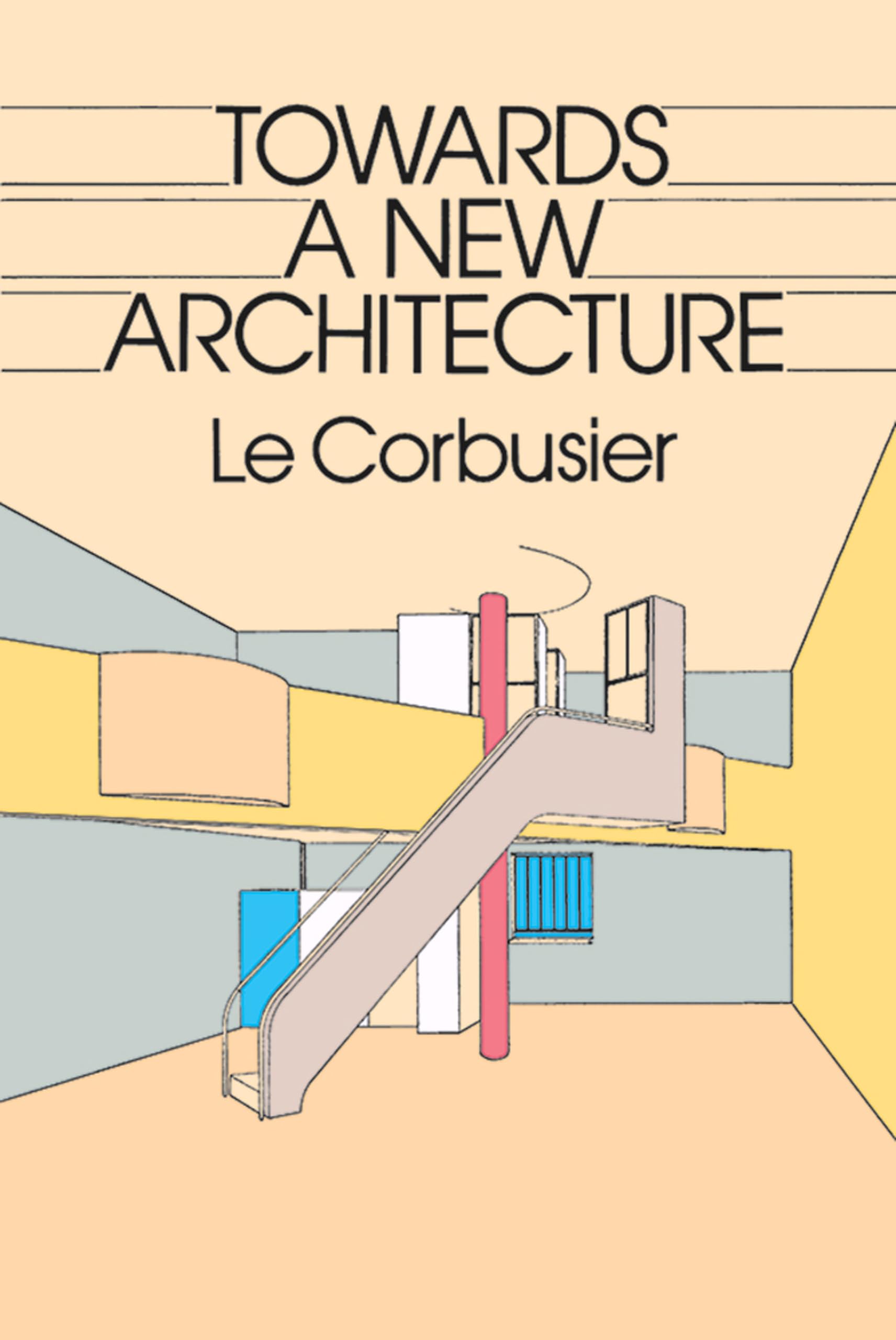
Profusely illustrated, this pioneering manifesto by the founder of the 'International School' emphasizes his technical and aesthetic theories, views of industry and economics, the relation of form to function, 'massproduction split,' and much more.For the Swissborn architect and city planner Le Corbusier (Charlesdouard Jeanneret, 18871965), architecture constituted a noble art, an exalted calling in which the architect combined plastic invention, intellectual speculation, and higher mathematics to go beyond mere utilitarian needs, beyond 'style,' to achieve a pure creation of the spirit which established 'emotional relationships using raw materials.'The first major exposition of his ideas appeared in Vers une Architecture (1923), a compilation of articles written by Le Corbusier for his avantgarde magazine, L'Esprit Nouveau. The present volume is an unabridged English translation of the 13th French edition of that historic manifesto, in which Le Corbusier expounded his technical and aesthetic theories, views on industry, economics, relation of form to function, the 'massproduction spirit,' and much else. A principal prophet of the 'modern' movement in architecture anda nearlegendary figure of the 'International School,' he designed some of the twentieth century's most memorable buildings: Chapel at Ronchamp; Swiss dormitory at the Cit Universitaire, Paris; Unit d'Habitation, Marseilles; and many more.Le Corbusier brought great passion and intelligence to these essays, which present his ideas in a concise, pithy style, studded with epigrammatic, often provocative, observations: 'American engineers overwhelm with their calculations our expiring architecture.' 'Architecture is stifled by custom. It is the only profession in which progress is not considered necessary.' 'A cathedral is not very beautiful . . .' and 'Rome is the damnation of the halfeducated. To send architectural students to Rome is to cripple them for life.'Profusely illustrated with over 200 line drawings and photographs of his own works and other structures he considered important, Towards a New Architecture is indispensable reading for architects, city planners, and cultural historiansbut will intrigue anyone fascinated by the wideranging ideas, unvarnished opinions, and innovative theories of one of this century's master builders.Revolutionary Concepts:Towards a New Architecture by Le Corbusier introduces groundbreaking ideas about modern architecture and passionately argues for a departure from styles of the past. Global Influence on Urban Planning: Learn how Le Corbusier's ideas transcended architecture to influence urban planning and housing worldwide, advocating for cities that cater to the needs of modern society, transportation, and technology. Foundational Text for Design Enthusiasts: An indispensable resource for architects, city planners, and cultural historians, offering insights into the technical, aesthetic theories, and visionary ideas of one of the 20thcentury architectural geniuses. Iconic Designs and Innovations: Explore Le Corbusier's most iconic 20thcentury buildings, including the Chapel at Ronchamp and Unit d'Habitation in Marseilles, and understand the philosophy driving their designs. Provocative Observations on Architecture and Society: Engage with Le Corbusier's often provocative insights on the profession of architecture, the impact of American engineering, and the constraints of tradition on creativity. Over 200 Illustrative Works: Richly illustrated with line drawings and photographs, this volume not only presents Le Corbusier's architectural achievements but also showcases structures that have been pivotal in the evolution of modern architectural thought. Essential Reading for Modern Architects: This seminal work is not just for architects but anyone interested in the evolution of modern architecture and urban planning. It remains a crucial text for understanding the principles that continue to shape our metropolitan environment and the vision of one of architecture's most influential figures.
⚠️ WARNING (California Proposition 65):
This product may contain chemicals known to the State of California to cause cancer, birth defects, or other reproductive harm.
For more information, please visit www.P65Warnings.ca.gov.
- Q: How many pages does the book have? A: This book has three hundred twenty pages. It offers a detailed exploration of Le Corbusier's architectural theories and philosophies.
- Q: What is the binding type of this book? A: The binding type is paperback. This makes it lightweight and easy to handle for readers.
- Q: What are the dimensions of the book? A: The dimensions are six point two six inches in length, zero point seven five inches in width, and nine point zero two inches in height. These measurements make it a convenient size for reading.
- Q: What is the main subject of this book? A: The main subject is modern architecture and urban planning. It focuses on the innovative ideas of architect Le Corbusier.
- Q: Who is the author of the book? A: The author is Le Corbusier, a pioneering figure in modern architecture known for his influential theories.
- Q: How do I read this book effectively? A: To read this book effectively, consider taking notes on key concepts. Engaging with the illustrations will enhance your understanding of Le Corbusier's architectural style.
- Q: Is this book suitable for beginners in architecture? A: Yes, it is suitable for beginners. The book presents Le Corbusier's ideas in a clear and accessible manner, making it a great starting point.
- Q: Can this book be used for academic studies? A: Yes, it can be used for academic studies. It's a foundational text that offers significant insights into architectural theory and practice.
- Q: How should I store this book to keep it in good condition? A: Store this book in a cool, dry place, away from direct sunlight. This will help prevent fading of the cover and pages.
- Q: Is this book safe for young readers? A: There is no explicit content, so it is generally safe for young readers. However, some concepts may be advanced for younger audiences.
- Q: What if my book arrives damaged? A: If your book arrives damaged, you should contact customer support to initiate a return or exchange. Keep the original packaging for the return process.
- Q: How can I clean the book if it gets dirty? A: To clean the book, gently wipe the cover with a dry cloth. Avoid using water or cleaners that may damage the paper.
- Q: Does this book include illustrations? A: Yes, the book includes over two hundred illustrations. These include line drawings and photographs that complement the text.
- Q: Is this book available in other formats? A: Currently, this book is available only in paperback. Digital formats may not be offered at this time.
- Q: What makes this book a significant read for architects? A: This book is significant because it encapsulates Le Corbusier's revolutionary ideas on architecture and urban planning, making it essential for understanding modern design principles.