
Title

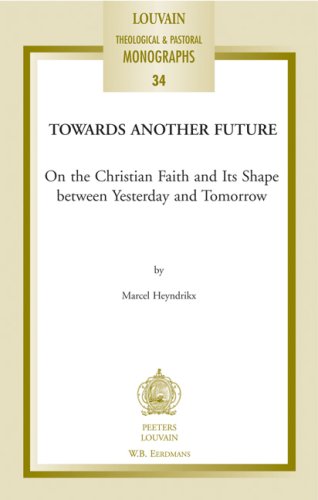
Towards another Future (Louvain Theological and Pastoral Monographs),Used
Sold by Ergodebooks, an authorized reseller.
Returns accepted within 30 days | support@ergodebooks.com
Shipping Information
- Free Standard Shipping — United States only
- Processing Time: 3–5 business days
- Estimated Delivery: 6–10 business days after dispatch
- Double-boxed, fully insured & discreetly packaged
- Tracking number sent via email once dispatched
Returns & Refund
Returns accepted within 30 days of delivery.
Damaged or Defective Item
Free return shipping + replacement or full refund
Wrong Item Received
Free return shipping + replacement or full refund
Change of Mind
Return shipping at customer's expense · 25% restocking fee applies
Payment Option

From the beginning, the gospel has been understood and articulated in terms borrowed from the cultural context in which it finds itself. For the largest part of the church's history, the prevailing context has worked with a static vision of humanity and the world. Theology and philosophy perpetuated this static worldview. This was both legitimate and necessary as long as the culture was shaped by such a worldview. Since the advent of modernity, however, this is no longer the case. The advent of science and technology has seen the static view of things give way to an understanding of ourselves and our world as dynamic entities. This has made the traditional understanding of faith increasingly untenable. One might say that the gospel has become the prisoner of its previous embodiments. The church's determination to hold on to established forms, and with them the traditional understanding of humanity and the world, has led to its increasing alienation from the prevailing culture, especially in the West. For many in our society, the church's language has become increasingly incomprehensible and its message increasingly untenable. In this book, the author argues that the church's attachment to a static worldview is the fundamental cause of the current crisis, especially as this is manifest in western Europe. He provides a detailed discussion of the European context and analyzes the main features of the traditional, static understanding of faith and its roots in classical culture. He then examines the contemporary crisis of faith and offers a critical evaluation of attempts at 'restoration'. Finally, he proposes a vision of the way forward for the church as it struggles to come to terms with the modern worldview.
⚠️ WARNING (California Proposition 65):
This product may contain chemicals known to the State of California to cause cancer, birth defects, or other reproductive harm.
For more information, please visit www.P65Warnings.ca.gov.