
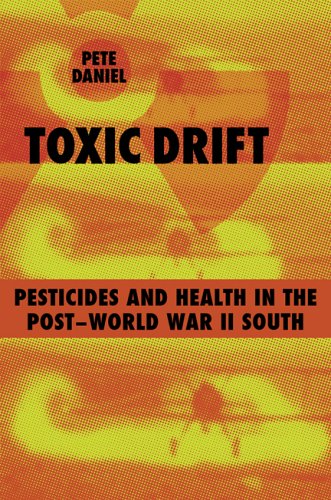
Title
Toxic Drift: Pesticides And Health In The Postworld War Ii South (Walter Lynwood Fleming Lectures In Southern History),Used
Sold by Ergodebooks, an authorized reseller.
Returns accepted within 30 days | support@ergodebooks.com
Shipping Information
- Free Standard Shipping — United States only
- Processing Time: 3–5 business days
- Estimated Delivery: 6–10 business days after dispatch
- Double-boxed, fully insured & discreetly packaged
- Tracking number sent via email once dispatched
Returns & Refund
Returns accepted within 30 days of delivery.
Damaged or Defective Item
Free return shipping + replacement or full refund
Wrong Item Received
Free return shipping + replacement or full refund
Change of Mind
Return shipping at customer's expense · 25% restocking fee applies
Payment Option

Following World War Ii, Chemical Companies And Agricultural Experts Promoted The Use Of Synthetic Chemicals Such As Ddt, Which Had Been Developed To Help The Military Fight Typhoid And Malaria Abroad, As Pesticides On Weeds And Insects. It Was, Pete Daniel Points Out, A Convenient Way For Companies To Apply Their Wartime Research To The Domestic Market. In Toxic Drift, Daniel Documents The Particularly Disastrous Effects This Campaign Had On The South'S Public Health And Environment, Exposing The Careless Mentality That Allowed Pesticide Application To Swerve Out Of Control Over Twentyfive Years.Millions Of Tons Of Highly Toxic Chemicals Spread Over The South, Much Of Them From Crop Dusters. The Quest To Destroy Pests, Daniel Contends, Unfortunately Outran Research On Insect Resistance, Ignored Environmental Damage, And Downplayed The Dangers Of Residue Accumulation And Threats To Fish, Wildlife, Domestic Animals, And Humans. He Tells A Story Of Bureaucratic Perfidy, Scientific Hubris, And Corporate Irresponsibility As He Relates Specific Cases Of Chemical Exposure And Poisoning Including Fish Kills In The Mississippi River, Ducks Falling Dead From The Sky, And Farm Animals Destroyed By Bungled, Overzealous Attempts To Wipe Out Fire Ants.Daniel Explains How The Agricultural Research Service, A Federal Entity Charged With Regulating Pesticides, Allowed Dangerous Formulations To Be Sold And Often Failed To Enforce Proper Labeling. Objections To The Undisciplined Use Of Synthetic Pesticides From Rachel Carson, Clarence Cottam, And Other Critics Went Unheeded. The Consequences For Human Health Were Staggering: Death And Severe Debilitation.Using Legal Sources, Archival Records, Newspapers, And Congressional Hearings, Daniel Constructs A Factfilled Account Of The Use, Abuse, And Regulation Of Pesticides From World War Ii Until 1970. Toxic Drift Recounts An Important Episode In Ecological History As It Cautions Against Not Only The Continued Threat Of Pesticides But Also The Dangers Surrounding Newer Issues Such As 'Mad Cow' Disease And Genetic Engineering.
⚠️ WARNING (California Proposition 65):
This product may contain chemicals known to the State of California to cause cancer, birth defects, or other reproductive harm.
For more information, please visit www.P65Warnings.ca.gov.
- Q: How many pages does 'Toxic Drift' have? A: This book has two hundred nine pages. It provides a comprehensive account of pesticide use and its effects on health and environment.
- Q: What binding type is used for 'Toxic Drift'? A: The book is hardcover. This durable binding is ideal for preservation and frequent use.
- Q: What are the dimensions of 'Toxic Drift'? A: The book measures six point two six inches in length, one inch in width, and nine point three inches in height. These dimensions make it a manageable size for reading.
- Q: Who is the author of 'Toxic Drift'? A: The author is Pete Daniel. He is known for his work on Southern history and environmental issues.
- Q: What is the main theme of 'Toxic Drift'? A: The main theme focuses on the impact of pesticides on health and the environment in the South after World War II. It critiques the irresponsible use and regulation of synthetic chemicals.
- Q: Is 'Toxic Drift' suitable for academic study? A: Yes, it is suitable for academic study. The book includes detailed research, legal sources, and historical records relevant to environmental science and history.
- Q: How should I care for 'Toxic Drift'? A: To care for the book, keep it in a cool, dry place away from direct sunlight. Avoid exposure to moisture to preserve its condition.
- Q: What is the recommended storage for books like 'Toxic Drift'? A: Store books upright on shelves or in boxes. Ensure they are not stacked on top of each other to prevent damage.
- Q: Is 'Toxic Drift' safe for children to read? A: No, it contains mature themes related to health and environmental issues. It is more suitable for adult readers and academic audiences.
- Q: Can 'Toxic Drift' be used as a reference book? A: Yes, it can be used as a reference book. Its extensive documentation and case studies provide valuable insights into pesticide regulation.
- Q: What makes 'Toxic Drift' different from other books on pesticides? A: This book uniquely combines historical context with personal stories of chemical exposure, making it a compelling read compared to standard textbooks.
- Q: Does 'Toxic Drift' discuss any specific pesticide incidents? A: Yes, it discusses incidents like fish kills in the Mississippi River and dead ducks falling from the sky. These cases illustrate the real-life impact of pesticide use.
- Q: Is there a specific audience for 'Toxic Drift'? A: The primary audience includes students, researchers, and anyone interested in environmental history and public health. It addresses critical issues relevant today.
- Q: What period does 'Toxic Drift' cover? A: The book covers the period from World War II until nineteen seventy. It details the evolution of pesticide use and regulation during these years.
- Q: What type of research sources does 'Toxic Drift' include? A: It includes legal sources, archival records, newspapers, and congressional hearings. These sources provide a thorough examination of pesticide regulation.