
Title
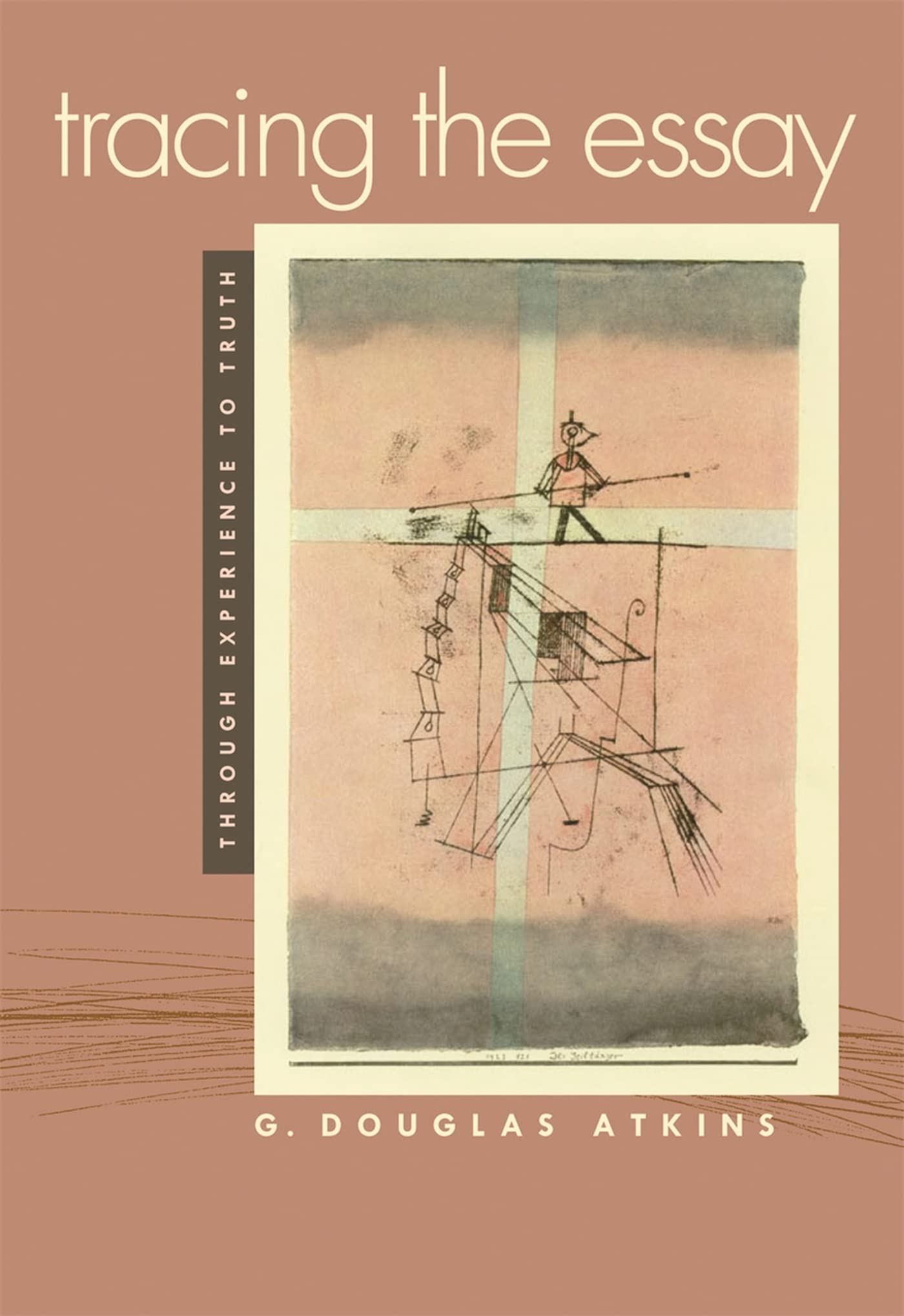
Tracing The Essay: Through Experience To Truth,New
Sold by Ergodebooks, an authorized reseller.
Returns accepted within 30 days | support@ergodebooks.com
Shipping Information
- Free Standard Shipping — United States only
- Processing Time: 3–5 business days
- Estimated Delivery: 6–10 business days after dispatch
- Double-boxed, fully insured & discreetly packaged
- Tracking number sent via email once dispatched
Returns & Refund
Returns accepted within 30 days of delivery.
Damaged or Defective Item
Free return shipping + replacement or full refund
Wrong Item Received
Free return shipping + replacement or full refund
Change of Mind
Return shipping at customer's expense · 25% restocking fee applies
Payment Option

The essay, as a notably hard form of writing to pin down, has inspired some unflattering descriptions: It is a greased pig, for example, or a pair of baggy pants into which nearly anything and everything can fit. In Tracing the Essay, G. Douglas Atkins embraces the very qualities that have moved others to accord the essay secondclass citizenship in the world of letters.Drawing from the work of Montaigne and Bacon and recent practitioners such as E. B. White and Cynthia Ozick, Atkins shows what the essay meansand how it comes to mean. The essay, related to assaying (attempting), mines experience for meaning, which it then carefully weighs. It is a via media creature, says Atkins, born of and embracing tension. It exists in places between experience and meaning, literature and philosophy, self and other, process and product, form and formlessness. Moreover, as a literary form the essay is inseparable from a way of life requiring wisdom, modesty, and honesty. The essay was, historically, notes Atkins, the first form to take the experience of the individual and make it the stuff of literature.Atkins also considers the essays basis in Renaissance (and Reformation) thinking and its participation in voyages of exploration and discovery of that age. Its concern is homecosmography, to use a term from seventeenthcentury writer William Habington. Responding to influential critiques of the essays supposed selfindulgence, lack of irony, and absence of form, Atkins argues that the essay exhibits a certain sneakiness as it proceeds in, through, and by means of the small and the mundane toward the spiritual and the revelatory.
⚠️ WARNING (California Proposition 65):
This product may contain chemicals known to the State of California to cause cancer, birth defects, or other reproductive harm.
For more information, please visit www.P65Warnings.ca.gov.