
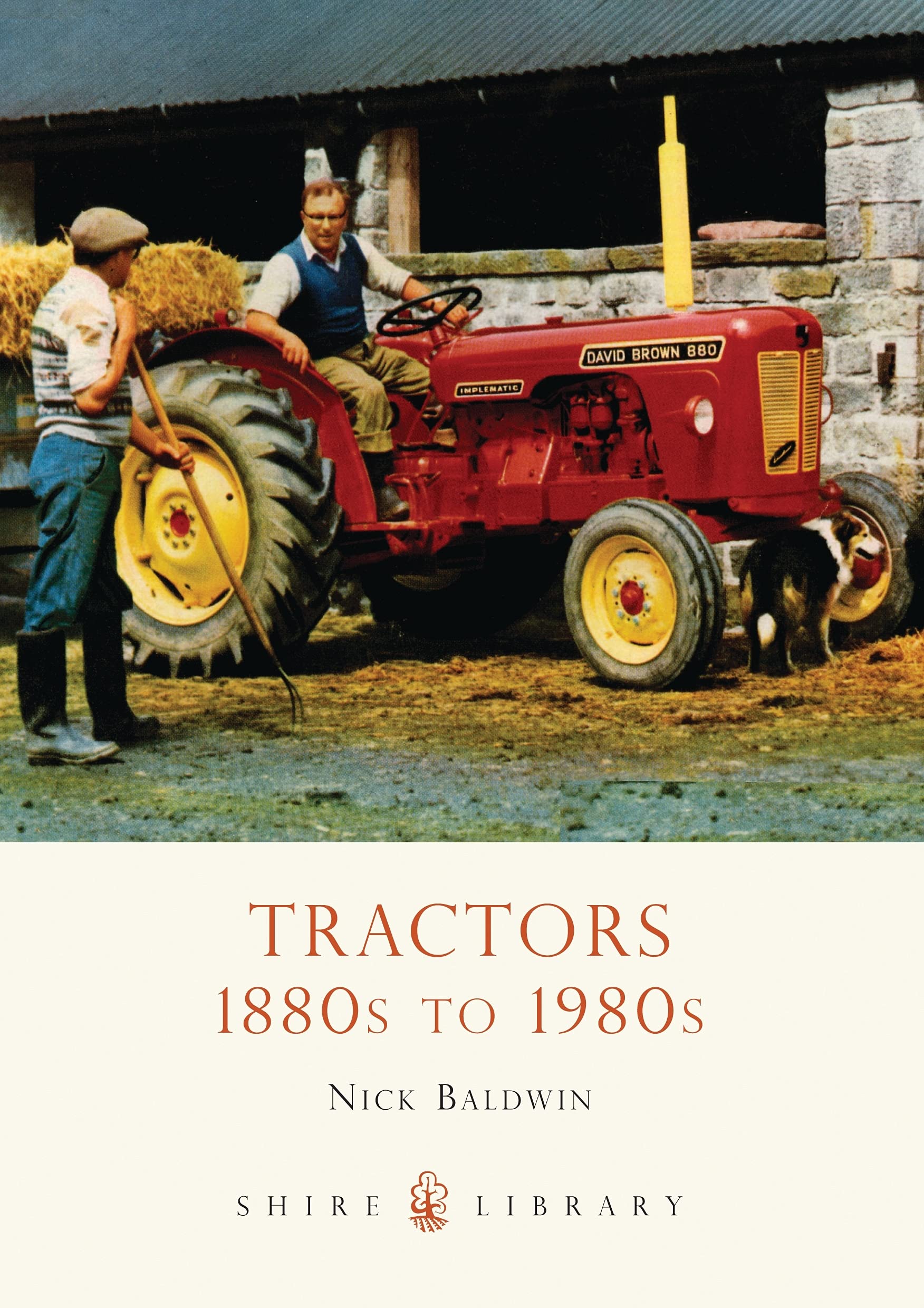
Title
Tractors: 1880S To 1980S (Shire Library)
Sold by Ergodebooks, an authorized reseller.
Returns accepted within 30 days | support@ergodebooks.com
Shipping Information
- Free Standard Shipping — United States only
- Processing Time: 3–5 business days
- Estimated Delivery: 6–10 business days after dispatch
- Double-boxed, fully insured & discreetly packaged
- Tracking number sent via email once dispatched
Returns & Refund
Returns accepted within 30 days of delivery.
Damaged or Defective Item
Free return shipping + replacement or full refund
Wrong Item Received
Free return shipping + replacement or full refund
Change of Mind
Return shipping at customer's expense · 25% restocking fee applies
Payment Option

Of All Motor Vehicles The Farm Tractor Has Proved To Be Among The Most Beneficial. It Has Freed Hundreds Of Thousands Of Laborers And Horses From Backbreaking Toil On The Land In All Weathers And It Has Stabilized The Cost Of Food.Starting With Steam Power In The Middle Of The Nineteenth Century, The Agricultural Tractor Became Motorized In The Early Years Of The Twentieth Century. From Vast Prairie Types, Lighter, Oneman Machines Arrived In Time To Avert Famine In The First World War. Mass Production Followed, Which Brought The Price Of Tractors Within Reach Of The Average Farmer. Meanwhile Tractors Changed From Being Simple Substitutes For Draught Animals To Highly Sophisticated Machines, With Power Takeoffs And Hydraulically Mounted Implements. Pneumatic Tires And Diesel Engines Revolutionized The 1930S Market, After Which Draught Control And Then Inexpensive Fourwheeldrive Made Sure That Fuel And Time Went Into Crop Production Rather Than Wheelspin. This Marked The End Of The Widespread Use Of Tracked Crawlers, As Powerful And Efficient Wheeled Tractors Took Their Place, Incorporating The Latest Multirange Transmission Technology.All The Key Developments And Significant Tractor Makers Are Described In This Book, From The Beginning Of The Tractor'S Development To The 1970S. Illustrated By Period Views Of Machines At Work And In Contemporary Sales Literature, This Is A Nostalgic History Of The Machine That Has Been At The Center Of Agricultural Life Since Before World War Ii.
⚠️ WARNING (California Proposition 65):
This product may contain chemicals known to the State of California to cause cancer, birth defects, or other reproductive harm.
For more information, please visit www.P65Warnings.ca.gov.
- Q: How many pages does the book have? A: This book has sixty-four pages. It provides a concise yet comprehensive overview of tractor history from the 1880s to the 1980s.
- Q: What are the dimensions of the book? A: The book measures five point ninety-six inches in length, zero point twenty-four inches in width, and eight point twenty-seven inches in height. These dimensions make it a convenient size for reading.
- Q: What type of binding does this book have? A: This book is paperback bound. The paperback format is lightweight and easy to handle, making it suitable for casual reading.
- Q: Who is the author of this book? A: The author of this book is Nick Baldwin. He provides insights into the historical development of agricultural tractors.
- Q: What is the main topic of the book? A: The main topic of the book is the evolution of tractors from the 1880s to the 1980s. It discusses significant developments and key manufacturers in the tractor industry.
- Q: Is the book suitable for children? A: Yes, the book is suitable for older children and interested readers. It offers educational content about agricultural history and machinery.
- Q: How can I use this book for research? A: You can use this book as a resource for historical research on agricultural machinery. It contains detailed information on tractor evolution and manufacturers.
- Q: Is this book appropriate for beginners in tractor history? A: Yes, this book is appropriate for beginners. Its straightforward language and structured content make it accessible for readers new to the topic.
- Q: Can I use this book for a school project? A: Yes, this book is an excellent resource for school projects focused on agricultural technology or history. It provides valuable insights and illustrations.
- Q: How should I store this book? A: Store this book in a cool, dry place. Keeping it away from direct sunlight and moisture will help preserve its condition.
- Q: What is the best way to clean this book? A: To clean this book, gently wipe the cover with a soft, damp cloth. Avoid using harsh chemicals that could damage the pages or cover.
- Q: Is this book a good gift for tractor enthusiasts? A: Yes, this book makes a great gift for tractor enthusiasts. It captures the nostalgia of tractor history and includes many illustrations.
- Q: What if the book arrives damaged? A: If the book arrives damaged, you should contact the seller for a return or exchange. Most sellers have policies in place for such situations.
- Q: Does this book have illustrations? A: Yes, this book includes period views of tractors and contemporary sales literature. The illustrations enhance the historical context of the text.
- Q: Can I find this book in libraries? A: Yes, this book is likely available in libraries, especially those with collections on transportation or agricultural history. Check your local library catalog.