
Title
Trade Policy in Multilevel Government: Organizing Openness,Used
Sold by Ergodebooks, an authorized reseller.
Returns accepted within 30 days | support@ergodebooks.com
Shipping Information
- Free Standard Shipping — United States only
- Processing Time: 3–5 business days
- Estimated Delivery: 6–10 business days after dispatch
- Double-boxed, fully insured & discreetly packaged
- Tracking number sent via email once dispatched
Returns & Refund
Returns accepted within 30 days of delivery.
Damaged or Defective Item
Free return shipping + replacement or full refund
Wrong Item Received
Free return shipping + replacement or full refund
Change of Mind
Return shipping at customer's expense · 25% restocking fee applies
Payment Option

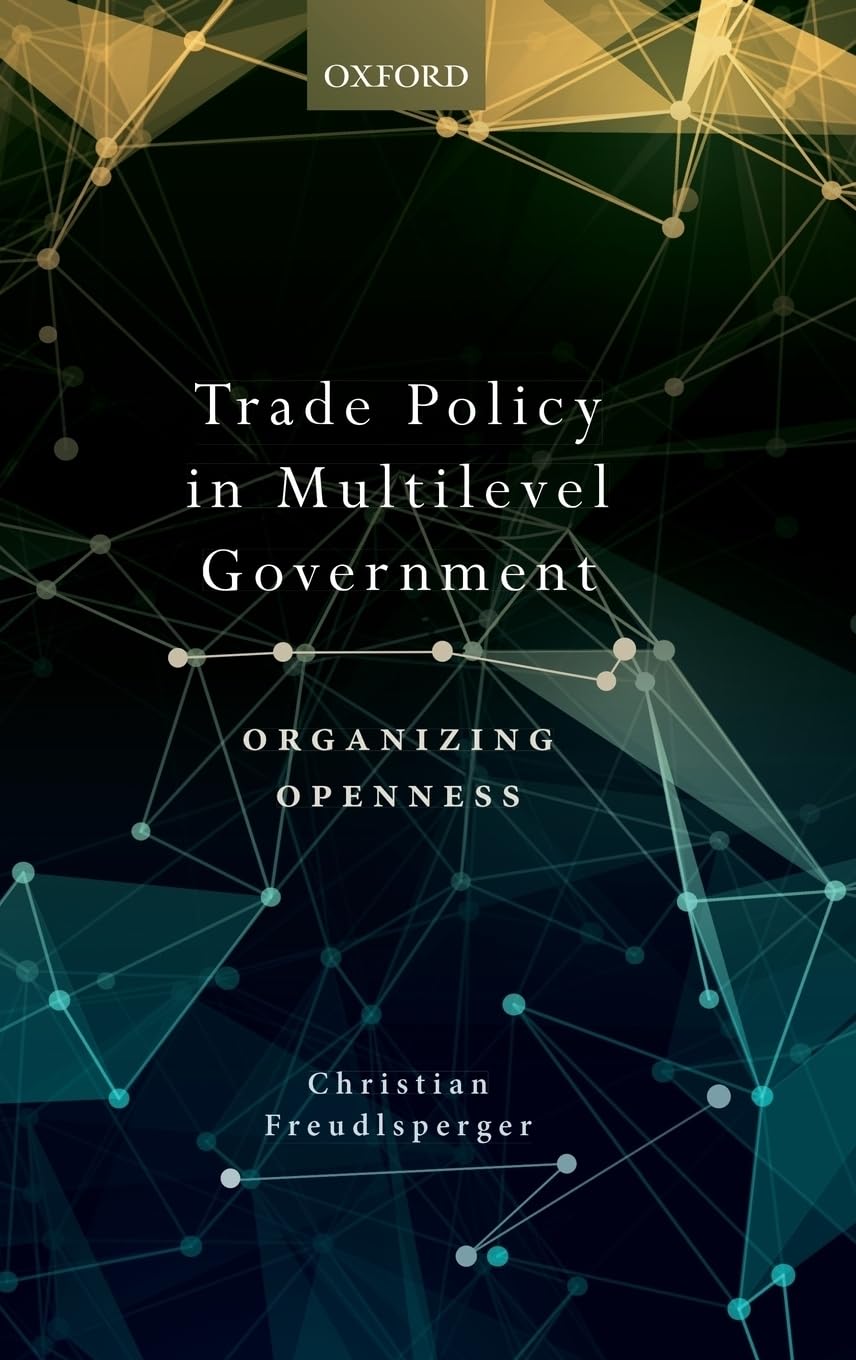
Trade Policy in Multilevel Government investigates how multilevel polities organize openness in a globalizing political and economic environment. In recent years, the multilevel politics of trade caught a broader public's attention, not least due to the Wallonian regional parliament's initial rejection of the EUCanada trade deal in 2016. In all multilevel polities, competencies held by states and regions have increasingly become the subject of international rulesetting. This is particularly so in the field of trade which has progressively targeted socalled 'behind the border' regulatory barriers. In their reaction to this 'deep trade' agenda, constituent units in different multilevel polities have shown widely varying degrees of openness to liberalizing their markets. Why is that? This book argues that domestic institutions and procedures of intergovernmental relations are the decisive factor. Countering a widelyheld belief among practitioners and analysts of trade policy that involving subcentral actors complicates trade negotiations, it demonstrates that the more voice a multilevel polity affords its constituent units in trade policymaking, the less the latter have an incentive to eventually exit from emerging trade deals. While in shared rule systems constituent unit governments are directly represented along the entirety of the policy cycle, in selfrule systems territorial representation is achieved merely indirectly. Shared rule systems are hence more effective than selfrule systems in organizing openness to trade. The book tests its theory's explanatory power on the understudied case of international procurement liberalization in extensive studies of three systems of multilevel government: Canada, the European Union, and the United States.
⚠️ WARNING (California Proposition 65):
This product may contain chemicals known to the State of California to cause cancer, birth defects, or other reproductive harm.
For more information, please visit www.P65Warnings.ca.gov.