
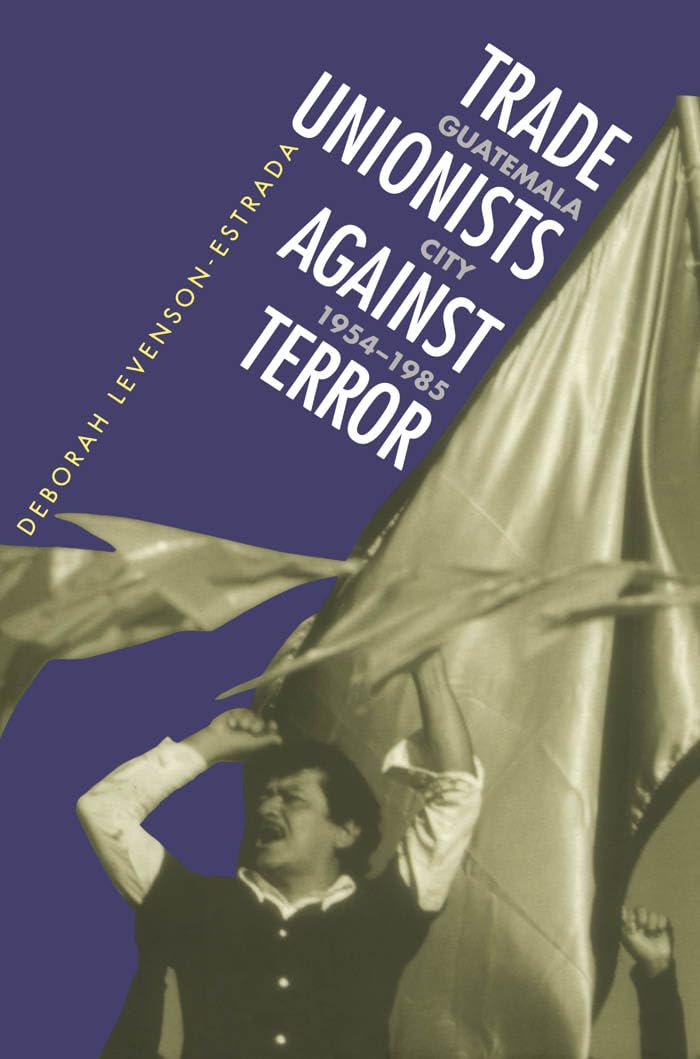
Title
Trade Unionists Against Terror: Guatemala City, 19541985
Sold by Ergodebooks, an authorized reseller.
Returns accepted within 30 days | support@ergodebooks.com
Shipping Information
- Free Standard Shipping — United States only
- Processing Time: 3–5 business days
- Estimated Delivery: 6–10 business days after dispatch
- Double-boxed, fully insured & discreetly packaged
- Tracking number sent via email once dispatched
Returns & Refund
Returns accepted within 30 days of delivery.
Damaged or Defective Item
Free return shipping + replacement or full refund
Wrong Item Received
Free return shipping + replacement or full refund
Change of Mind
Return shipping at customer's expense · 25% restocking fee applies
Payment Option

Deborah Levensonestrada Provides The First Comprehensive Analysis Of How Urban Labor Unions Took Shape In Guatemala Under Conditions Of State Terrorism. In Trade Unionists Against Terror, She Explores How Workers Made Sense Of Their Struggle For Rights In The Face Of Death Squads And Other Forms Of Violent Opposition From The State. Levensonestrada Focuses Especially On The Case Of 400 Workers At The Cocacola Bottling Plant In Guatemala City, Who, In Order To Protect Their Union, Successfully Occupied The Factory For Over A Year Beginning In 1984 While The Country Was Under A State Of Siege. According To Levensonestrada, Religion Provided The Language Of Resistance, And Workers Who Were Engaged In What Seemed To Be A Deadend Battle Constructed An Identity For Themselves As Powerful Agents Of Change. Based On Oral Histories As Well As Documentary Sources, Trade Unionists Against Terror Also Illuminates Complex Relationships Between Urban Popular Culture, Gender, Family, And Workplace Activism In Guatemala.
⚠️ WARNING (California Proposition 65):
This product may contain chemicals known to the State of California to cause cancer, birth defects, or other reproductive harm.
For more information, please visit www.P65Warnings.ca.gov.
- Q: How many pages does the book have? A: The book has three hundred four pages. This length provides a comprehensive exploration of trade unionism in Guatemala.
- Q: What is the binding type of this book? A: The book is paperback bound. This binding is lightweight and flexible, making it easy to handle and read.
- Q: What are the dimensions of the book? A: The book measures five point nine eight inches by nine point zero two inches by zero point seven five inches. These dimensions make it a convenient size for reading.
- Q: What topics does the book cover? A: The book covers urban labor unions, state terrorism, and workplace activism. It specifically focuses on the experiences of workers in Guatemala.
- Q: Who is the author of this book? A: The author is Deborah Levenson-Estrada. She provides a detailed analysis of labor movements in Guatemala.
- Q: Is this book suitable for academic research? A: Yes, this book is suitable for academic research. It is based on oral histories and documentary sources, making it a valuable resource.
- Q: What themes are explored in the book? A: The book explores themes of resistance, identity, and activism. It highlights how workers navigated challenges posed by state violence.
- Q: How can I read this book? A: You can read this book by purchasing it or borrowing it from a library. It is ideal for those interested in labor history.
- Q: Is this book appropriate for young readers? A: No, this book may not be appropriate for young readers. It discusses complex themes of state violence and labor struggles.
- Q: How should I store this book? A: Store this book in a cool, dry place. Keeping it upright on a shelf will help prevent damage to the spine.
- Q: What should I do if the book arrives damaged? A: If the book arrives damaged, contact the retailer for a return or exchange. Most retailers have policies for damaged items.
- Q: Is there a warranty for this book? A: No, there is typically no warranty for books. However, check the retailer’s return policy for options.
- Q: Can I find this book in libraries? A: Yes, you can likely find this book in libraries. Many academic libraries carry titles on labor history.
- Q: How can I keep the book in good condition? A: To keep the book in good condition, avoid exposing it to moisture and direct sunlight. Handle it gently when reading.
- Q: What makes this book unique? A: This book is unique for its in-depth analysis of urban labor unions in Guatemala during a time of state terrorism. It provides rare insights into workers' lives.
- Q: What audience is this book intended for? A: This book is intended for scholars, students, and anyone interested in labor rights and history. It offers valuable insights for those studying social movements.