If you have any questions, you are always welcome to contact us. We'll get back to you as soon as possible, withing 24 hours on weekdays.
Customer service
All questions about your order, return and delivery must be sent to our customer service team by e-mail at yourstore@yourdomain.com
Sale & Press
If you are interested in selling our products, need more information about our brand or wish to make a collaboration, please contact us at press@yourdomain.com
Help
If you have any questions, you are always welcome to contact us. We'll get back to you as soon as possible, withing 24 hours on weekdays.
Customer service
All questions about your order, return and delivery must be sent to our customer service team by e-mail at yourstore@yourdomain.com
Sale & Press
If you are interested in selling our products, need more information about our brand or wish to make a collaboration, please contact us at press@yourdomain.com
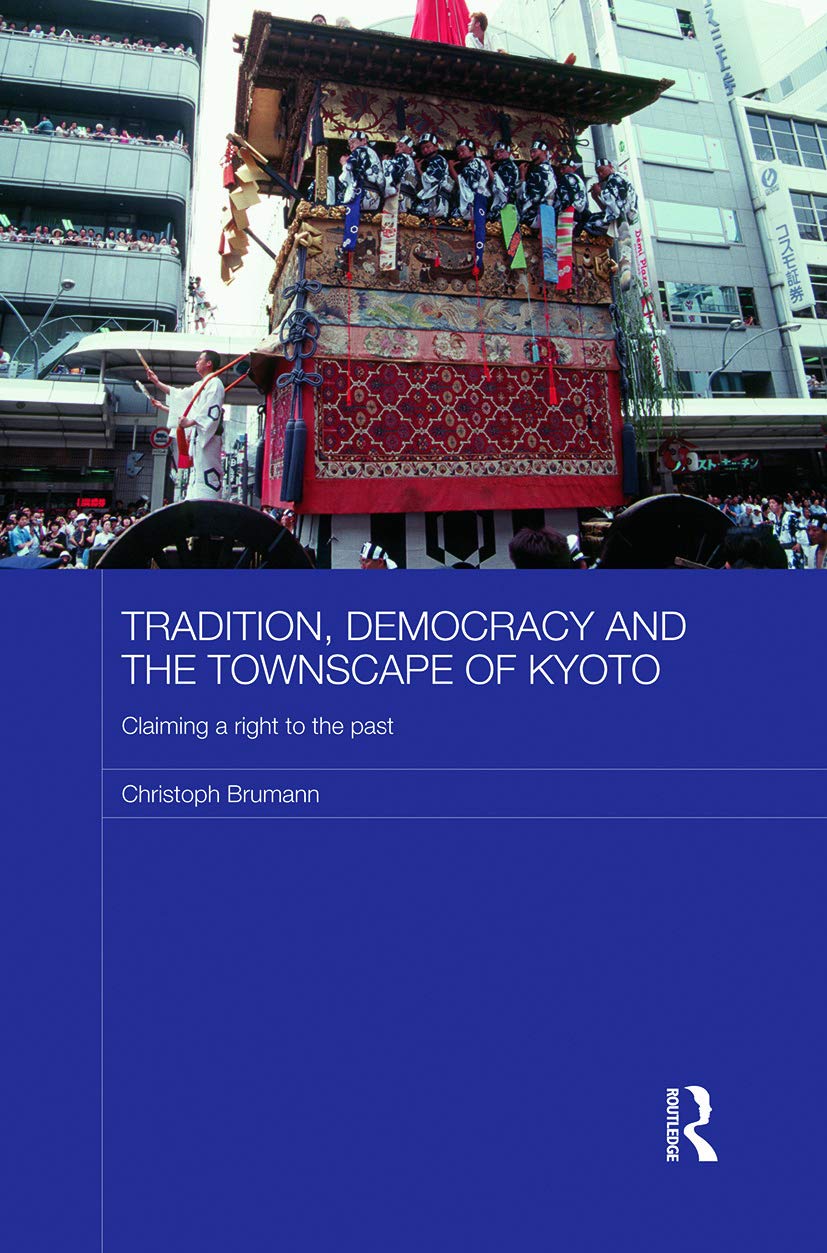
As the historic capital of the country and the stronghold of the nations most celebrated traditions, the city of Kyoto holds a unique place in the Japanese imagination. Widely praised for the beauty of its townscape and natural environments, it is both a popular destination for tourists and home to one and a half million inhabitants. There has been a sustained, lively debate about how best to develop the city, with a large number of local government officials, citizen activists, urban planners, realestate developers, architects, builders, proprietors, academic researchers, and ordinary Kyotoites involved in discussions, forming a highly peculiar social arena that has no match elsewhere in Japan.This book, based on extensive fieldwork and interviews, provides an ethnographic study of this particular social field. It analyses how people in Kyoto deal with their most cherished traditions, such as the traditional town houses and the famous Gion matsuri festival, which calls into question several of the standard social scientific assumptions about the functions of cultural heritage for presentday societies. The book looks at the way concerned citizens, government bureaucrats, and other important players interact with each other over contentious modern buildings, often with the best intentions but constrained by set role expectations and by the superior power of nationallevel regulations and agencies. This book contributes to debates on the social uses of tradition and heritage, and the question of how to create sustainable, liveable urban environments.
⚠️ WARNING (California Proposition 65):
This product may contain chemicals known to the State of California to cause cancer,
birth defects, or other reproductive harm.
For MAP (Minimum Advertised Price) violations and Intellectual Property (IP) or Trademark concerns, please contact:
support@ergodebooks.com
⚠️ California Proposition 65 Warning: Some products sold on this website may expose you to chemicals known to the State of California to cause cancer, birth defects, or other reproductive harm. For more information, visit www.P65Warnings.ca.gov.