
Title
Tradition, Revolution, and Market Economy in a North Vietnamese Village, 19252006,Used
Sold by Ergodebooks, an authorized reseller.
Returns accepted within 30 days | support@ergodebooks.com
Shipping Information
- Free Standard Shipping — United States only
- Processing Time: 3–5 business days
- Estimated Delivery: 6–10 business days after dispatch
- Double-boxed, fully insured & discreetly packaged
- Tracking number sent via email once dispatched
Returns & Refund
Returns accepted within 30 days of delivery.
Damaged or Defective Item
Free return shipping + replacement or full refund
Wrong Item Received
Free return shipping + replacement or full refund
Change of Mind
Return shipping at customer's expense · 25% restocking fee applies
Payment Option

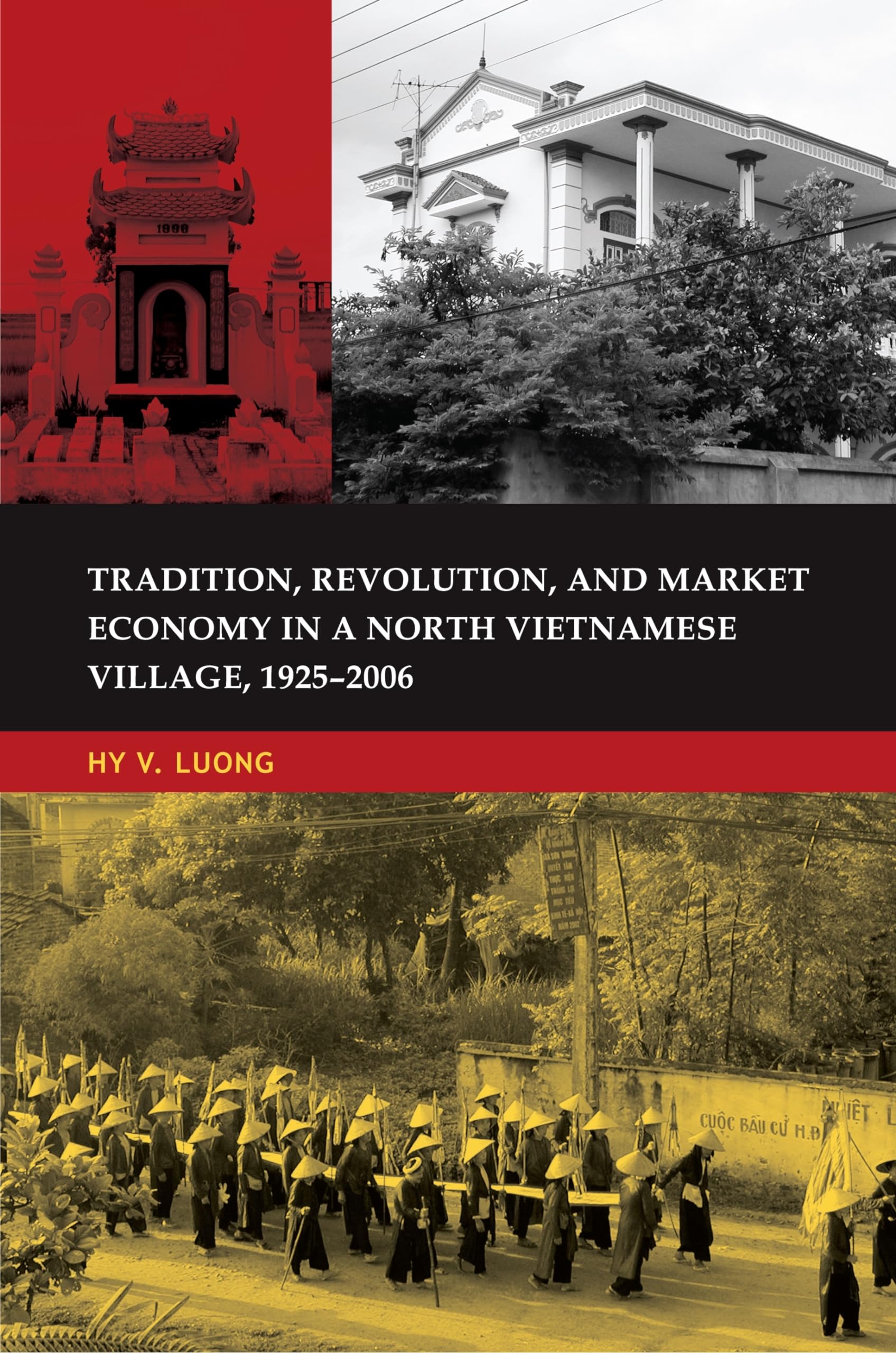
Tradition, Revolution, and Market Economy in a North Vietnamese Village examines both continuity and change over eight decades in a small rural village deep in the North Vietnamese countryside. SonDuong, a community near the Red River, experienced firsthand the ravages of French colonialism and the American war, as well as the socialist revolution and Vietnams recent reintegration into the global market economy. In this revised and expanded edition of his 1992 book, Revolution in the Village, Hy V. Luong draws on newly available archival documents in Hanoi, narratives by villagers, and three field seasons from the late 1980s to 2006. He situates his finely drawn village portrait within the historical framework of the Vietnamese revolution and the recent reforms in Vietnam.The richness of the oral testimony of surviving villagers enables the author to follow them throughout political and economic upheavals, compiling a wealth of original data as they actively restructure their daily lives. In his analysis of the implications of these data for theoretical models of agrarian transformation, Luong argues that local traditions have played a major role in shaping villagers responses to colonialism, socialist policies, and the global market economy. His work, spanning eight decades of sociocultural change, will interest students and scholars of the Vietnamese revolution, agrarian politics, peasant societies, French colonialism, and socialist transformation.
⚠️ WARNING (California Proposition 65):
This product may contain chemicals known to the State of California to cause cancer, birth defects, or other reproductive harm.
For more information, please visit www.P65Warnings.ca.gov.
- Q: What is the main focus of 'Tradition, Revolution, and Market Economy in a North Vietnamese Village, 1925–2006'? A: The book examines the continuity and change in a North Vietnamese village over eight decades, detailing the impacts of French colonialism, the American war, socialist revolution, and Vietnam's integration into the global market economy.
- Q: Who is the author of this book? A: The author is Hy V. Luong, who has expanded on his original work, 'Revolution in the Village', incorporating new archival documents and narratives from villagers.
- Q: What unique perspectives does this book provide? A: It offers rich oral testimonies from surviving villagers, allowing readers to understand their experiences during significant political and economic upheavals.
- Q: What edition of the book is available? A: This is the first edition, revised and expanded, published on December 31, 2009.
- Q: How many pages does the book contain? A: The book contains 312 pages.
- Q: What is the condition of the book? A: The book is listed as 'New'.
- Q: What binding type does this book have? A: The book is available in paperback binding.
- Q: Is this book suitable for academic study? A: Yes, it is particularly useful for students and scholars interested in themes like the Vietnamese revolution, agrarian politics, and the impacts of colonialism.
- Q: What themes are explored in this book? A: The book explores themes of tradition, revolution, and the market economy, and how local traditions influence villagers' responses to various political and economic changes.
- Q: What is the significance of the village Son-Duong in the book? A: Son-Duong serves as a case study to illustrate the broader historical context of Vietnam's sociocultural transformation over eight decades.