
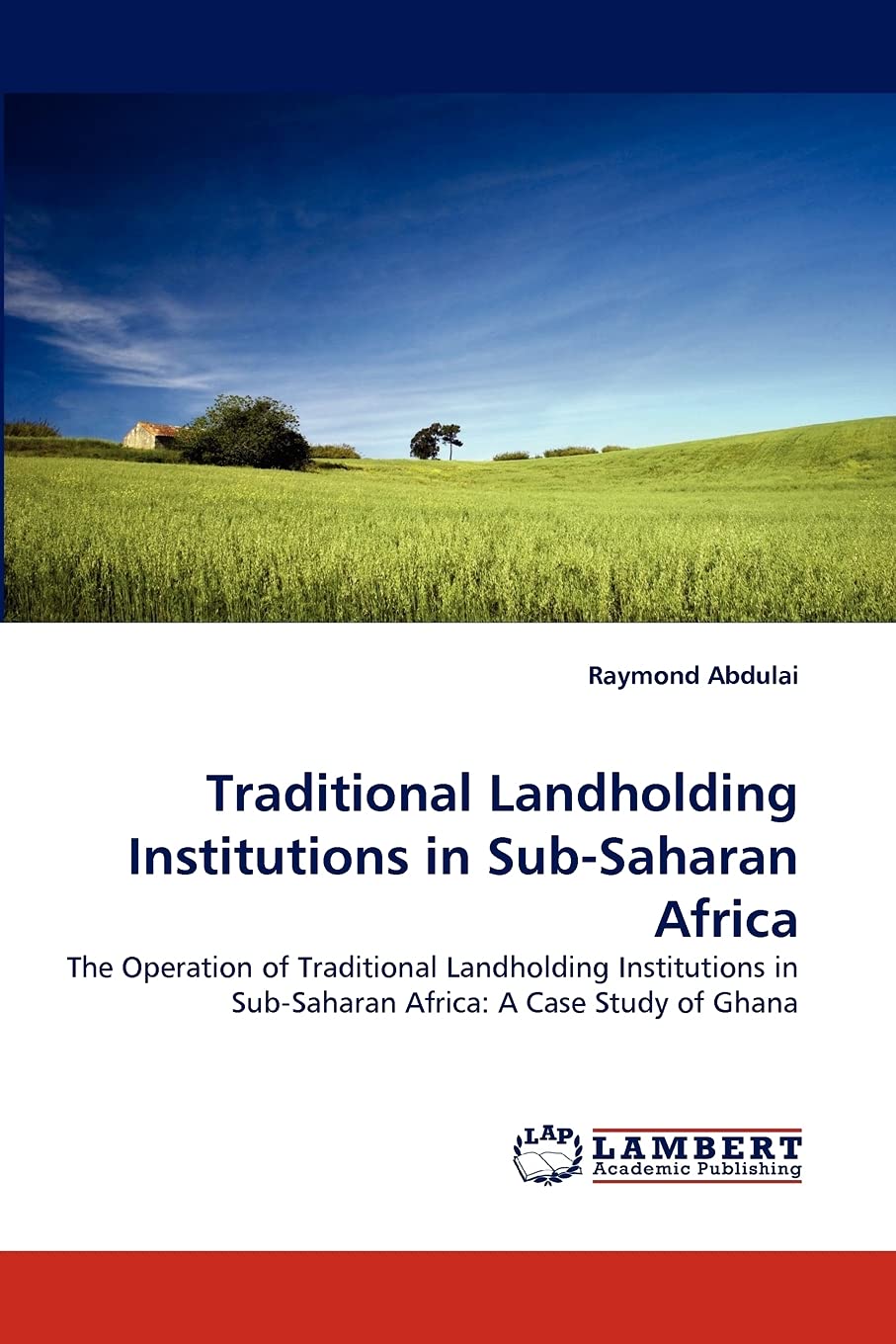
Title
Traditional Landholding Institutions in SubSaharan Africa: The Operation of Traditional Landholding Institutions in SubSaharan,Used
Sold by Ergodebooks, an authorized reseller.
Returns accepted within 30 days | support@ergodebooks.com
Shipping Information
- Free Standard Shipping — United States only
- Processing Time: 3–5 business days
- Estimated Delivery: 6–10 business days after dispatch
- Double-boxed, fully insured & discreetly packaged
- Tracking number sent via email once dispatched
Returns & Refund
Returns accepted within 30 days of delivery.
Damaged or Defective Item
Free return shipping + replacement or full refund
Wrong Item Received
Free return shipping + replacement or full refund
Change of Mind
Return shipping at customer's expense · 25% restocking fee applies
Payment Option

This book empirically investigates the common perceptions about traditional land (land vested in communities represented by families and chiefs) in subSaharan Africa that it is: communally owned and does not permit individual ownership; insecure as traditional land rights are not registered; and considered as deities that cannot be traded. The book has originated from two research projects undertaken by the author during his doctoral programme (2004 2007) and postdoctoral study (2009) at Wolverhampton and Liverpool John Moores Universities in the UK respectively. The qualitative research methodology was adopted for the research projects. The key findings are that: traditional landholding is dual with communal and individual ownership; there is a separation between land as property and deities; land rights can be secure whether registered or not and registered land can be contested and lost via civil litigation; and land registration does not guarantee access to formal credit. Based on these findings, the necessary recommendations have been proposed.
⚠️ WARNING (California Proposition 65):
This product may contain chemicals known to the State of California to cause cancer, birth defects, or other reproductive harm.
For more information, please visit www.P65Warnings.ca.gov.