If you have any questions, you are always welcome to contact us. We'll get back to you as soon as possible, withing 24 hours on weekdays.
Customer service
All questions about your order, return and delivery must be sent to our customer service team by e-mail at yourstore@yourdomain.com
Sale & Press
If you are interested in selling our products, need more information about our brand or wish to make a collaboration, please contact us at press@yourdomain.com
Help
If you have any questions, you are always welcome to contact us. We'll get back to you as soon as possible, withing 24 hours on weekdays.
Customer service
All questions about your order, return and delivery must be sent to our customer service team by e-mail at yourstore@yourdomain.com
Sale & Press
If you are interested in selling our products, need more information about our brand or wish to make a collaboration, please contact us at press@yourdomain.com
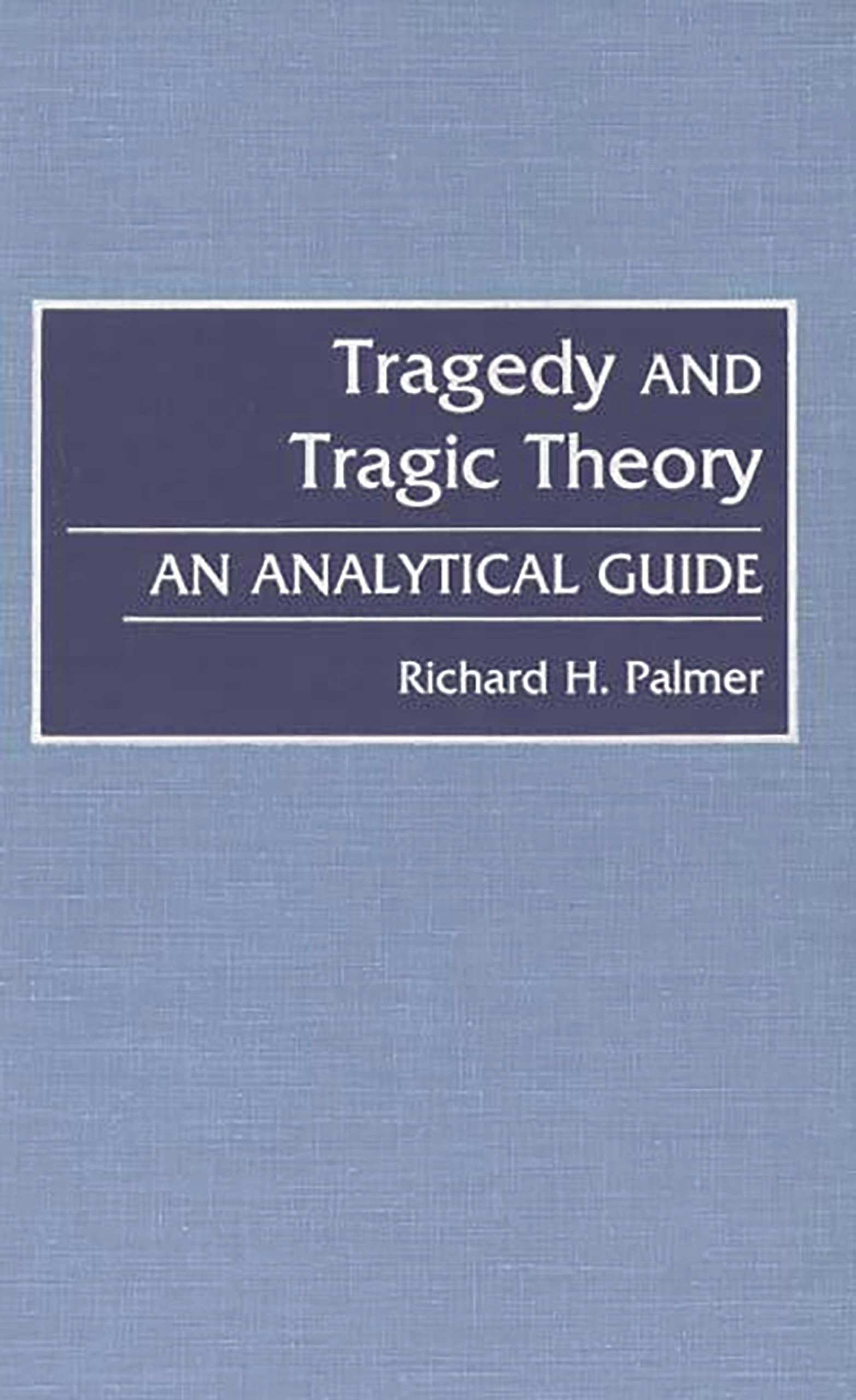
Comprehending tragedy has been a major philosophical and critical preoccupation in Western thought. Whether concerned with the generic problem of definition or with tragedy in the context of specific writers or periods, books with multiple and often conflicting perspectives abound. In an effort to bring order to the explanations over two millennia, Tragedy and Tragic Theory lucidly analyzes the principal ideas about tragedy from Plato to the present.Critically surveying the similarities and differences among major theories, Palmer analyzes features associated with tragedy, such as the tragic hero, katharsis, and selfrecognition; develops a working definition of tragedy; and applies these ideas to a sampling of plays that present special interpretive problems. He incorporates and explores the ideas of such eminent thinkers as Aristotle, Hegel, Nietzche, Schopenhauer, Schiller, Kierkegaard, and Freud, as well as contemporary theorists, who also appear with biographical blurbs in an appendix to the volume along with an extensive bibliography. By examining both tragedy and the theoretical responses to tragedy, this study demonstrates that the definition of tragedy depends on the meaning perceived by an audience rather than on a structured stimulus independent of response; yet, it does not abandon the possibility of isolating fixed defining characteristics. The audience response approach provides a framework for analyzing earlier theories. Systematically developed, the study is equally valuable as a text in drama and criticism or as a convenient reference tool to drama theory and theorists.
⚠️ WARNING (California Proposition 65):
This product may contain chemicals known to the State of California to cause cancer,
birth defects, or other reproductive harm.
For MAP (Minimum Advertised Price) violations and Intellectual Property (IP) or Trademark concerns, please contact:
support@ergodebooks.com
⚠️ California Proposition 65 Warning: Some products sold on this website may expose you to chemicals known to the State of California to cause cancer, birth defects, or other reproductive harm. For more information, visit www.P65Warnings.ca.gov.