
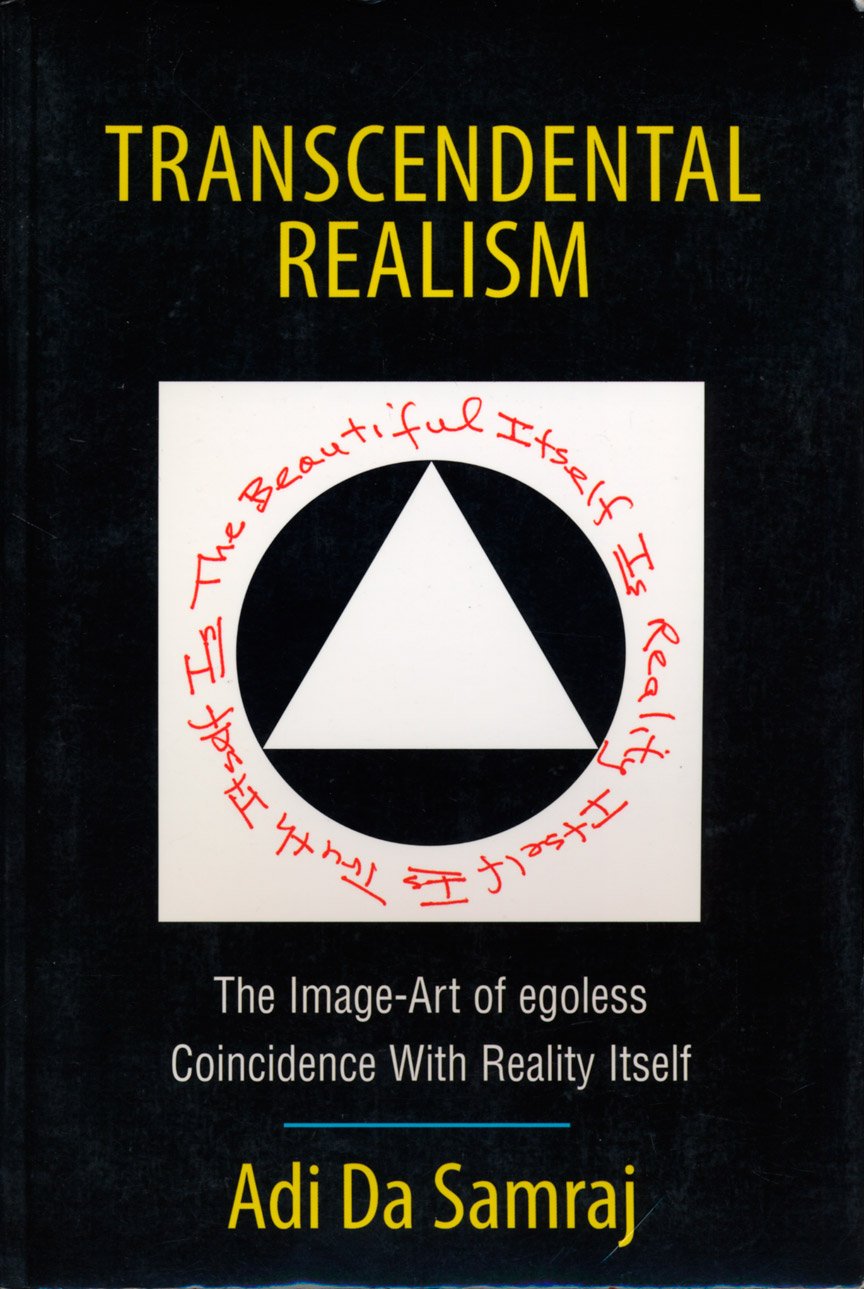
Title
Transcendental Realism: The Imageart Of Egoless Coincidence With Reality Itself
Sold by Ergodebooks, an authorized reseller.
Returns accepted within 30 days | support@ergodebooks.com
Shipping Information
- Free Standard Shipping — United States only
- Processing Time: 3–5 business days
- Estimated Delivery: 6–10 business days after dispatch
- Double-boxed, fully insured & discreetly packaged
- Tracking number sent via email once dispatched
Returns & Refund
Returns accepted within 30 days of delivery.
Damaged or Defective Item
Free return shipping + replacement or full refund
Wrong Item Received
Free return shipping + replacement or full refund
Change of Mind
Return shipping at customer's expense · 25% restocking fee applies
Payment Option

Product Descriptionadi Da Samraj'S Collateral Exhibition At The 52Nd Biennale Di Venezia (2007), Transcendental Realism, Marks The First Time His Work Is Being Shown To The Public. The Commentary He Offers In These Twelve Essays Can Help The Reader To Appreciate The Astonishing Scope And Purpose Of His Art, And To Understand The Place It Holds In The Tradition Of Art Altogether.Erik Van Erp Writes In The Introduction: Art Speaks For Itself, In Silence. Yet, Some Words Can Be Spoken To Assist Its Reception. In The Text You Have Before You, Transcendental Realism, The Artist, Adi Da Samraj, Speaks Of His Art, His Purposes, And The Unique Artistic Discipline By Which Those Purposes Are Realized. ...Adi Da Crafts His Writings With The Same Serious Intent And Meticulous Discipline With Which He Makes His Images. More Than A Verbal Explanation Of What His Art Is Really All About, This Body Of Words, Much Like Adi Da'S Art Itself, Is A Transformational Environment. If You Have Seen Adi Da'S Art, And Wonder What Or Who It Was That Moved You, A Careful Consideration Of This Text Will Serve To Integrate The Immediacy Of The Aesthetic Experience Into A Transformed Understanding Of Adi Da'S Art, Of Art Altogether, And Of The Most Profound Dimensions Of Human Experience. ...On The Cover Of The Book Is Printed A Circular Wordimage, Reality Itself Is Truth Itself Is The Beautiful Itself. This, At Once, Defines The Circle Of Essential Meaning In Which The Text Moves. It Is A Circle That Encompasses Plato, The Upanishads, And The Alchemical Experiments Of Gertrude Stein. It Is A Circle In Which Antiquity Meets Modernism A Circle That Freely Embraces All Serious Achievements Of Human Civilization And Culture. There Is No Irony Here, No Postmodern Tongueincheek. In Transcendental Realism, Adi Da Announces His Serious Intent To Renew The Modernist Program, And He Is Not Going To Settle For Less Than The Traditionally Required Measure Of Art As Reality, Truth, The Beautiful, Realized As An Indivisible Unity.Adi Da Always Returns The Reader To The Unity Of Being, No Matter What The Topic Under Consideration.ReviewIt Is A Rare Artist Who Can Convey, Convincingly, The Sense Of Being Face To Face With The Source Of Being. Adi Da Can Clearly Live In The Depths Without Succumbing To Their Pressure, Bringing Back Pearls Of Art To Prove It. Donald Kuspit, Critic, Professor Of Art History And Philosophy, State University Of New York At Stony Brookabout The Authorfrom His Birth (On Long Island, New York, In 1939), Adi Da Samraj Has Always Manifested Unique Signs Of Spiritual Illumination And Of Artistic And Literary Inspiration. Nevertheless, From His Birth, And Until His Spiritual Restoration At Thirty Years Of Age, Adi Da Samraj Submitted Himself To An Ordeal Of Selfidentification With All The Limitations And Sufferings Of The Human Condition. Adi Da Samraj Describes His Early Years As Being Focused In Two Fundamental Activities: Investigating How (In The Scale Of Human Ordinariness) To Perfectly Realize The Truth Of Reality Itself, And Achieving The Ability To Communicate The Truth Of Reality Itself Through Artistic Means (Both Visual And Literary).Adi Da Samraj Graduated From Columbia University In 1961, With A Ba In Philosophy, And From Stanford University In 1966, With An Ma In English Literature. His Master'S Thesis, A Study Of Core Issues In Modernism, Focused On The Literary Experiments Of Gertrude Stein And On The Modernist Painters Of The Same Period.In 1964, Adi Da Samraj Began A Period Of Intensive Practice Under A Succession Of Spiritual Masters In The United States And India. Eventually, In 1970, After A Final Period Of Intense Spiritual Endeavor, Adi Da Samraj Spontaneously Became Reestablished In The Continuous State Of Illumination That Was His Unique Condition At Birthand That Reawakening Signaled The End Of His Thirty Years Of Spiritual Quest.In 1972, Adi Da Samraj Began To Teach, Cr
⚠️ WARNING (California Proposition 65):
This product may contain chemicals known to the State of California to cause cancer, birth defects, or other reproductive harm.
For more information, please visit www.P65Warnings.ca.gov.
- Q: How many pages does this book have? A: This book has one hundred four pages. It provides a comprehensive exploration of Adi Da Samraj's artistic philosophy.
- Q: What is the binding type of this book? A: This book is paperback bound. It offers flexibility and ease of handling for readers.
- Q: What are the dimensions of the book? A: The book measures six point zero two inches in length, zero point two eight inches in width, and nine point zero six inches in height. These dimensions make it portable for readers.
- Q: How should I read this book for best understanding? A: To fully appreciate the themes, read it slowly and reflectively. Engage with the essays to understand Adi Da's artistic intentions.
- Q: Is this book suitable for beginners in art theory? A: Yes, this book is suitable for beginners. It introduces complex concepts in a digestible manner through Adi Da's accessible writing.
- Q: Can this book be used for academic studies? A: Yes, this book can be utilized for academic studies. It offers insights into art philosophy and the modernist tradition.
- Q: How do I keep this book in good condition? A: To maintain its condition, store it in a dry, cool place and avoid exposure to direct sunlight. Handle it with care to prevent wear and tear.
- Q: Is this book safe to handle and read? A: Yes, this book is safe to handle and read. There are no hazardous materials used in its production.
- Q: What should I do if the book arrives damaged? A: If the book arrives damaged, contact the seller for a return or exchange. Ensure you keep the original packaging for the return process.
- Q: How can I best compare this book to other art theory texts? A: To compare effectively, consider themes, the author's perspective, and the depth of analysis. This book offers a unique viewpoint not commonly found in other texts.
- Q: Is this book appropriate for children? A: No, this book is not specifically designed for children. It discusses complex philosophical concepts that may not be suitable for younger audiences.
- Q: Does the book include illustrations or images? A: No, this book does not include illustrations or images. It focuses on textual analysis of Adi Da's art and philosophy.
- Q: Can I lend this book to a friend? A: Yes, you can lend this book to a friend. Just ensure they handle it with care to maintain its condition.
- Q: What genre does this book belong to? A: This book belongs to the genre of art theory and philosophy. It explores the intersections of art, truth, and beauty.
- Q: Is there a glossary or index in the book? A: No, this book does not include a glossary or index. Readers are encouraged to engage directly with the essays for context.