
Title
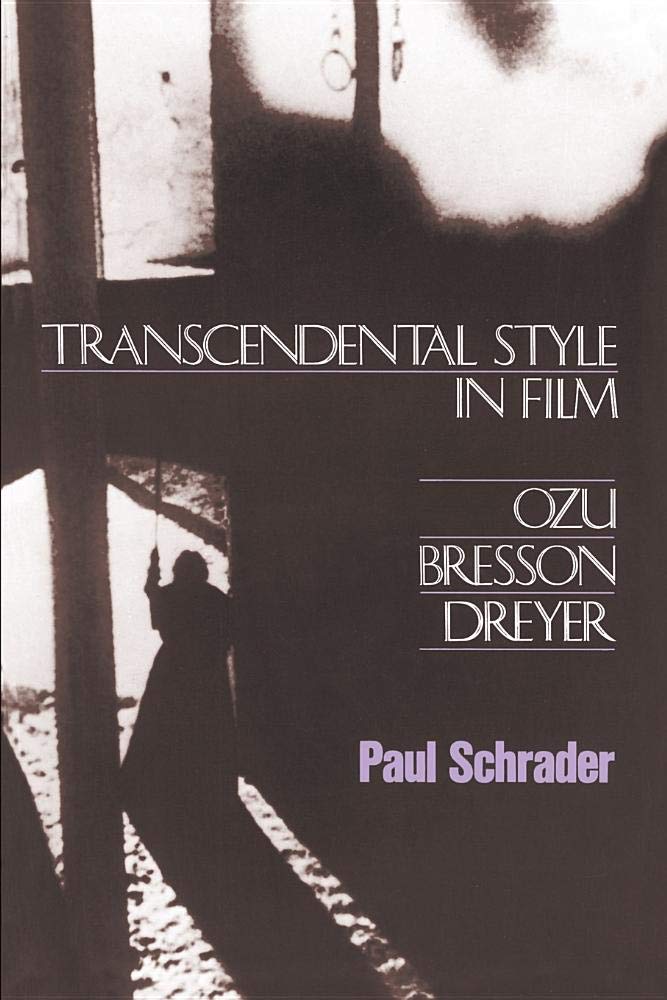
Transcendental Style In Film,Used
Sold by Ergodebooks, an authorized reseller.
Returns accepted within 30 days | support@ergodebooks.com
Shipping Information
- Free Standard Shipping — United States only
- Processing Time: 3–5 business days
- Estimated Delivery: 6–10 business days after dispatch
- Double-boxed, fully insured & discreetly packaged
- Tracking number sent via email once dispatched
Returns & Refund
Returns accepted within 30 days of delivery.
Damaged or Defective Item
Free return shipping + replacement or full refund
Wrong Item Received
Free return shipping + replacement or full refund
Change of Mind
Return shipping at customer's expense · 25% restocking fee applies
Payment Option

The acclaimed director of Mishima, American Gigolo, Hard Core, Blue Collar, Cat People also the screenwriter for Taxi Driver, Paul Schrader here analyzes the film style of three great directorsYasajiro Ozu, Robert Bresson, Carl Dreyerand posits a common dramatic language by these artists from divergent cultures. Unlike the style of psychological realism, which dominates film, the transcendental style expresses a spiritual state with austere camerawork, acting devoid of selfconsciousness, and editing that avoids editorial comment. This important book is an original contribution to film analysis and a key work by one of our most searching directors and writers.
⚠️ WARNING (California Proposition 65):
This product may contain chemicals known to the State of California to cause cancer, birth defects, or other reproductive harm.
For more information, please visit www.P65Warnings.ca.gov.
- Q: What is the genre of 'Transcendental Style In Film'? A: The genre is Performing Arts. This book delves into film analysis and explores unique directorial styles.
- Q: Who is the author of this book? A: The author is Paul Schrader. He is a renowned director and screenwriter known for his insightful contributions to film.
- Q: How many pages does 'Transcendental Style In Film' have? A: The book has one hundred ninety-four pages. This length allows for an in-depth exploration of film styles.
- Q: What type of binding does this book have? A: The book is available in paperback binding. This makes it lightweight and easy to handle.
- Q: What are the dimensions of this book? A: The dimensions are six inches in length, zero point twenty-five inches in width, and nine point zero two inches in height. These measurements make it a convenient size for reading.
- Q: Is this book suitable for film students? A: Yes, this book is suitable for film students. It provides valuable insights into the styles of influential directors.
- Q: How does 'Transcendental Style In Film' explore its themes? A: The book analyzes the film styles of Yasujirō Ozu, Robert Bresson, and Carl Dreyer. It posits a common dramatic language shared by these diverse filmmakers.
- Q: Can beginners understand the concepts in this book? A: Yes, beginners can understand the concepts. Paul Schrader presents complex ideas in an accessible manner, making it suitable for all readers.
- Q: What is the main focus of this book? A: The main focus is the transcendental style in film. It contrasts this style with psychological realism, emphasizing its unique characteristics.
- Q: How should I care for this book? A: To care for this book, keep it in a dry place and avoid exposing it to direct sunlight. This will help maintain its condition.
- Q: Is there a warranty or return policy for this book? A: Yes, there is a return policy. You can return the book within a specified period if it is in new condition.
- Q: What if the book arrives damaged? A: If the book arrives damaged, you should contact customer service for a replacement. They will guide you through the return process.
- Q: How should I store this book? A: Store the book upright on a shelf to prevent bending. This will help preserve its spine and pages.
- Q: Is this book appropriate for a general audience? A: Yes, this book is appropriate for a general audience. It offers insights that can benefit anyone interested in film.
- Q: Can I use this book for research purposes? A: Yes, you can use this book for research purposes. It provides a critical analysis of film styles that can enhance academic work.