If you have any questions, you are always welcome to contact us. We'll get back to you as soon as possible, withing 24 hours on weekdays.
Customer service
All questions about your order, return and delivery must be sent to our customer service team by e-mail at yourstore@yourdomain.com
Sale & Press
If you are interested in selling our products, need more information about our brand or wish to make a collaboration, please contact us at press@yourdomain.com
Help
If you have any questions, you are always welcome to contact us. We'll get back to you as soon as possible, withing 24 hours on weekdays.
Customer service
All questions about your order, return and delivery must be sent to our customer service team by e-mail at yourstore@yourdomain.com
Sale & Press
If you are interested in selling our products, need more information about our brand or wish to make a collaboration, please contact us at press@yourdomain.com
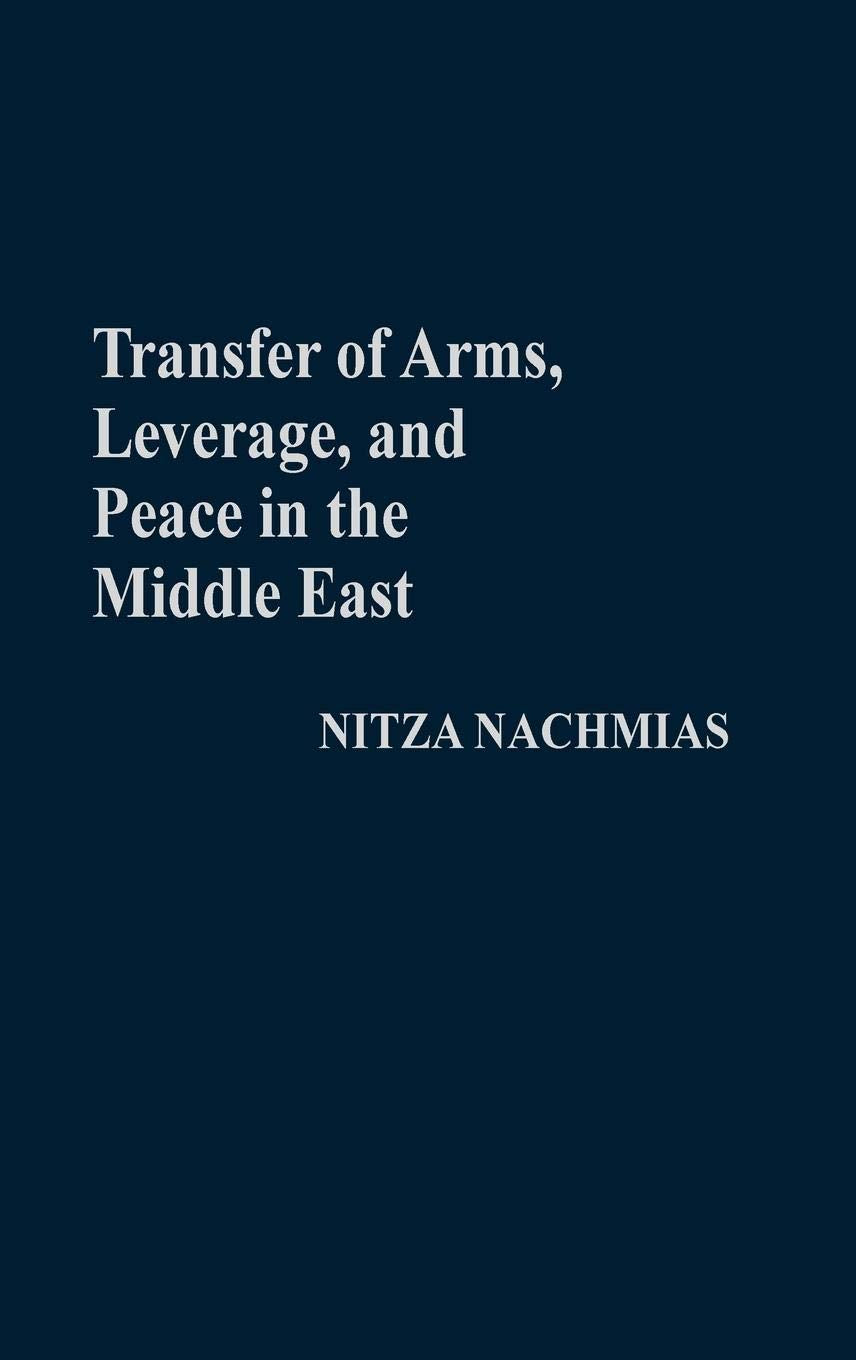
Although Israel has been primarily dependent on U.S. arms for its national security since 1968, supplying military aid has not conferred the degree of policy leverage anticipated by the United States. This study is the first to analyze the reasons why the tactics of transferring or withholding arms have failed to achieve U.S. foreign policy goals in the Middle East. Providing a thorough, uptodate reexamination of the U.S.Israeli relationship, Nachmias gives a comprehensive account of U.S. Middle East policy from 1968 to 1988 and explores the international and regional dilemmas that have undercut U.S. policy initiatives for peace.Nachmias argues that the use of military aid to achieve foreign policy goals ignores the regional conditions that control Middle East politics and does little to advance the peace process or enhance U.S. power in the region. To promote these objectives, she suggests alternative approaches, including the creation of a coherent and consistent U.S. policy for the region and a stronger and more innovative diplomatic role. One of the few analyses to consider international policy questions in terms of leverage between client and patron states, Nachmias's work significantly enlarges our understanding of the complex forces that will continue to shape the Middle East situation in the coming decades. Her book will be a valuable resource for scholars, officials, and students specializing in U.S. politics and foreign policy and Middle East studies.
⚠️ WARNING (California Proposition 65):
This product may contain chemicals known to the State of California to cause cancer,
birth defects, or other reproductive harm.
For MAP (Minimum Advertised Price) violations and Intellectual Property (IP) or Trademark concerns, please contact:
support@ergodebooks.com
⚠️ California Proposition 65 Warning: Some products sold on this website may expose you to chemicals known to the State of California to cause cancer, birth defects, or other reproductive harm. For more information, visit www.P65Warnings.ca.gov.