If you have any questions, you are always welcome to contact us. We'll get back to you as soon as possible, withing 24 hours on weekdays.
Customer service
All questions about your order, return and delivery must be sent to our customer service team by e-mail at yourstore@yourdomain.com
Sale & Press
If you are interested in selling our products, need more information about our brand or wish to make a collaboration, please contact us at press@yourdomain.com
Help
If you have any questions, you are always welcome to contact us. We'll get back to you as soon as possible, withing 24 hours on weekdays.
Customer service
All questions about your order, return and delivery must be sent to our customer service team by e-mail at yourstore@yourdomain.com
Sale & Press
If you are interested in selling our products, need more information about our brand or wish to make a collaboration, please contact us at press@yourdomain.com
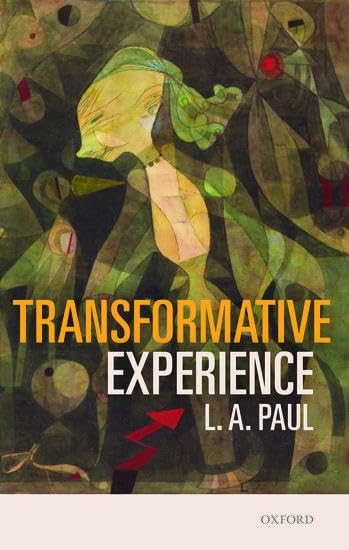
As we live our lives, we repeatedly make decisions that shape our future circumstances and affect the sort of person we will be. When choosing whether to start a family, or deciding on a career, we often think we can assess the options by imagining what different experiences would be like for us. L. A. Paul argues that, for choices involving dramatically new experiences, we are confronted by the brute fact that we can know very little about our subjective futures. This has serious implications for our decisions. If we make life choices in the way we naturally and intuitively want toby considering what we care about, and what our future selves will be like if we choose to have the experiencewe only learn what we really need to know after we have already committed ourselves. If we try to escape the dilemma by avoiding an experience, we have still made a choice.Choosing rationally, then, may require us to regard big life decisions as choices to make discoveries, small and large, about the intrinsic nature of experience, and to recognize that part of the value of living authentically is to experience one's life and preferences in whatever way they may evolve in the wake of the choices one makes.Using classic philosophical examples about the nature of consciousness, and drawing on recent work in normative decision theory, cognitive science, epistemology, and the philosophy of mind, Paul develops a rigorous account of transformative experience that sheds light on how we should understand realworld experience and our capacity to rationally map our subjective futures.
⚠️ WARNING (California Proposition 65):
This product may contain chemicals known to the State of California to cause cancer,
birth defects, or other reproductive harm.
For MAP (Minimum Advertised Price) violations and Intellectual Property (IP) or Trademark concerns, please contact:
support@ergodebooks.com
⚠️ California Proposition 65 Warning: Some products sold on this website may expose you to chemicals known to the State of California to cause cancer, birth defects, or other reproductive harm. For more information, visit www.P65Warnings.ca.gov.