
Title
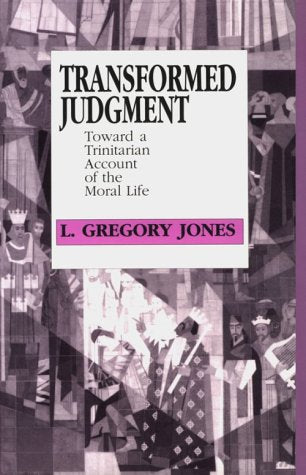
Transformed Judgement: Toward a Trinitarian Account of the Moral Life,Used
Sold by Ergodebooks, an authorized reseller.
Returns accepted within 30 days | support@ergodebooks.com
Shipping Information
- Free Standard Shipping — United States only
- Processing Time: 3–5 business days
- Estimated Delivery: 6–10 business days after dispatch
- Double-boxed, fully insured & discreetly packaged
- Tracking number sent via email once dispatched
Returns & Refund
Returns accepted within 30 days of delivery.
Damaged or Defective Item
Free return shipping + replacement or full refund
Wrong Item Received
Free return shipping + replacement or full refund
Change of Mind
Return shipping at customer's expense · 25% restocking fee applies
Payment Option

Over the past couple decades prominent philosophers and theologians have returned the virtues to a significant place in moral reflection. Transformed Judgment contributes to the growing literature by arguing that the most coherent account of moral judgment is one grounded in, and lived in the presence of, the Triune God. L. Gregory Jones suggests that while there has been considerable discussion of the virtues and the activity of moral judgment, the discussion has tended to neglect the importance of friendship and the ways in which people learn to acquire and exercise the virtues in making wise moral judgments. The Christian tradition's claim that human beings are to live in relation to the mystery of the Triune God provides a distinctive understanding of friendship, the virtues, and moral judgment, claims Jones. Drawing on the thought of Thomas Aquinas, he develops his claim that the primary friendship a person should have is with the God who has befriended humanity in Jesus Christ; such friendship calls forth a life of transformative discipleship in friendship with others. Jones criticizes recent exponents of the virtues such as Martha Nussbaum, Edmund Pincoffs, and Stanley Hauerwas for failing to adequately recognize the difference theological claims make for ethics and moral judgment. He argues that an adequate understanding of how the virtues are acquired and character is formed reveals that theological claims about such matters as God, the world, and life and death make a decisive difference in moral judgment. Drawing on a wide range of literature from the philosophy of language and moral philosophy to theology and theological ethics, Jones establishes why it iscrucial to attend to not only the formation of moral judgments, but also to transformation in moral judgment.About the L. Gregory Jones is Dean and Professor of Theology at Duke Divinity School in Durham, NC
⚠️ WARNING (California Proposition 65):
This product may contain chemicals known to the State of California to cause cancer, birth defects, or other reproductive harm.
For more information, please visit www.P65Warnings.ca.gov.