
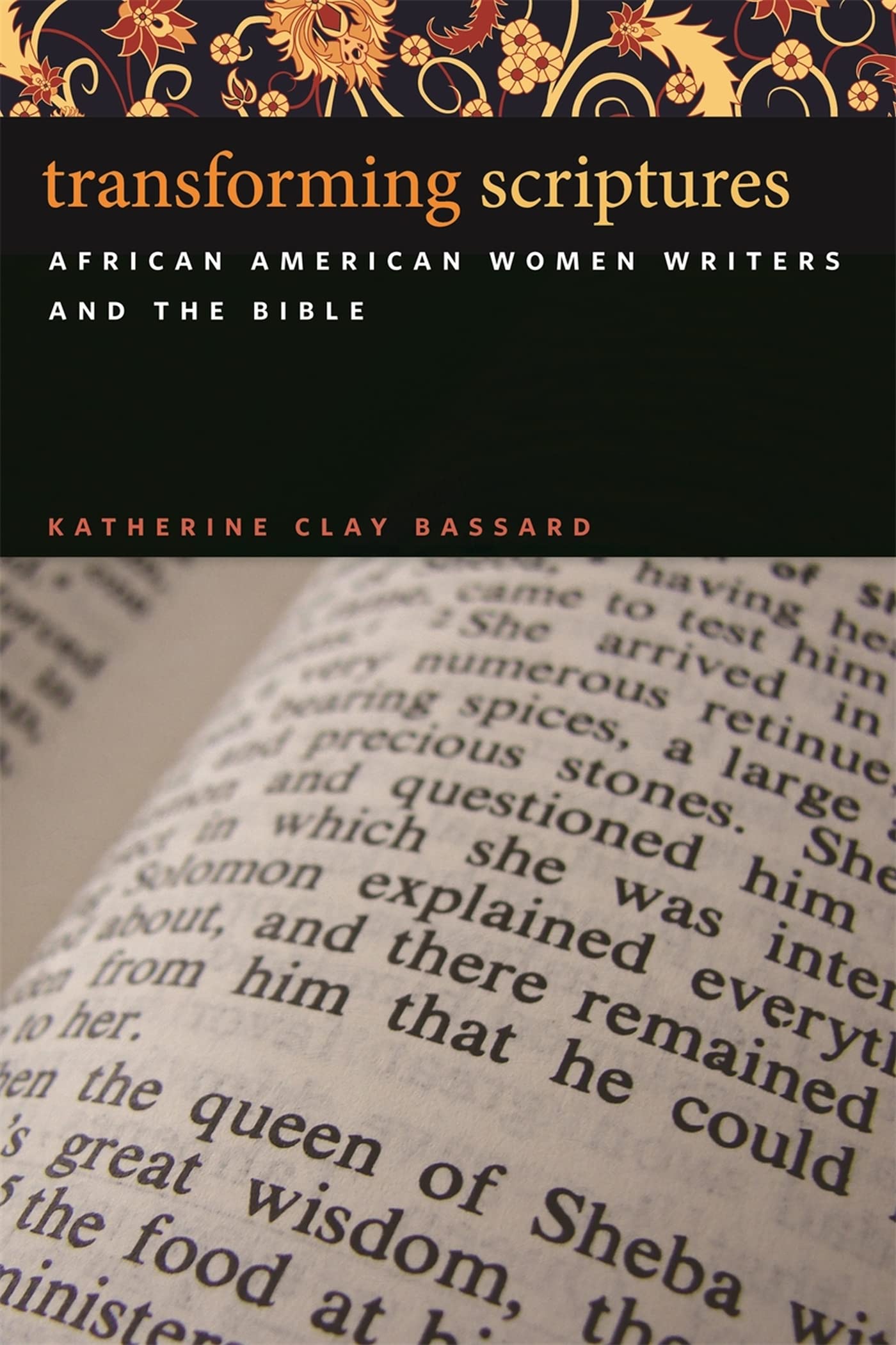
Title
Transforming Scriptures: African American Women Writers And The Bible,Used
Sold by Ergodebooks, an authorized reseller.
Returns accepted within 30 days | support@ergodebooks.com
Shipping Information
- Free Standard Shipping — United States only
- Processing Time: 3–5 business days
- Estimated Delivery: 6–10 business days after dispatch
- Double-boxed, fully insured & discreetly packaged
- Tracking number sent via email once dispatched
Returns & Refund
Returns accepted within 30 days of delivery.
Damaged or Defective Item
Free return shipping + replacement or full refund
Wrong Item Received
Free return shipping + replacement or full refund
Change of Mind
Return shipping at customer's expense · 25% restocking fee applies
Payment Option

Transforming Scriptures is the first sustained treatment of African American women writers intellectual, even theological, engagements with the book Northrop Frye referred to as the great code of Western civilization. Katherine Clay Bassard looks at poetry, novels, speeches, sermons, and prayers by Maria W. Stewart, Frances Harper, Hannah Crafts, Harriet E. Wilson, Harriet Jacobs, Zora Neale Hurston, Toni Morrison, and Sherley Anne Williams and discusses how such texts respond as a collective literary witness to the use of the Bible for purposes of social domination. Black womens historic encounters with the Bible were, indeed, transformational; in the process of turning cursing into blessing these women were both shaped and reshaped by the scriptures they appropriated for their own selfrepresentation.Two important biblical figures emerge as key tropes around which women fashioned a counternarrative to the dominant cultures curse on black female identity: the talking mule from Numbers 22 and the black but comely Shulamite of Song of Songs, the Queen of Sheba. Transforming Scriptures analyzes these tropes within a range of contexts, from biblical justifications of slavery and the secondclass status of women to hermeneutical and poststructural critiques of the Bible. African American womens appropriations of scripture occur within a continuum of African American Biblereading practices and religious or ideological commitments, argues Bassard. There is thus no single black womens hermeneutic; rather, theories of African American women and the Bible must account for historical and social change and difference.
⚠️ WARNING (California Proposition 65):
This product may contain chemicals known to the State of California to cause cancer, birth defects, or other reproductive harm.
For more information, please visit www.P65Warnings.ca.gov.