
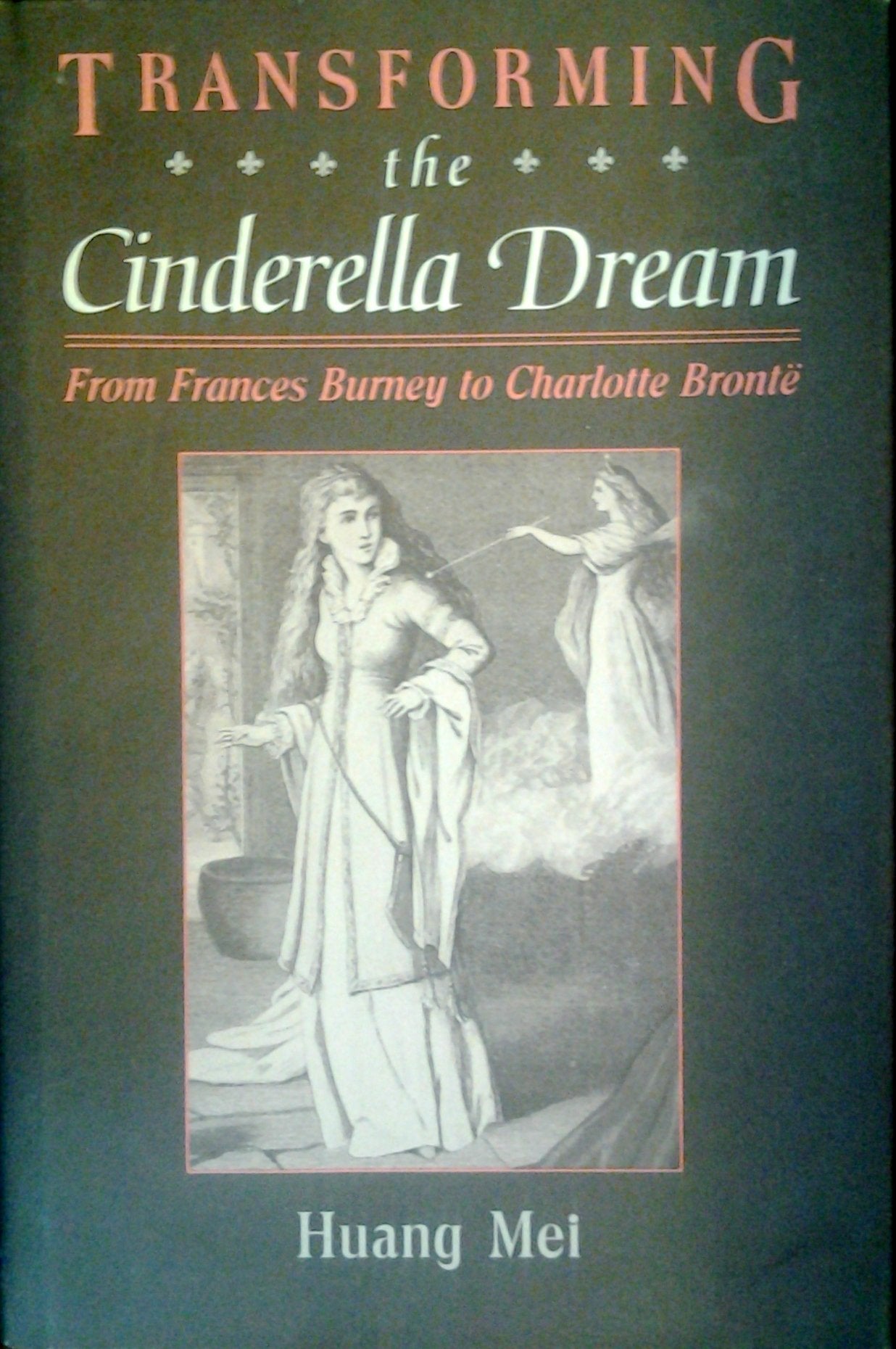
Title
Transforming The Cinderella Dream: From Frances Burney To Charlotte Bronte,Used
Sold by Ergodebooks, an authorized reseller.
Returns accepted within 30 days | support@ergodebooks.com
Shipping Information
- Free Standard Shipping — United States only
- Processing Time: 3–5 business days
- Estimated Delivery: 6–10 business days after dispatch
- Double-boxed, fully insured & discreetly packaged
- Tracking number sent via email once dispatched
Returns & Refund
Returns accepted within 30 days of delivery.
Damaged or Defective Item
Free return shipping + replacement or full refund
Wrong Item Received
Free return shipping + replacement or full refund
Change of Mind
Return shipping at customer's expense · 25% restocking fee applies
Payment Option

Transforming the Cinderella Dream is the first systematic study of the formation and transformation of the Cinderella theme in the English novel. The author's central argument is that the Cinderella plot is essentially one of female selfassertion realized through ideological and textual dialogues between desire and selfdenial. On the one hand characters argue for and desire resolution inmarriage and the domestic world of 'happily ever after' endings, on the other they and their creators often strive to disengage themselves from this entanglement in a feminist attempt to escape narrative closure.Huang Mei looks at the operation of these conflicts int he novel from cokplex origins in Samuel Richardson's work to unresolved conflict in Charlotte Bronte's. Chapter One sets forth the basic features of the Cinderlla plot, as expressed in Perrault''s 'Cinderella' and in Richardson's Pamela. It tries both to expose the patriarchal bias of these 'parent' texts and to emphasize their innate ambiguity and textual 'dialogism.' The four other chapters cover Frances Burnley's Evelina, Charlotte Smith's Emmeline, Jane Austen's Mansfield Park, and Charlotte Bronte's Villette. They demonstrate that these middleclass women writers recognize in the equivocaal and selfconflicting narratives they write a possible space for female selfrealization. Their novels, with frequent contortions of the basic Cinderella plot, including systematic use of ambiguous dialogue and discussion, narrative evasion, and the insertion of a new type of character (the heroine as outsider and spectator of the plot within which she is figured), tell of the continuous effort to appropriate, reshape, and eventually dismantle the narrative pattern.The story of Cinderella in the classical English novel is, ultimately, not a personal Bildungsroman pointing toward marriage, but a collective female battle for a larger narrative as well as existential space. Huang Mei shows that struggle's enactment in its literary forum and in so doing has written a fascinating and powerful study of the English novel.
⚠️ WARNING (California Proposition 65):
This product may contain chemicals known to the State of California to cause cancer, birth defects, or other reproductive harm.
For more information, please visit www.P65Warnings.ca.gov.