
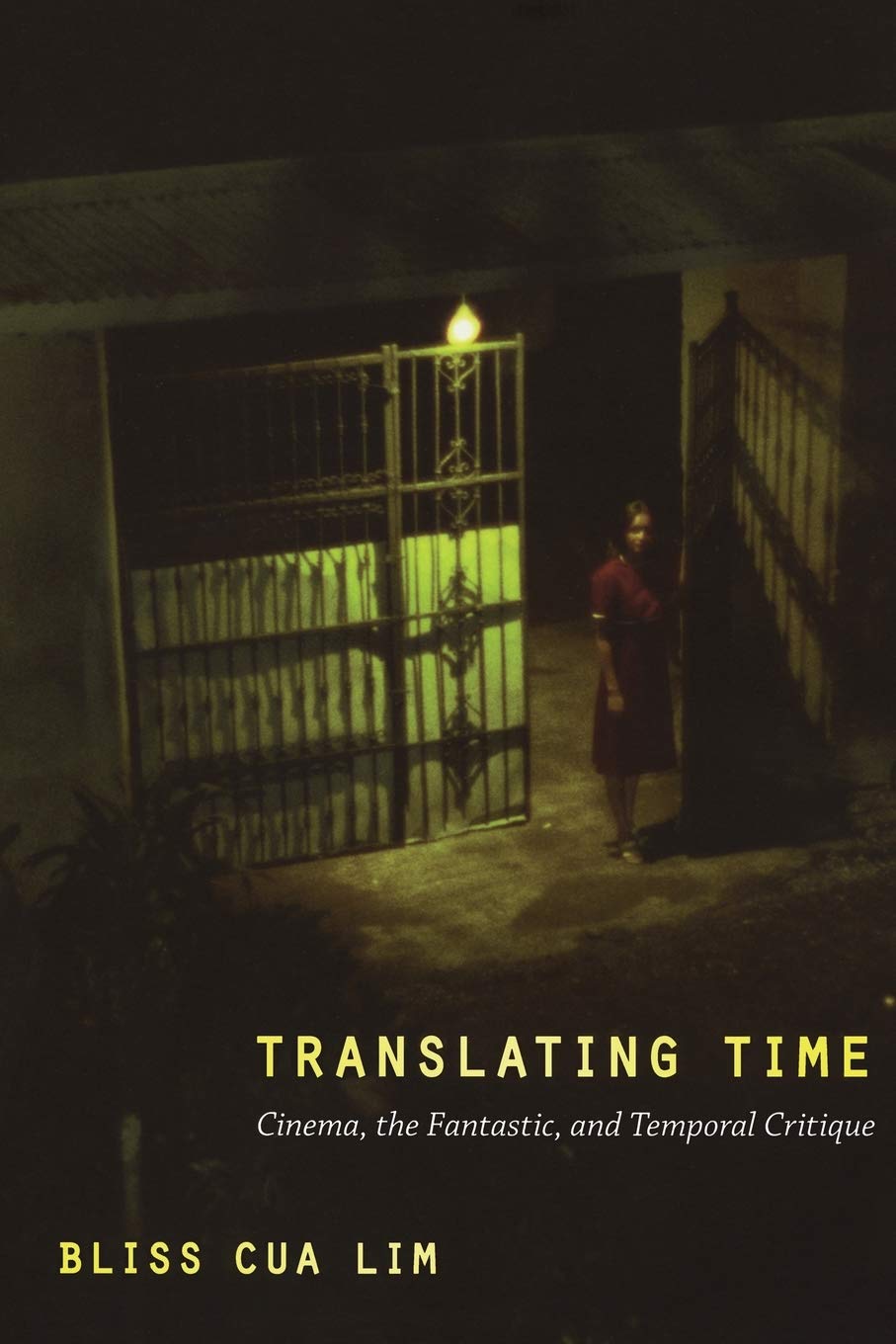
Title
Translating Time: Cinema, The Fantastic, And Temporal Critique (A John Hope Franklin Center Book),Used
Sold by Ergodebooks, an authorized reseller.
Returns accepted within 30 days | support@ergodebooks.com
Shipping Information
- Free Standard Shipping — United States only
- Processing Time: 3–5 business days
- Estimated Delivery: 6–10 business days after dispatch
- Double-boxed, fully insured & discreetly packaged
- Tracking number sent via email once dispatched
Returns & Refund
Returns accepted within 30 days of delivery.
Damaged or Defective Item
Free return shipping + replacement or full refund
Wrong Item Received
Free return shipping + replacement or full refund
Change of Mind
Return shipping at customer's expense · 25% restocking fee applies
Payment Option

Under modernity, time is regarded as linear and measurable by clocks and calendars. Despite the historicity of clocktime itself, the modern concept of time is considered universal and culturally neutral. What Walter Benjamin called homogeneous, empty time founds the modern notions of progress and a uniform global present in which the past and other forms of time consciousness are seen as superseded.In Translating Time, Bliss Cua Lim argues that fantastic cinema depicts the coexistence of other modes of being alongside and within the modern present, disclosing multiple immiscible temporalities that strain against the modern concept of homogeneous time. In this wideranging studyencompassing Asian American video (On Cannibalism), ghost films from the New Cinema movements of Hong Kong and the Philippines (Rouge, Itim, Haplos), Hollywood remakes of Asian horror films (Juon, The Grudge, A Tale of Two Sisters) and a Filipino horror film cycle on monstrous viscera suckers (Aswang)Lim conceptualizes the fantastic as a form of temporal translation. The fantastic translates supernatural agency in secular terms while also exposing an untranslatable remainder, thereby undermining the fantasy of a singular national time and emphasizing shifting temporalities of transnational reception.Lim interweaves scholarship on visuality with postcolonial historiography. She draws on Henri Bergsons understanding of cinema as both implicated in homogeneous time and central to its critique, as well as on postcolonial thought linking the ideology of progress to imperialist expansion. At stake in this project are more ethical forms of understanding time that refuse to domesticate difference as anachronism. While supernaturalism is often disparaged as a vestige of primitive or superstitious thought, Lim suggests an alternative interpretation of the fantastic as a mode of resistance to the ascendancy of homogeneous time and a startingpoint for more ethical temporal imaginings.
⚠️ WARNING (California Proposition 65):
This product may contain chemicals known to the State of California to cause cancer, birth defects, or other reproductive harm.
For more information, please visit www.P65Warnings.ca.gov.