If you have any questions, you are always welcome to contact us. We'll get back to you as soon as possible, withing 24 hours on weekdays.
Customer service
All questions about your order, return and delivery must be sent to our customer service team by e-mail at yourstore@yourdomain.com
Sale & Press
If you are interested in selling our products, need more information about our brand or wish to make a collaboration, please contact us at press@yourdomain.com
Help
If you have any questions, you are always welcome to contact us. We'll get back to you as soon as possible, withing 24 hours on weekdays.
Customer service
All questions about your order, return and delivery must be sent to our customer service team by e-mail at yourstore@yourdomain.com
Sale & Press
If you are interested in selling our products, need more information about our brand or wish to make a collaboration, please contact us at press@yourdomain.com
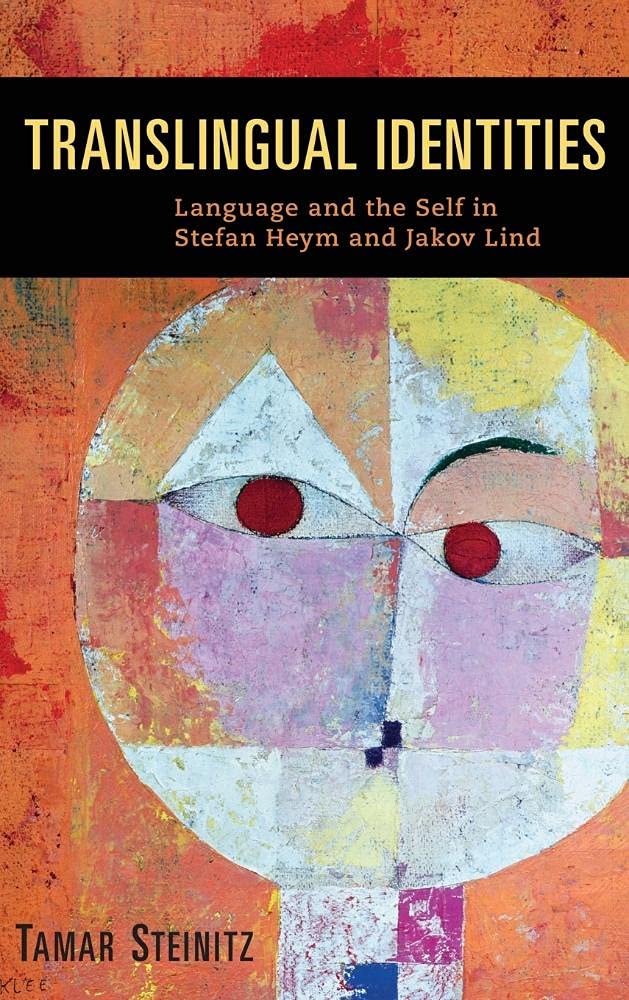
Explores the psychology of literary translingualism in the works of two authors, finding it expressed as loss and fragmentation in one case and as opportunity and mediation in the other.The works of translingual writersthose who write in a language other than their native tonguepresent a rich field for study, but literary translingualism remains underresearched and undertheorized. In this work Tamar Steinitz explores the psychological effects of translingualism in the works of two authors: the German Stefan Heym (19132001) and the Austrian Jakov Lind (19272007). Both were forced into exile by the rise of Nazism; both chose English asa language of artistic expression. Steinitz argues that translingualism, which ruptures the perceived link between language and world as the writer chooses between systems of representation, leads to a psychic split that can be expressed in the writer's work as a schizophrenic existence or as a productive doubling of perspective. Movement between languages can thus reflect both the freedom associated with geographical mobility and the emotional price it entails. Reading Lind's and Heym's works within their postwar context, Steinitz proposes these authors as representative models, respectively, of translingualism as loss and fragmentation and translingualism as opportunity and mediation.Tamar Steinitz teaches English literature at Queen Mary and Goldsmiths colleges, University of London. She has also worked as a literary translator.
⚠️ WARNING (California Proposition 65):
This product may contain chemicals known to the State of California to cause cancer,
birth defects, or other reproductive harm.
For MAP (Minimum Advertised Price) violations and Intellectual Property (IP) or Trademark concerns, please contact:
support@ergodebooks.com
⚠️ California Proposition 65 Warning: Some products sold on this website may expose you to chemicals known to the State of California to cause cancer, birth defects, or other reproductive harm. For more information, visit www.P65Warnings.ca.gov.