If you have any questions, you are always welcome to contact us. We'll get back to you as soon as possible, withing 24 hours on weekdays.
Customer service
All questions about your order, return and delivery must be sent to our customer service team by e-mail at yourstore@yourdomain.com
Sale & Press
If you are interested in selling our products, need more information about our brand or wish to make a collaboration, please contact us at press@yourdomain.com
Help
If you have any questions, you are always welcome to contact us. We'll get back to you as soon as possible, withing 24 hours on weekdays.
Customer service
All questions about your order, return and delivery must be sent to our customer service team by e-mail at yourstore@yourdomain.com
Sale & Press
If you are interested in selling our products, need more information about our brand or wish to make a collaboration, please contact us at press@yourdomain.com
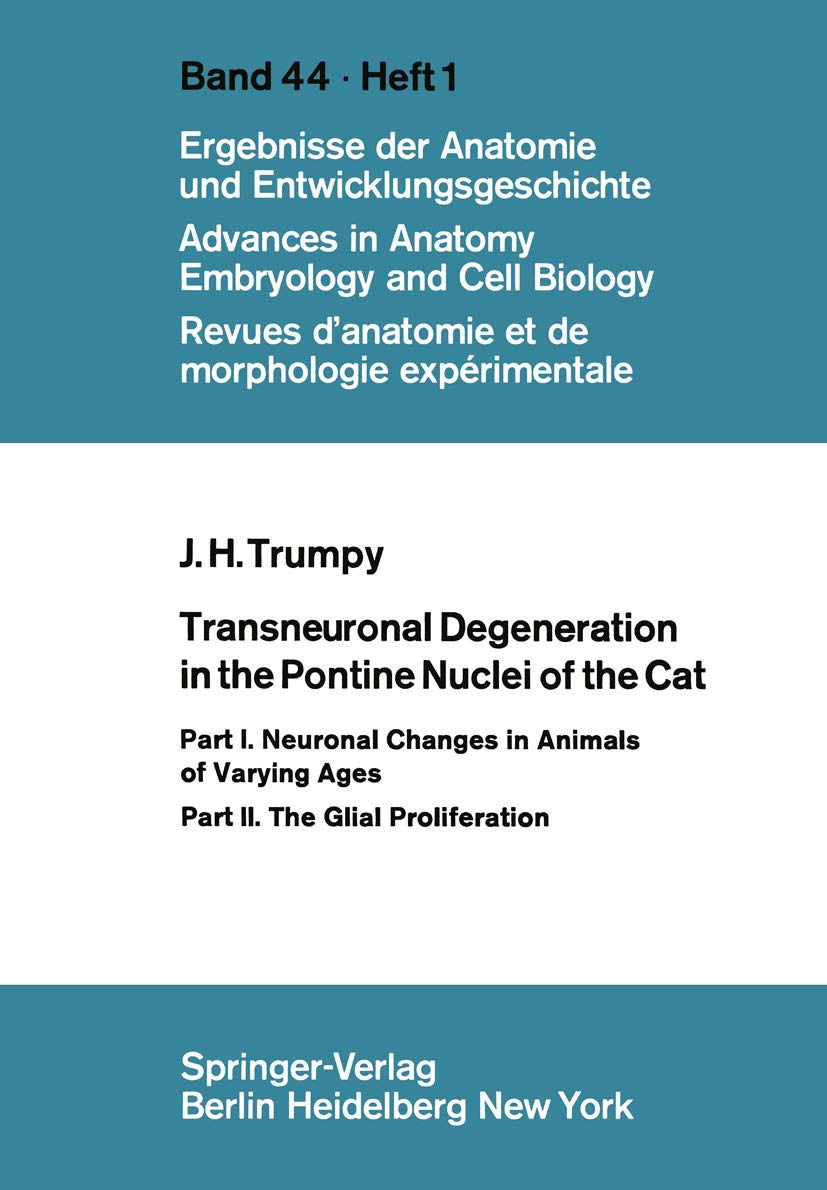
The present study was performed to elucidate the mechanism of a rapid nerve cell loss in the nuclei pontis described after mesencephalic lesions in young cats by Torvik (1956). He observed that hemisection of the mesencephalon caused an extensive disintegration of nerve cells in the homolateral nuclei pontis within four days after the operation. Mter lesions of the caudal part of the mesencephalon a severe neuronal loss was noted also in the inferior olive. Most of the degenerating neurons appeared to pass through a stage of pyknosis and karyorhexis before disintegration, but other types of neuronal change were also described. The changes were considered caused by deafferentation of the pontine nuclei and were regarded as a kind of transneuronal degeneration. During this degeneration an unusual type of glial proliferation was also observed. The nature of the glial pro liferation will be dealt with in Part II of this study while the neuronal changes will be studied here. A similar loss of pontine neurons had been described earlier after cortical lesions and after hemisection of the brain stem (Monakow, 1882; Borowiecki, 1911). However, the animals used by these authors were kept alive for several weeks and the acute stages of nerve cell degeneration were not studied. No clear ex planation for the changes was given. The type of nerve cell degeneration described by Torvik (1956) differs markedly from the transneuronal degeneration described in other nuclei in the cat and other animals.
⚠️ WARNING (California Proposition 65):
This product may contain chemicals known to the State of California to cause cancer,
birth defects, or other reproductive harm.
For MAP (Minimum Advertised Price) violations and Intellectual Property (IP) or Trademark concerns, please contact:
support@ergodebooks.com
⚠️ California Proposition 65 Warning: Some products sold on this website may expose you to chemicals known to the State of California to cause cancer, birth defects, or other reproductive harm. For more information, visit www.P65Warnings.ca.gov.