
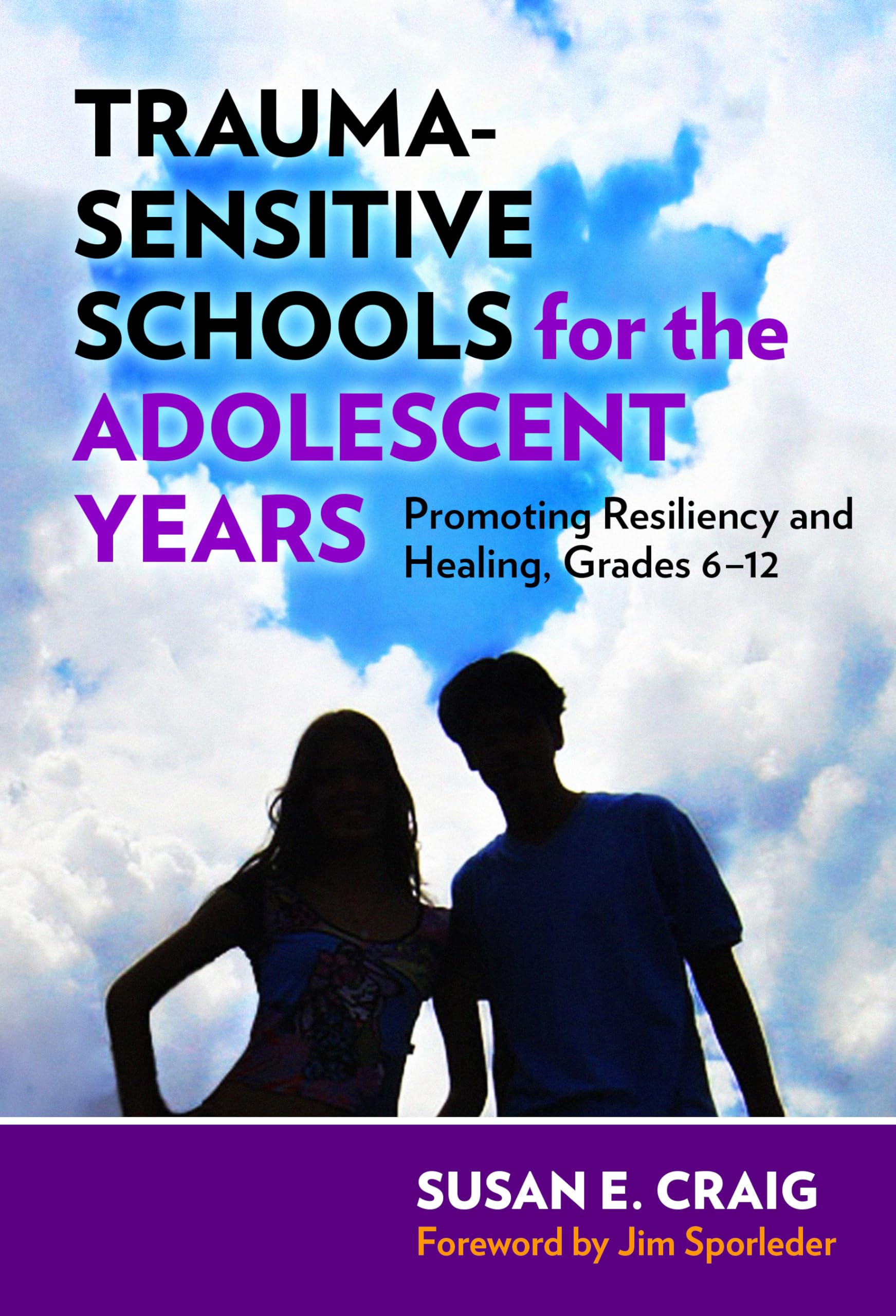
Title
Traumasensitive Schools For The Adolescent Years: Promoting Resiliency And Healing, Grades 612,Used
Sold by Ergodebooks, an authorized reseller.
Returns accepted within 30 days | support@ergodebooks.com
Shipping Information
- Free Standard Shipping — United States only
- Processing Time: 3–5 business days
- Estimated Delivery: 6–10 business days after dispatch
- Double-boxed, fully insured & discreetly packaged
- Tracking number sent via email once dispatched
Returns & Refund
Returns accepted within 30 days of delivery.
Damaged or Defective Item
Free return shipping + replacement or full refund
Wrong Item Received
Free return shipping + replacement or full refund
Change of Mind
Return shipping at customer's expense · 25% restocking fee applies
Payment Option

The traumasensitive schools movement is the result of a confluence of forces that are changing how educators view students academic and social problems, including the failure of zero tolerance policies to resolve issues of school safety, bullying, and academic failure, as well as a new understanding of adolescents disruptive behavior.In this followup to her bestseller, TraumaSensitive Schools, Susan Craig provides secondary school teachers and administrators with practical ideas for how to improve students achievement by implementing a traumasensitive approach to instruction. Along with clear explanations of the role that childhood adversity and trauma play in determining academic success, readers will find dozens of concrete strategies to help them: View poor academic and social progress through a traumasensitive lens. Create a school climate that fosters safety and resiliency in vulnerable teenagers. Establish relationships with students that support their efforts to selfregulate. Design instruction that reflects the social nature of the brain. Work with the brains neuroplasticity to increase adolescents executive functioning. Reduce teacher attrition in highrisk schools by decreasing secondary traumatic stress. Influence educational reforms by aligning them with current research on childhood trauma and its effects on learning.Book Features: Provides an overview of the effects of three types of trauma on adolescent development: early childhood adversity, community violence, and systemic inequities. Links the effects of trauma on students cognitive development to educational reform efforts. Integrates research on adolescents neurodevelopment and current educational best practices. Builds the capacity of education professionals to successfully manage the behavior of adolescents with symptoms of complex developmental trauma.
⚠️ WARNING (California Proposition 65):
This product may contain chemicals known to the State of California to cause cancer, birth defects, or other reproductive harm.
For more information, please visit www.P65Warnings.ca.gov.
- Q: How many pages does the book have? A: This book has one hundred sixty-eight pages. It's a comprehensive guide for educators on trauma-sensitive approaches.
- Q: What is the binding type of the book? A: The book is available in paperback binding. This makes it lightweight and easy to handle for reading.
- Q: What are the dimensions of the book? A: The book measures six point fourteen inches in length, zero point thirty-three inches in width, and nine point zero two inches in height. These dimensions make it convenient for storage and portability.
- Q: What age group is this book suitable for? A: This book is suitable for educators working with students in grades six through twelve. It provides insights specifically for adolescent education.
- Q: How can educators implement the strategies from the book? A: Educators can implement the strategies by applying trauma-sensitive approaches in their classrooms. This includes creating a supportive school environment and fostering strong student relationships.
- Q: Is this book easy to read? A: Yes, the book is exceptionally well written and organized. It is designed to be informative and accessible to all educators.
- Q: How should I store this book to keep it in good condition? A: Store the book in a dry, cool place away from direct sunlight. This will help preserve its binding and pages.
- Q: Can this book be used for professional development? A: Yes, it is an excellent resource for professional development. Many educators recommend it for teacher education collections.
- Q: Is there a warranty or return policy for this book? A: Typically, books do not come with a warranty. However, check with the retailer for specific return policies.
- Q: What if the book arrives damaged? A: If the book arrives damaged, contact the seller immediately to inquire about a return or exchange. Most retailers aim to resolve such issues promptly.
- Q: Are there any specific teaching strategies mentioned in the book? A: Yes, the book includes dozens of concrete strategies for trauma-sensitive teaching. These strategies help educators support students in self-regulating and improving their academic performance.
- Q: Does this book address trauma from systemic inequities? A: Yes, it provides an overview of how systemic inequities impact adolescent development and education. This is crucial for fostering understanding among educators.
- Q: Who is the author of this book? A: The author of the book is Susan E. Craig. She is recognized for her contributions to the field of trauma-sensitive education.
- Q: What is the primary focus of the book? A: The primary focus is on promoting resiliency and healing in adolescents through trauma-sensitive educational practices. It aims to improve student achievement.
- Q: Is this book recommended for college libraries? A: Yes, it is highly recommended for college and university library collections, particularly in Teacher Education and Adolescent Special Needs studies.