
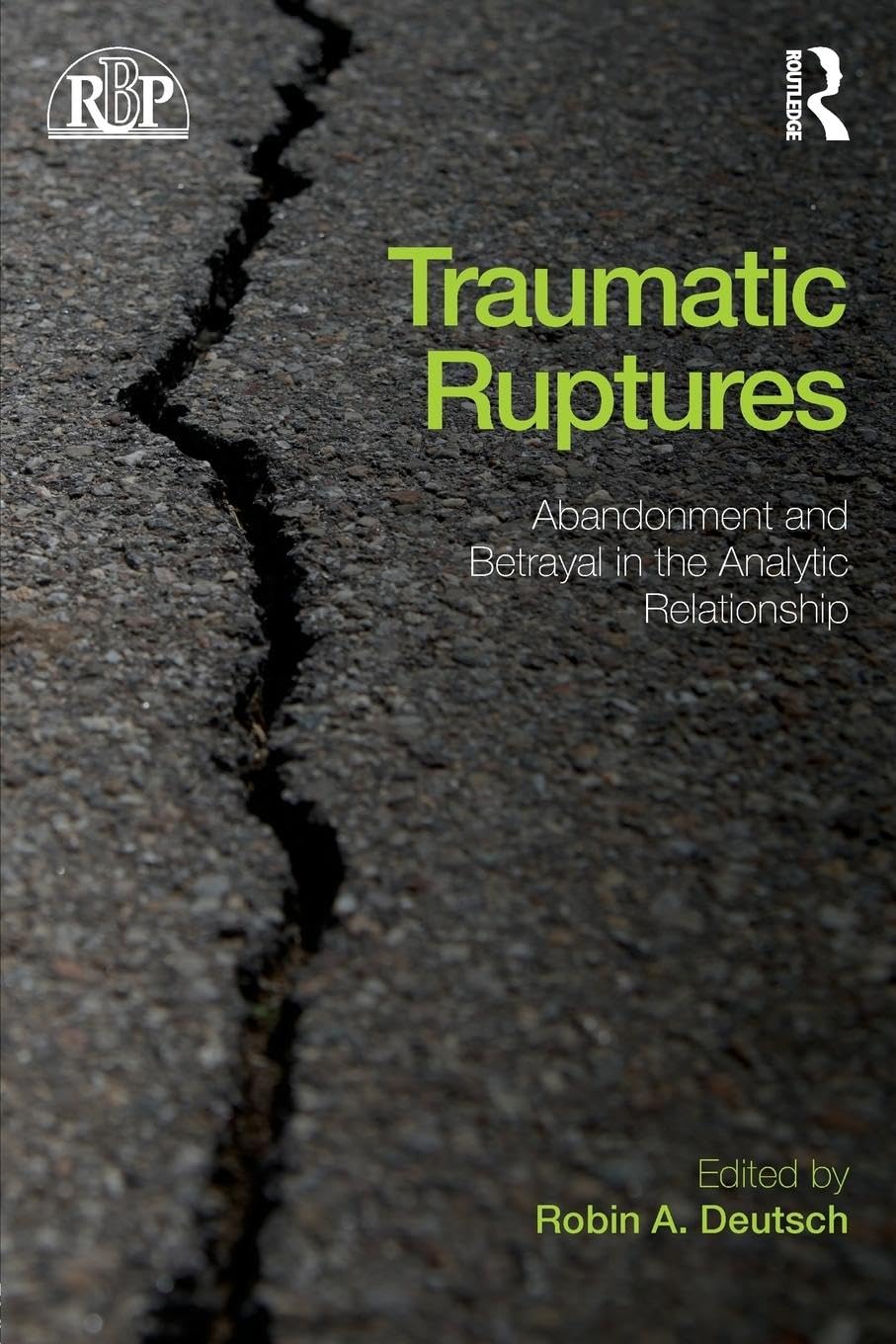
Title
Traumatic Ruptures: Abandonment And Betrayal In The Analytic Relationship (Relational Perspectives Book Series)
Sold by Ergodebooks, an authorized reseller.
Returns accepted within 30 days | support@ergodebooks.com
Shipping Information
- Free Standard Shipping — United States only
- Processing Time: 3–5 business days
- Estimated Delivery: 6–10 business days after dispatch
- Double-boxed, fully insured & discreetly packaged
- Tracking number sent via email once dispatched
Returns & Refund
Returns accepted within 30 days of delivery.
Damaged or Defective Item
Free return shipping + replacement or full refund
Wrong Item Received
Free return shipping + replacement or full refund
Change of Mind
Return shipping at customer's expense · 25% restocking fee applies
Payment Option

For Much Of Its History, Psychoanalysis Has Been Strangely Silent About Sudden Ruptures In The Analytic Relationship And Their Immediate And Farreaching Effects For Those Involved. Such Issues Of Betrayal And Abandonment The Death Of An Analyst, A Patients Suicide, An Ethical Violation Disrupt The Stability And Cohesion Of The Analytic Framework And Leave Indelible Marks On Both Individuals And Institutions Alike.In Traumatic Ruptures An International Range Of Contributors Present Firstperson, Highly Personal And Sometimes Painful Accounts Of Their Experiences And The Occasionally Difficult Yet Redeeming Lessons They Have Taken From Them. Presented In Four Parts, The Book Explores Multiple Meanings And Consequences Of The Break In The Analytic Relationship. Part One, Ruptured Subjectivity: Lost And Found, Presents Accounts Of Clinical Encounters With Death. Part Two, Rupture: The Clinical Process,Addresses The Sudden Loss Of An Analyst, The Trauma Of Patient Suicide And The Issue Of Countertransference When Working With Patients Who Have Suffered The Unexpected Loss Of Their First Analyst. Part Three, The Long Shadow Of Rupture, Examines The Effects Of Ethical Violations In The Short And Long Term. Finally, Part Four, Ruptures Impact On Organizations, Looks At The Wider Impact Of Ethical And Sexual Boundary Violations In The Context Of An Organization And The Effect Of Trauma On A Psychoanalytic Institute. By Giving Voice To Issues That Are Usually Silenced, The Authors Here Open The Door To Understanding The Complex Nature Of Traumatic Rupture Within The Analytic Field.This Intimate Exploration Of Psychoanalytic Treatments And Communities Is Ideal For Psychoanalysts, Psychologists, Clinical Social Workers, Psychiatrists And Family Therapists. It Is An Important Text For Clinicians Working With Individuals Who Have Experienced Traumatic Ruptures And For Members Of Organisations Dealing With Their Effects.
⚠️ WARNING (California Proposition 65):
This product may contain chemicals known to the State of California to cause cancer, birth defects, or other reproductive harm.
For more information, please visit www.P65Warnings.ca.gov.
- Q: How many pages does the book have? A: The book has two hundred thirty-eight pages. This length provides a comprehensive exploration of traumatic ruptures in psychoanalysis.
- Q: What is the binding type of this book? A: The book is paperback bound. This makes it lightweight and easy to handle for reading and note-taking.
- Q: What are the dimensions of the book? A: The book measures six inches in length, zero point five five inches in width, and nine point zero two inches in height. These dimensions make it portable for readers.
- Q: Who is the author of this book? A: The author is Robin A. Deutsch. His insights contribute significantly to the understanding of analytic relationships.
- Q: What category does this book fall under? A: The book is categorized under Mental Health. It addresses complex issues relevant to psychoanalysts and mental health professionals.
- Q: Is this book suitable for beginners in psychoanalysis? A: Yes, the book is suitable for beginners. It provides accessible accounts of traumatic ruptures that are beneficial for new learners in the field.
- Q: Who would benefit from reading this book? A: Psychoanalysts, psychologists, clinical social workers, psychiatrists, and family therapists would benefit. The book offers valuable insights for professionals dealing with traumatic experiences.
- Q: How does this book address ethical violations? A: The book examines the long-term effects of ethical violations in psychoanalytic settings. It discusses how these issues impact both individuals and organizations.
- Q: What themes are explored in the book? A: The book explores themes of abandonment, betrayal, and the impact of sudden ruptures in the analytic relationship. These themes are crucial for understanding patient experiences.
- Q: Is this book appropriate for academic use? A: Yes, this book is appropriate for academic use. It serves as an important text for courses focused on psychoanalysis and mental health.
- Q: Can this book help in understanding countertransference? A: Yes, it addresses countertransference in the context of loss. The insights can help clinicians better navigate their emotional responses.
- Q: What impact does the book discuss regarding patient suicide? A: The book explores the trauma of patient suicide and its implications. It offers perspectives on how such events affect both analysts and patients.
- Q: Are there personal accounts included in this book? A: Yes, the book includes first-person accounts. These narratives provide a personal and relatable perspective on traumatic ruptures.
- Q: How does the book address the topic of death in therapy? A: The book presents accounts related to clinical encounters with death. This exploration is crucial for understanding the complexities involved in therapy.
- Q: What organizations might find this book useful? A: Psychoanalytic institutes and mental health organizations would find this book useful. It addresses the impact of trauma on organizational dynamics.
- Q: Is there a focus on the effects of trauma on institutions? A: Yes, the book discusses the wider impact of trauma on psychoanalytic institutions. It highlights how ethical violations affect organizational integrity.