If you have any questions, you are always welcome to contact us. We'll get back to you as soon as possible, withing 24 hours on weekdays.
Customer service
All questions about your order, return and delivery must be sent to our customer service team by e-mail at yourstore@yourdomain.com
Sale & Press
If you are interested in selling our products, need more information about our brand or wish to make a collaboration, please contact us at press@yourdomain.com
Help
If you have any questions, you are always welcome to contact us. We'll get back to you as soon as possible, withing 24 hours on weekdays.
Customer service
All questions about your order, return and delivery must be sent to our customer service team by e-mail at yourstore@yourdomain.com
Sale & Press
If you are interested in selling our products, need more information about our brand or wish to make a collaboration, please contact us at press@yourdomain.com
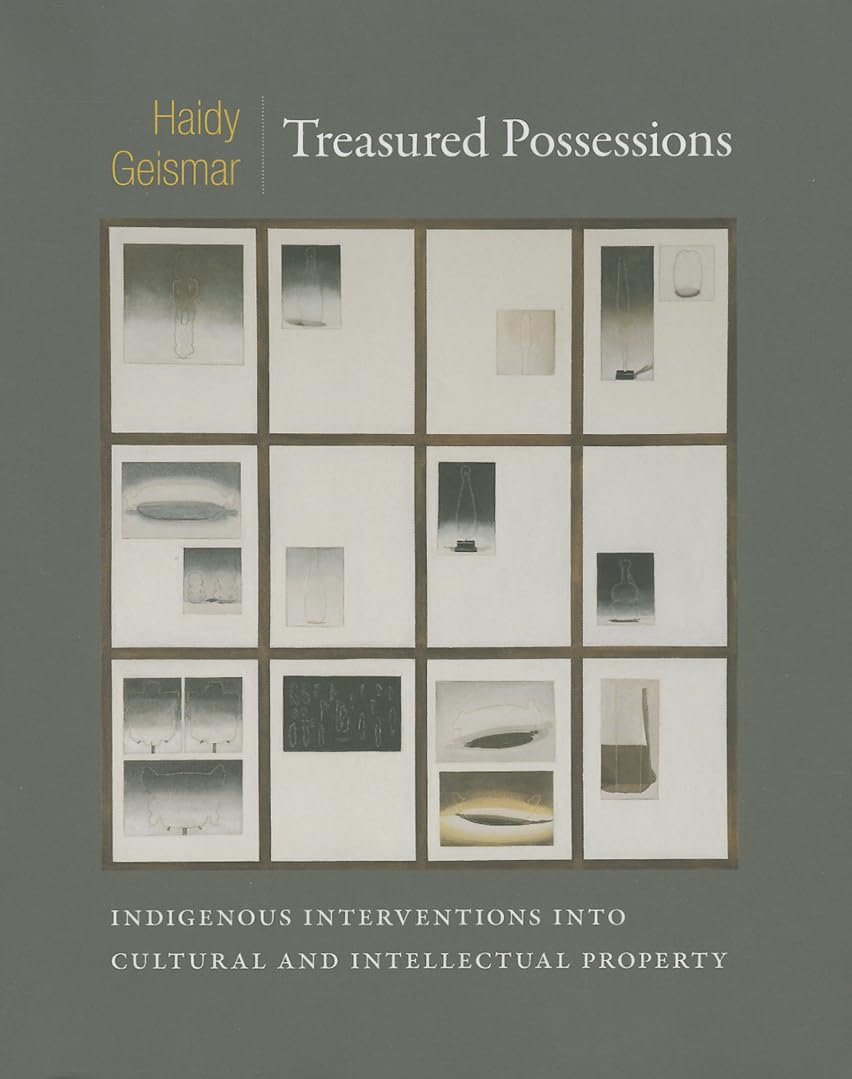
What happens when ritual practitioners from a small Pacific nation make an intellectual property claim to bungee jumping? When a German company successfully sues to defend its trademark of a Maori name? Or when UNESCO deems ephemeral sand drawings to be "intangible cultural heritage"? In Treasured Possessions, Haidy Geismar examines how global forms of cultural and intellectual property are being redefined by everyday people and policymakers in two markedly different Pacific nations. The New Hebrides, a small archipelago in Melanesia managed jointly by Britain and France until 1980, is now the independent nationstate of Vanuatu, with a population that is more than 95 percent indigenous. New Zealand, by contrast, is a settler state and former British colony that engages with its entangled Polynesian and British heritage through an ethos of "biculturalism" that is meant to involve an indigenous population of just 15 percent. Alternative notions of property, resources, and heritageinformed by distinct national historiesare emerging in both countries. These property claims are advanced in national and international settings, but they emanate from specific communities and cultural landscapes, and they are grounded in an awareness of ancestral power and inheritance. They reveal intellectual and cultural property to be not only legal constructs but also powerful ways of asserting indigenous identities and sovereignties.
⚠️ WARNING (California Proposition 65):
This product may contain chemicals known to the State of California to cause cancer,
birth defects, or other reproductive harm.
For MAP (Minimum Advertised Price) violations and Intellectual Property (IP) or Trademark concerns, please contact:
support@ergodebooks.com
⚠️ California Proposition 65 Warning: Some products sold on this website may expose you to chemicals known to the State of California to cause cancer, birth defects, or other reproductive harm. For more information, visit www.P65Warnings.ca.gov.