
Title
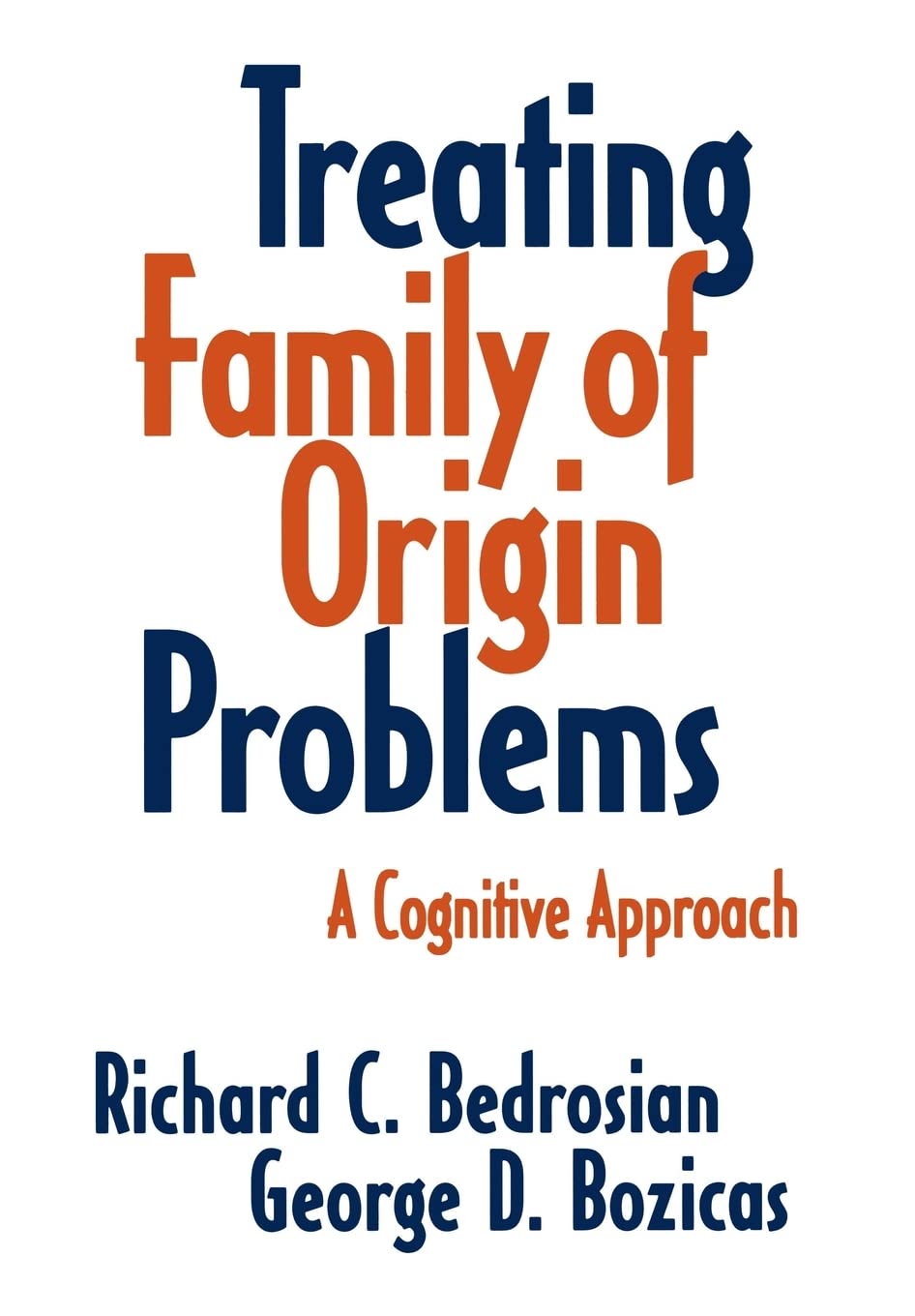
Treating Family Of Origin Problems: A Cognitive Approach
Sold by Ergodebooks, an authorized reseller.
Returns accepted within 30 days | support@ergodebooks.com
Shipping Information
- Free Standard Shipping — United States only
- Processing Time: 3–5 business days
- Estimated Delivery: 6–10 business days after dispatch
- Double-boxed, fully insured & discreetly packaged
- Tracking number sent via email once dispatched
Returns & Refund
Returns accepted within 30 days of delivery.
Damaged or Defective Item
Free return shipping + replacement or full refund
Wrong Item Received
Free return shipping + replacement or full refund
Change of Mind
Return shipping at customer's expense · 25% restocking fee applies
Payment Option

This Groundbreaking Volume Shows How The Clarity And Discipline Of Cognitive Therapy Can Be Applied To The Treatment Of Family Of Origin Issues, Such As Alcoholism And Incest, Without Compromising Depth And Clinical Sophistication. Compared To The Plethora Of Books On Adult Children Of Dysfunctional Families, This Work Is Unique In Its Use Of An Integrative Cognitive Model And Structured Techniques. The Book Also Shows How Ideas Highlighted In Other Orientationsfrom Family Therapy To Twelvestep And Recovery Programscan Be Translated Into Cognitive Terms And Incorporated Into A Cognitive Approach. Realistically Conveying The Complex Nature Of The Treatment Process, This Book Presents The Diverse Elements Of Successful Therapy Not As Narrow, Rote Strategies, But As Concepts That Can Be Applied In A Wide Variety Of Cases.Treating Family Of Origin Problems Begins With A Discussion Of The Characteristics Of Dysfunctional Families And An Overview Of The Cognitive Model. Subsequent Chapters Explore Coping Strategies, Goals Of Recovery And Treatment, Diagnostic Considerations, And Assessment Of Family Of Origin Issues. Ways In Which The Therapist'S Own Family Of Origin Issues And The Therapist'S Posture Can Influence The Treatment Process Are Addressed In A Discussion Of Various Metacommunicative Elements That Can Affect The Client'S Ability To Use Treatment Constructively.Throughout, Illustrative Clinical Material Shows How Clinicians Can Utilize Embedded Messages And Other Techniques To Circumvent Resistance; Confront Various Types Of Actingout Behavior While Remaining In A Supportive, Collaborative Posture; And Provide A Consistent Focus In Treatment, Highlighting The Underlying Mechanisms That Cause Distress Without Becoming Mired In Unproductive Attention To The Presenting Symptoms. The Volume Concludes With Discussions Of Building Coping Strategies, Utilizing Relationship Material, And Variations In The Recovery Process.Written For Mental Health Professionals From A Wide Variety Of Disciplines And Theoretical Backgrounds, Treating Family Of Origin Problems Will Provide Clinicians Who Have Had Little Or No Exposure To Cognitive Therapies With A Guide To Formulating An Active Treatment Plan That Can Be Sustained Over Time. Cognitive Therapists Will Benefit From The Book'S Illustration Of How The Cognitive Approach Can Be Expanded To Embrace Key Concepts From Other Treatment Orientations. An Extremely Comprehensive And Detailed Work, This Volume Is An Ideal Text For Courses In Cognitive Therapy, Behavior Therapy, And Integrative Psychotherapy, As Well As General Courses In Psychotherapy.
⚠️ WARNING (California Proposition 65):
This product may contain chemicals known to the State of California to cause cancer, birth defects, or other reproductive harm.
For more information, please visit www.P65Warnings.ca.gov.
- Q: How many pages does this book have? A: This book contains three hundred eighty-four pages. It provides a comprehensive overview of cognitive therapy applied to family of origin issues.
- Q: What is the binding type of this book? A: This book has a hardcover binding. This ensures durability and makes it suitable for regular use by mental health professionals.
- Q: What are the dimensions of this book? A: This book measures six point five inches in length, one point two six inches in width, and nine point five inches in height. These dimensions make it easy to handle during therapy sessions.
- Q: Who is the author of this book? A: The author of this book is Richard C. Bedrosian. He brings expertise in cognitive therapy to the discussion of family issues.
- Q: What category does this book fall under? A: This book is categorized under compulsive behavior. It specifically addresses issues related to family dynamics and dysfunction.
- Q: How can this book be applied in therapy? A: Clinicians can utilize this book to form active treatment plans. It provides structured techniques and cognitive models applicable to various family issues.
- Q: Is this book suitable for beginners in therapy? A: Yes, this book is suitable for beginners. It offers clear guidelines for mental health professionals new to cognitive therapies.
- Q: What key topics are covered in this book? A: Key topics include coping strategies, treatment goals, and assessment of family origin issues. It emphasizes the complexity of dysfunctional family dynamics.
- Q: Can this book help with specific family issues like alcoholism? A: Yes, this book addresses family issues such as alcoholism. It uses cognitive therapy techniques to provide insights into treatment.
- Q: How should I store this book to maintain its condition? A: Store this book in a cool, dry place away from direct sunlight. This will help preserve its binding and cover.
- Q: What if the book arrives damaged? A: If the book arrives damaged, contact the seller for a return or replacement. Most sellers will provide support for damaged items.
- Q: Is this book appropriate for all mental health professionals? A: Yes, this book is appropriate for all mental health professionals. It integrates concepts from various therapeutic orientations.
- Q: What kind of therapy does this book focus on? A: This book focuses on cognitive therapy. It applies cognitive principles to the treatment of family of origin problems.
- Q: Are there practical techniques included in this book? A: Yes, the book includes practical techniques for therapists. These techniques are designed to address resistance and promote constructive treatment.
- Q: What makes this book unique compared to others on similar topics? A: This book is unique for its integrative cognitive model. It combines cognitive therapy with concepts from family therapy and recovery programs.