
Title
Treating The Public: Charitable Theater And Civic Health In The Early Modern Atlantic World,Used
Sold by Ergodebooks, an authorized reseller.
Returns accepted within 30 days | support@ergodebooks.com
Shipping Information
- Free Standard Shipping — United States only
- Processing Time: 3–5 business days
- Estimated Delivery: 6–10 business days after dispatch
- Double-boxed, fully insured & discreetly packaged
- Tracking number sent via email once dispatched
Returns & Refund
Returns accepted within 30 days of delivery.
Damaged or Defective Item
Free return shipping + replacement or full refund
Wrong Item Received
Free return shipping + replacement or full refund
Change of Mind
Return shipping at customer's expense · 25% restocking fee applies
Payment Option

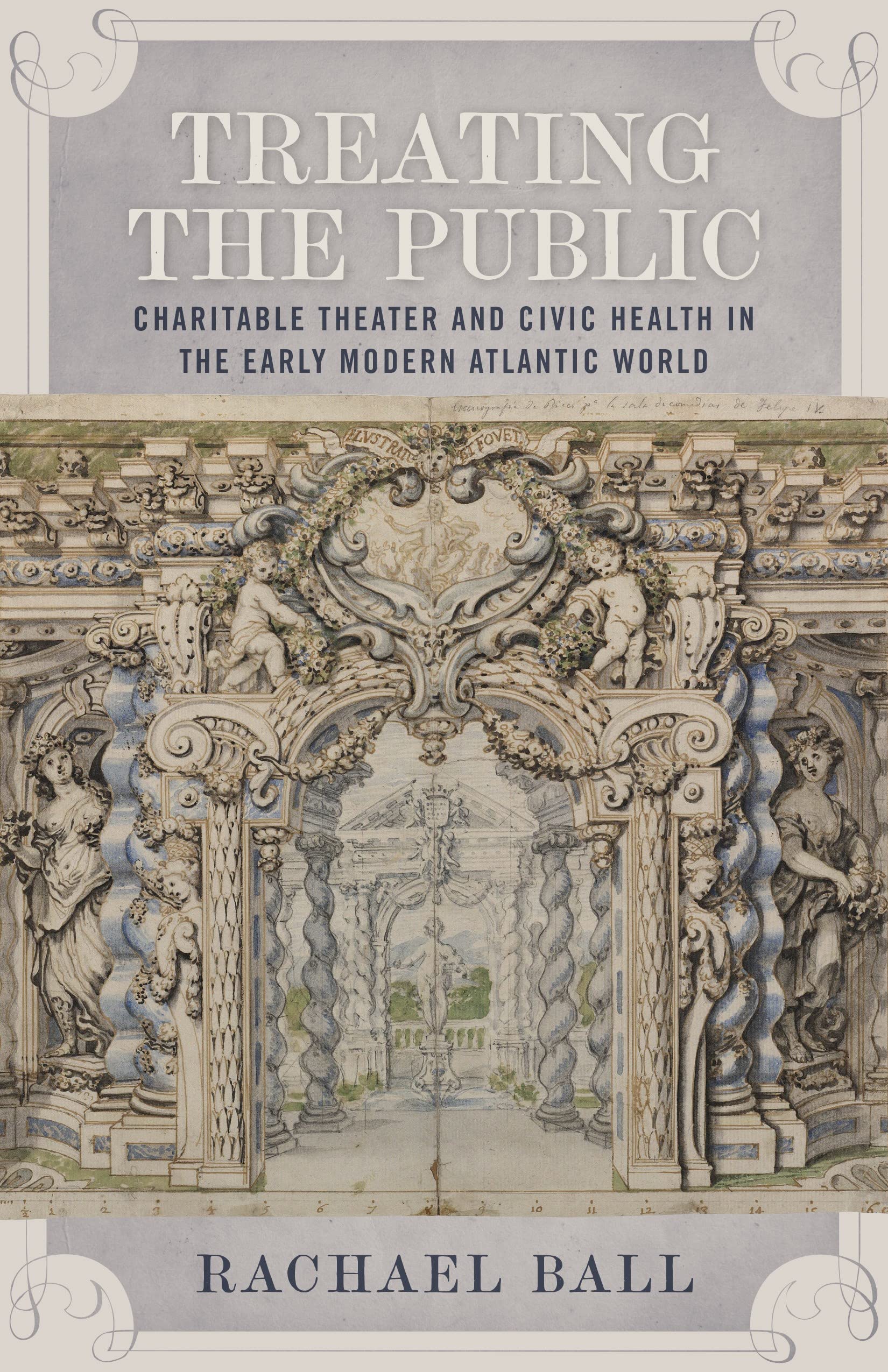
In Treating the Public, Rachael Ball presents a comparative history of commercial theater, public opinion, and charitable organizations in eight cities across the Spanish and AngloAtlantic worlds during the sixteenth and seventeenth centuries. This innovative study uncovers the rapid expansion of public drama into urban daily life in the Spanish Atlantic, revealing the means by which men and women provided and sought theatrical entertainment while practicing Catholic piety and working to aid the poor. Ball focuses her analysis on the theaters of Madrid, Seville, Mexico City, and Puebla de los Angeles, which she compares to Englishspeaking theaters throughout the Atlantic world in cities and towns including London, Bristol, Dublin, and Williamsburg, Virginia.Ball shows how the corrales de comedias, or innyard theaters, became staples of city life throughout Spain and the Spanish Atlantic. This development stemmed, she argues, from a tremendous output of dramatic works and from the theaters charitable activities that included donating a percentage of admission fees to hospitals and orphanages. As a result, groups like theatrical companies, religious lay brotherhoods, city leaders, and hospitals forged collaborative relationships which at once allowed the corrales to flourish and protected theaters as charitable institutions. Ball highlights the uniqueness of this system by contrasting it with public drama in England, where financial dependence on courtly and noble patronage slowed the spread of regular theatrical performances to provincial cities and colonial centers.Using an array of archival and print sources, Ball links the largely disconnected national histories of Spanish, English, and colonial American theaters. Treating the Public uncovers the depth of the comedia tradition that flourished in early modern Spain as well as the geographic scope of the Spanish theater as a political, social, and cultural institution.
⚠️ WARNING (California Proposition 65):
This product may contain chemicals known to the State of California to cause cancer, birth defects, or other reproductive harm.
For more information, please visit www.P65Warnings.ca.gov.