
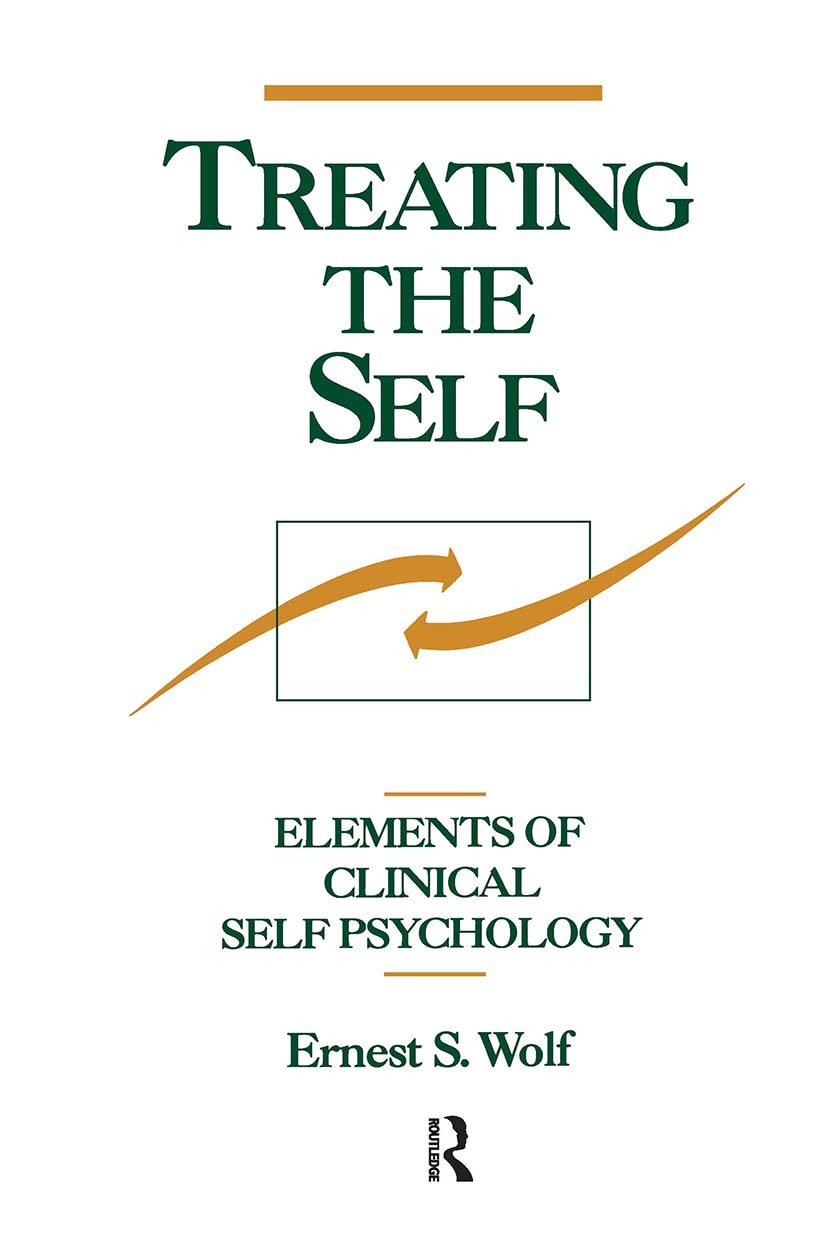
Title
Treating the Self: Elements of Clinical Self Psychology,New
Sold by Ergodebooks, an authorized reseller.
Returns accepted within 30 days | support@ergodebooks.com
Shipping Information
- Free Standard Shipping — United States only
- Processing Time: 3–5 business days
- Estimated Delivery: 6–10 business days after dispatch
- Double-boxed, fully insured & discreetly packaged
- Tracking number sent via email once dispatched
Returns & Refund
Returns accepted within 30 days of delivery.
Damaged or Defective Item
Free return shipping + replacement or full refund
Wrong Item Received
Free return shipping + replacement or full refund
Change of Mind
Return shipping at customer's expense · 25% restocking fee applies
Payment Option

This book is about how an analyst analyzes. Rooted in the theory of psychoanalytic selfpsychology as put forth by Heinz Kohut and his colleagues, Treating the Self focuses specifically on the application of the selfpsychological concept of the psyche to the actual conduct of psychoanalytic treatment. The result is not a how to'' approach, but rather a volume that suggests a theory of treatment and offers its readers guidelines for new ways of thinking about therapy. Based on the author's own familiarity of the therapeutic process, it concentrates on the detailed experiences of both the analyst and analysand, and demonstrates ways of creating and attitude and ambience that facilitates and guides successful treatment. Written by Ernest Wolf, a close collaborator of Heinz Kohut, this volume is a personal account of the process of selfpsychology presented by one of the foremost experts in the field.Divided into two parts, the volume's first section provides an general orientation to the field. It includes a review of selfpsychology's historical development, and elaboration of basic concepts, and an introduction to the Kohutian concepts of selfobject transference and narcissistic rage. A unique feature of this section is a chapter that provides, for the first time in a text, a comprehensive classification of disorders of the self with illustrative clinical vignettes. Part II, which focuses on treatment, explicates the principles and process of treatment, and offers indepth discussion of such topics as analytic reality, countertransference, and the problems and process of termination.An outstanding contribution to the development and understanding of the process of selfpsychology, Treating the Self is an invaluable resource for psychoanalysts, psychiatrists, psychotherapists, psychologists, social workers, and pastoral counselors. It is also an excellent text for advanced graduate courses in these fields.
⚠️ WARNING (California Proposition 65):
This product may contain chemicals known to the State of California to cause cancer, birth defects, or other reproductive harm.
For more information, please visit www.P65Warnings.ca.gov.
- Q: How many pages does this book have? A: This book has one hundred ninety-four pages. It provides a comprehensive exploration of self-psychology and its application in therapy.
- Q: What is the binding type of this book? A: This book is a hardcover edition. The durable binding makes it suitable for frequent use in educational and clinical settings.
- Q: What are the dimensions of this book? A: The dimensions are six point five inches in length, zero point seventy-five inches in width, and nine point five inches in height. These dimensions make it easy to handle and store.
- Q: Is this book suitable for beginners in psychology? A: Yes, this book can be suitable for beginners. It provides foundational concepts of self-psychology and practical applications in therapy.
- Q: Can this book be used in graduate courses? A: Yes, it is an excellent resource for advanced graduate courses. It covers key theories and practical insights valuable for students.
- Q: How do I approach reading this book effectively? A: To read this book effectively, take notes on key concepts and reflect on the clinical vignettes provided. Engaging with the material enhances understanding and application.
- Q: What should I do to keep this book in good condition? A: To keep this book in good condition, store it upright in a cool, dry place and avoid exposure to direct sunlight. Handle pages gently to prevent wear.
- Q: Is it safe to read this book in a group setting? A: Yes, it is safe to read this book in a group. Its content is designed for educational purposes and promotes discussion on self-psychology.
- Q: How do I clean this book if it gets dirty? A: To clean this book, use a dry cloth to gently wipe the cover. Avoid using liquids to prevent damage to the pages or binding.
- Q: Where is this book published? A: This book is published by The Guilford Press. It is a reputable publisher known for its contributions to psychology and mental health literature.
- Q: What audience is this book aimed at? A: This book is aimed at psychoanalysts, therapists, and psychology students. It is a valuable resource for professionals and those studying mental health.
- Q: What topics are covered in the book? A: The book covers topics such as self-object transference, narcissistic rage, and the principles of psychoanalytic treatment. These are crucial concepts in self-psychology.
- Q: What is the author's background? A: The author, Ernest Wolf, is a close collaborator of Heinz Kohut, a key figure in self-psychology. His expertise lends credibility to the book's content.
- Q: Are there clinical examples in the book? A: Yes, the book includes illustrative clinical vignettes. These examples provide practical insights into applying self-psychology in therapy.
- Q: What is the main focus of this book? A: The main focus of this book is on the application of self-psychological concepts in psychoanalytic treatment. It emphasizes the therapeutic process and analyst-analysand dynamics.