If you have any questions, you are always welcome to contact us. We'll get back to you as soon as possible, withing 24 hours on weekdays.
Customer service
All questions about your order, return and delivery must be sent to our customer service team by e-mail at yourstore@yourdomain.com
Sale & Press
If you are interested in selling our products, need more information about our brand or wish to make a collaboration, please contact us at press@yourdomain.com
Help
If you have any questions, you are always welcome to contact us. We'll get back to you as soon as possible, withing 24 hours on weekdays.
Customer service
All questions about your order, return and delivery must be sent to our customer service team by e-mail at yourstore@yourdomain.com
Sale & Press
If you are interested in selling our products, need more information about our brand or wish to make a collaboration, please contact us at press@yourdomain.com
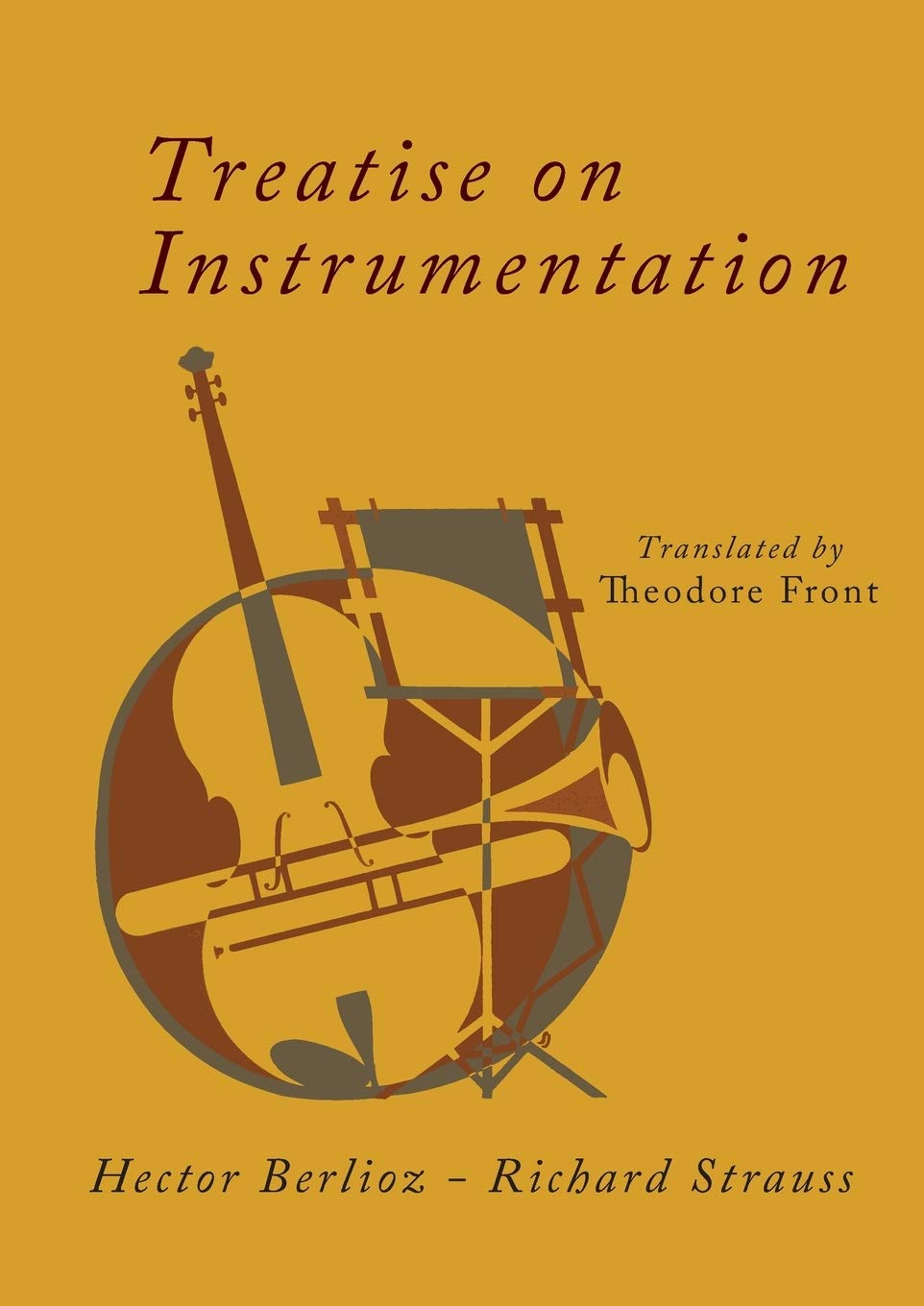
2016 Reprint of 1948 Edition. Full facsimile of the original edition, not reproduced with Optical Recognition Software. Berlioz's work was first published in 1843/4 in French, then reissued in 1855 in a revised and enlarged edition. It remains a landmark in the history of the symphony orchestra, and though there have been numerous technical improvements in the manufacture and playing of instruments since the composer's time, especially concerning wind and brass instruments, the work still retains much of its value. In 1904 Richard Strauss was asked to update the text to include some modern instruments and included musical examples from Wagner, and in 1905 the updated Treatise with a new preface by Strauss was published in German. The 1905 edition was first translated into English in 1948 and is reprinted herein. The book discusses the various technical aspects of instruments, such as chromatic range, tone quality, and limitations. An explanation of the role of particular instruments within the orchestra is also provided. The book also provides orchestral excerpts from classical scores to give examples of techniques discussed. These examples are sometimes of works by Berlioz himself, while Mozart, Wagner, Beethoven, and Gluck are also frequently cited.
⚠️ WARNING (California Proposition 65):
This product may contain chemicals known to the State of California to cause cancer,
birth defects, or other reproductive harm.
For MAP (Minimum Advertised Price) violations and Intellectual Property (IP) or Trademark concerns, please contact:
support@ergodebooks.com
⚠️ California Proposition 65 Warning: Some products sold on this website may expose you to chemicals known to the State of California to cause cancer, birth defects, or other reproductive harm. For more information, visit www.P65Warnings.ca.gov.