
Title
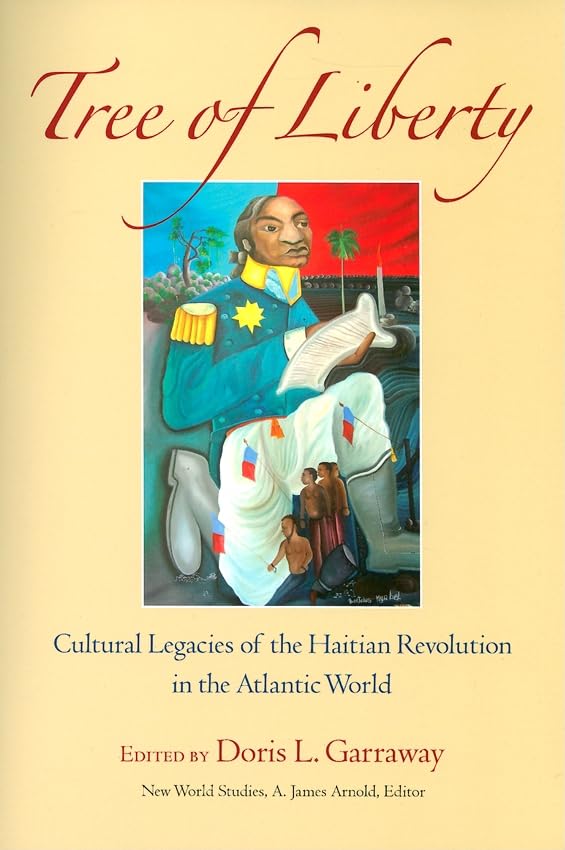
Tree Of Liberty: Cultural Legacies Of The Haitian Revolution In The Atlantic World (New World Studies),New
Sold by Ergodebooks, an authorized reseller.
Returns accepted within 30 days | support@ergodebooks.com
Shipping Information
- Free Standard Shipping — United States only
- Processing Time: 3–5 business days
- Estimated Delivery: 6–10 business days after dispatch
- Double-boxed, fully insured & discreetly packaged
- Tracking number sent via email once dispatched
Returns & Refund
Returns accepted within 30 days of delivery.
Damaged or Defective Item
Free return shipping + replacement or full refund
Wrong Item Received
Free return shipping + replacement or full refund
Change of Mind
Return shipping at customer's expense · 25% restocking fee applies
Payment Option

On January 1, 1804, JeanJacques Dessalines declared the independence of Haiti, thus bringing to an end the only successful slave revolution in history and transforming the colony of SaintDomingue into the second independent state in the Western Hemisphere. The historical significance of the Haitian Revolution has been addressed by numerous scholars, but the importance of the Revolution as a cultural and political phenomenon has only begun to be explored. Although the pathbreaking work of MichelRolph Trouillot and Sibylle Fischer has illustrated the profound silences surrounding the Haitian Revolution in Western historiography and in Caribbean cultural production in the aftermath of the Revolution, contributors to this volume argue that, while suppressed and disavowed in some quarters, the Haitian Revolution nonetheless had an enduring cultural and political impact, particularly on peoples and communities that have been marginalized in the historical record and absent from the discourses of Western historiography.Tree of Liberty interrogates the literary, historical, and political discourses that the Revolution produced and inspired across time and space and across national and linguistic boundaries. In so doing, it seeks to initiate a farreaching discussion of the Revolution as a cultural and political phenomenon that shaped ideas about the Enlightenment, freedom, postcolonialism, and race in the modern Atlantic world.Contributors:A. James Arnold, University of Virginia * Chris Bongie, Queens University * Paul Breslin, Northwestern University * Ada Ferrer, New York University * Doris L. Garraway, Northwestern University * E. Anthony Hurley, SUNY Stony Brook * Deborah Jenson, University of Wisconsin, Madison * Jean Jonassaint, Syracuse University * Valerie Kaussen, University of Missouri * Ifeoma C.K. Nwankwo, Vanderbilt University
⚠️ WARNING (California Proposition 65):
This product may contain chemicals known to the State of California to cause cancer, birth defects, or other reproductive harm.
For more information, please visit www.P65Warnings.ca.gov.