
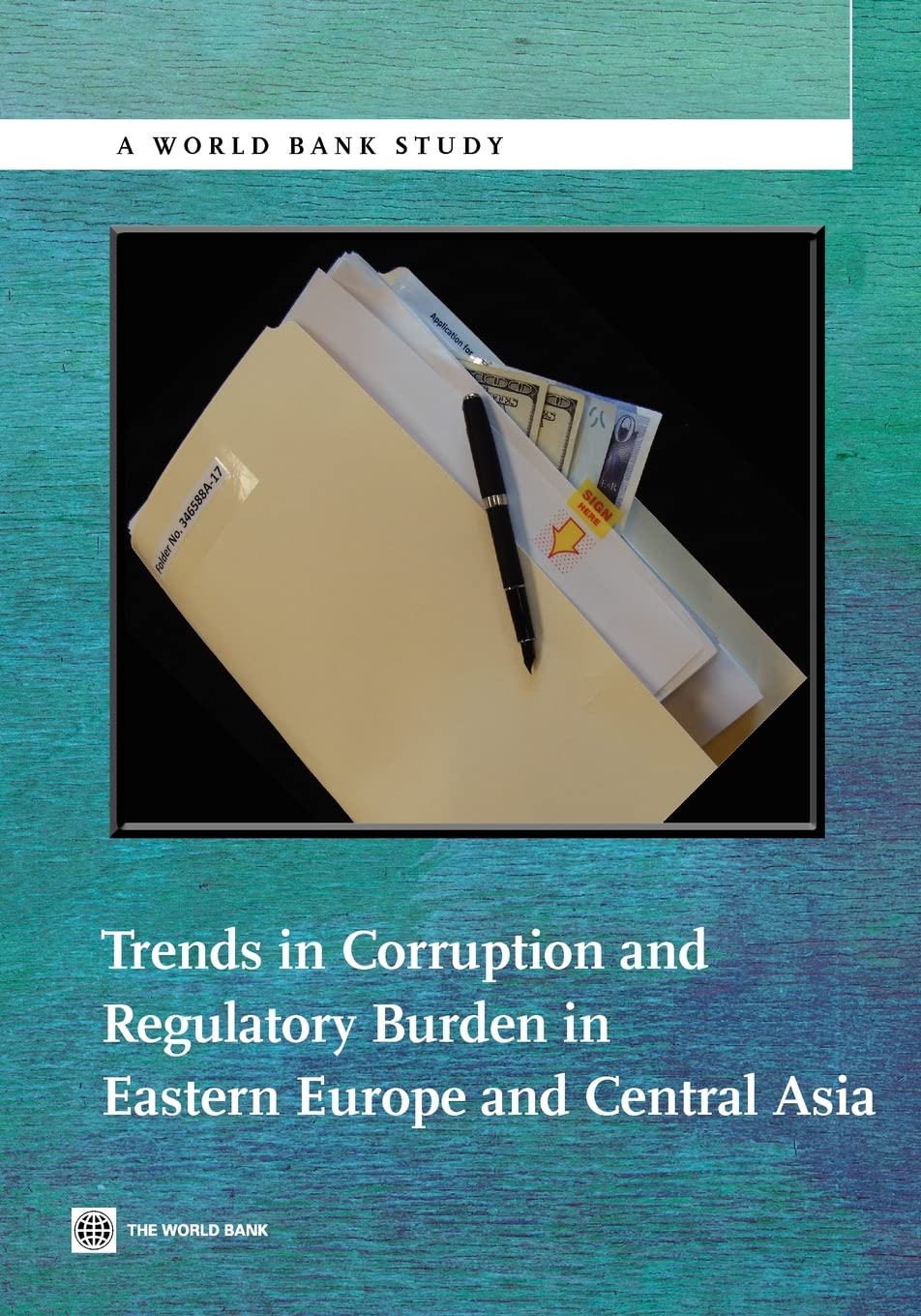
Title
Trends In Corruption And Regulatory Burden In Eastern Europe And Central Asia (World Bank Studies),New
Sold by Ergodebooks, an authorized reseller.
Returns accepted within 30 days | support@ergodebooks.com
Shipping Information
- Free Standard Shipping — United States only
- Processing Time: 3–5 business days
- Estimated Delivery: 6–10 business days after dispatch
- Double-boxed, fully insured & discreetly packaged
- Tracking number sent via email once dispatched
Returns & Refund
Returns accepted within 30 days of delivery.
Damaged or Defective Item
Free return shipping + replacement or full refund
Wrong Item Received
Free return shipping + replacement or full refund
Change of Mind
Return shipping at customer's expense · 25% restocking fee applies
Payment Option

Historically countries of Eastern Europe and Central Asia have faced a number of obstacles in their transition to democracy and marketbased economies. These obstacles include higher levels of corruption, and greater administrative and regulatory burdens as they pass laws and implement programs to combat corruption and promote private sector development. This report uses the results of the most recent Business Environment and Enterprise Performance Survey (BEEPS) to examine trends in corruption and administrative burden of regulations on private sector firms in 29 Eastern European and Central Asian countries. The results show overall positive trends in the Eastern Europe and Central Asian region in terms of incidence of corruption and the burden placed on private sector firms by administrative and other regulations. . The most notable and definitive finding from the 2008 BEEPS is a continuation in the favorable trend regarding firms payment of administrative bribes. Across the region, there has been progress made in the perceptions of bribery and unofficial payments. Frequency of bribepaying fell significantly in the areas of taxes, customs and imports and courts, for the region overall and in most countries. The report examines several factors that influence the level of administrative corruption, including regulatory burden, strength of anticorruption legislation, and income (among others). Results show that countries with greater capacity to enforce and implement anticorruption measures are less likely to have high levels of corruption and incidence of graft. The results presented in the report show that countries of Eastern Europe and Central Asia are no longer facing higher corruption or regulatory burden than firms in comparable nontransition countries.
⚠️ WARNING (California Proposition 65):
This product may contain chemicals known to the State of California to cause cancer, birth defects, or other reproductive harm.
For more information, please visit www.P65Warnings.ca.gov.