
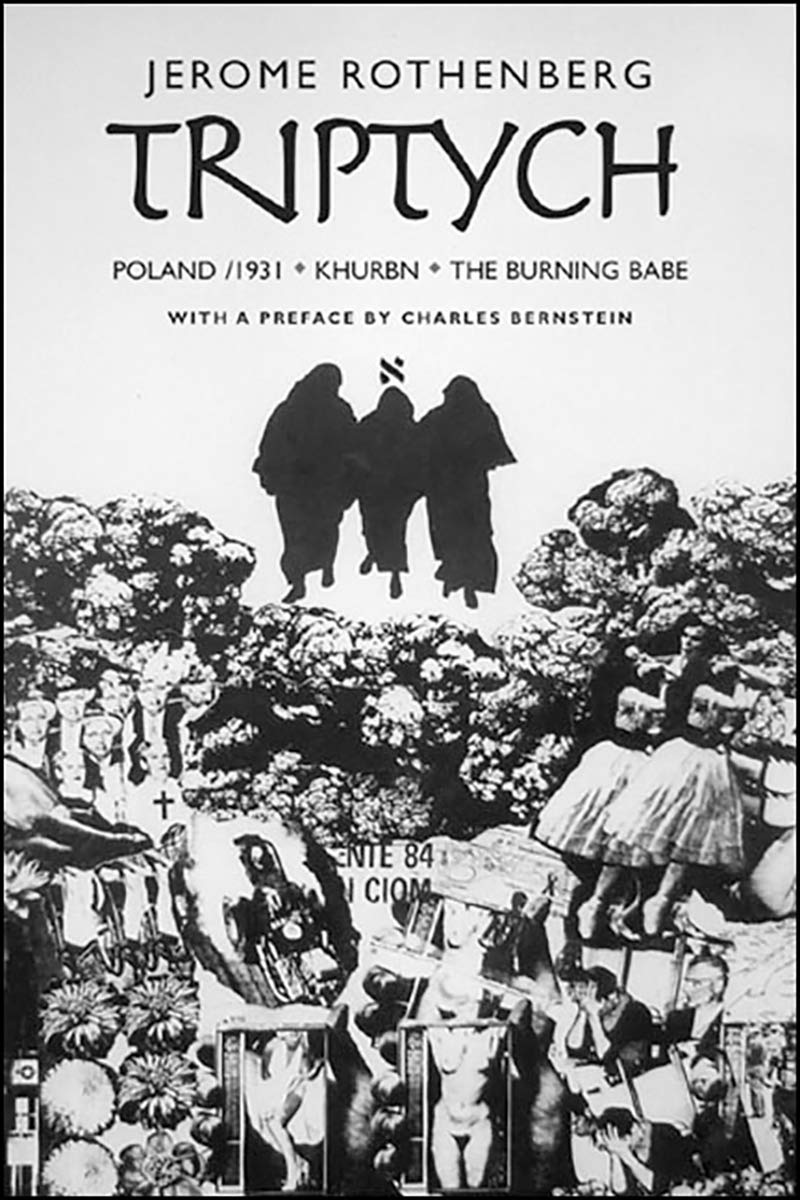
Title
Triptych: Poland/1931, Khurbn, The Burning Babe,Used
Sold by Ergodebooks, an authorized reseller.
Returns accepted within 30 days | support@ergodebooks.com
Shipping Information
- Free Standard Shipping — United States only
- Processing Time: 3–5 business days
- Estimated Delivery: 6–10 business days after dispatch
- Double-boxed, fully insured & discreetly packaged
- Tracking number sent via email once dispatched
Returns & Refund
Returns accepted within 30 days of delivery.
Damaged or Defective Item
Free return shipping + replacement or full refund
Wrong Item Received
Free return shipping + replacement or full refund
Change of Mind
Return shipping at customer's expense · 25% restocking fee applies
Payment Option

The key book by the internationally celebrated poet with the only Polish ghettohassidiccowboy and Indian American comic voice (Robert Duncan) in history. For the last half of the twentieth century into the new millennium, no other American poet has been as deeply engaged in the opening of the poem (its boundaries and its possibilities) as Jerome Rothenberg. As editor, translator, essayist, performer, groundbreaking anthologist, one of the founding figures of enthnopoetics, and most significantly, as poet, Rothenberg has remapped the art against the grain of a single great tradition. Reminiscent of H.D.s Trilogy, Triptych assembles three long serial poems into one multilayered sacred text. Like Kafkas America, Calvinos Euphemia, and Babels Odessa, Rothenbergs Poland in Poland/1931, first published in 1974, is a poland stuffed with poland / brought in the imagination. Fifteen years later, Poland materializes into Khurbn (a Yiddish word meaning destruction, holocaust, human disaster), a poem summoned from the authors visit to his ancestral town, OstrowMazowiecka, and the confrontation with his familys annihilationincluding an uncle who killed himselfduring World War II. Allowing my uncles khurbn to speak through me the author writes, the poems are the clearest message I have ever gotten about why I write poetry. And now in 2006, The Burning Babe rises out of the furnace of khurbn, reaching through the ruins / for a place to soar.
⚠️ WARNING (California Proposition 65):
This product may contain chemicals known to the State of California to cause cancer, birth defects, or other reproductive harm.
For more information, please visit www.P65Warnings.ca.gov.
- Q: What is the main theme of 'Triptych: Poland/1931, Khurbn, The Burning Babe'? A: The main theme revolves around the exploration of identity, memory, and the impact of historical trauma, particularly relating to the Holocaust and personal family history.
- Q: Who is the author of this book? A: The author is Jerome Rothenberg, a renowned poet and anthologist known for his contributions to ethnopoetics.
- Q: What type of poems are included in 'Triptych'? A: The book includes three long serial poems that are interconnected, reflecting on themes of destruction, memory, and cultural heritage.
- Q: When was 'Triptych: Poland/1931, Khurbn, The Burning Babe' published? A: The book was published on June 17, 2007.
- Q: What is the format of this book? A: The book is available in paperback format.
- Q: How many pages does 'Triptych: Poland/1931, Khurbn, The Burning Babe' have? A: The book contains 240 pages.
- Q: Is this book suitable for readers interested in poetry? A: Yes, it is particularly suitable for readers who appreciate contemporary poetry and themes related to cultural identity.
- Q: What kind of language is used in the poems? A: The poems use a blend of imaginative and evocative language, often drawing on historical and personal references.
- Q: Are there any notable influences on Jerome Rothenberg's work? A: Yes, Rothenberg’s work is influenced by various literary traditions and includes elements from ethnopoetics, reflecting a wide range of cultural experiences.
- Q: What can readers expect in terms of emotional impact from this book? A: Readers can expect a profound emotional impact as the poems delve into themes of loss, memory, and the resilience of the human spirit.