
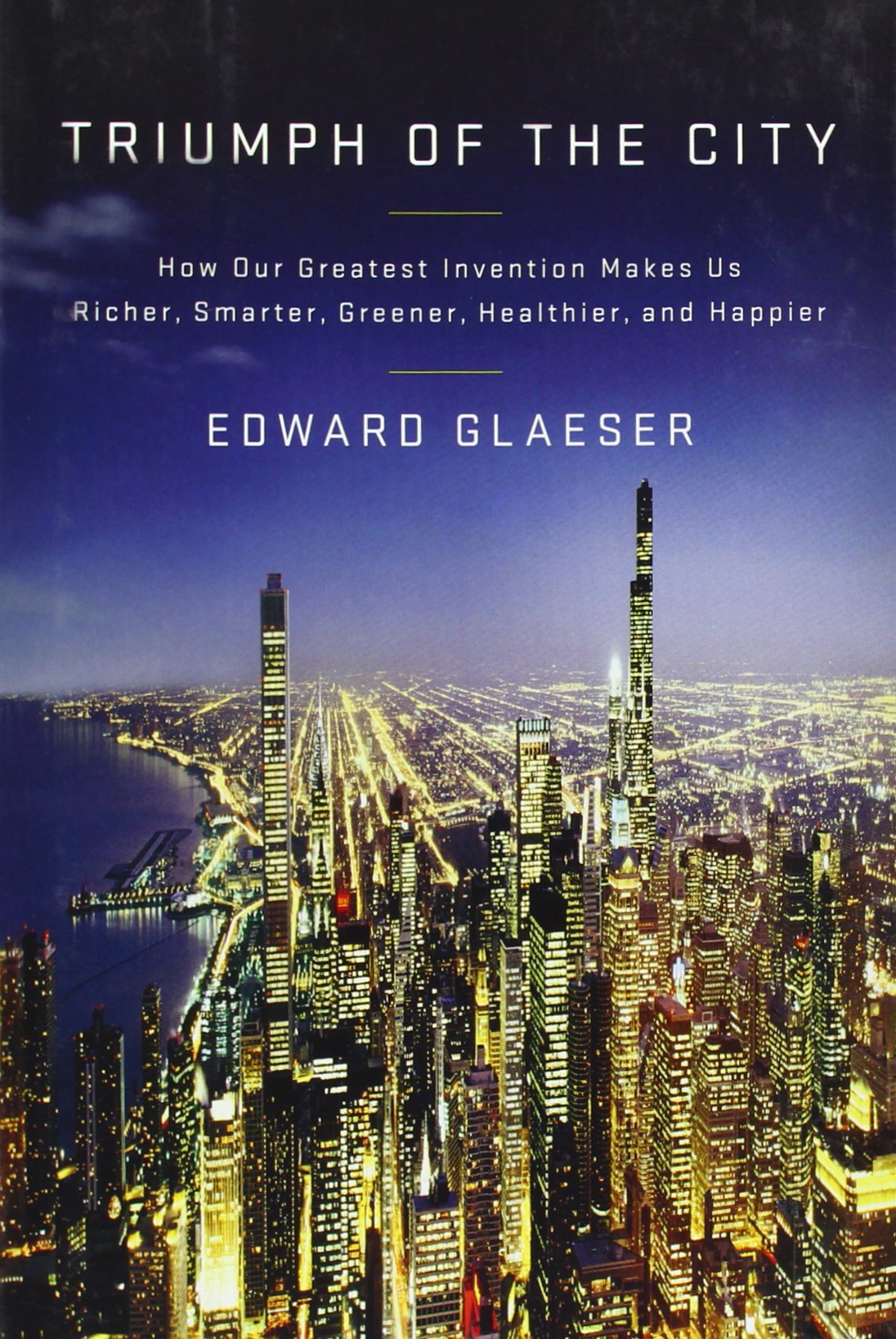
Title
Triumph of the City: How Our Greatest Invention Makes Us Richer, Smarter, Greener, Healthier, and Happier,Used
Sold by Ergodebooks, an authorized reseller.
Returns accepted within 30 days | support@ergodebooks.com
Shipping Information
- Free Standard Shipping — United States only
- Processing Time: 3–5 business days
- Estimated Delivery: 6–10 business days after dispatch
- Double-boxed, fully insured & discreetly packaged
- Tracking number sent via email once dispatched
Returns & Refund
Returns accepted within 30 days of delivery.
Damaged or Defective Item
Free return shipping + replacement or full refund
Wrong Item Received
Free return shipping + replacement or full refund
Change of Mind
Return shipping at customer's expense · 25% restocking fee applies
Payment Option

A pioneering urban economist offers fascinating, even inspiring proof that the city is humanitys greatest invention and our best hope for the future.America is an urban nation. More than two thirds of us live on the 3 percent of land that contains our cities. Yet cities get a bad rap: theyre dirty, poor, unhealthy, crime ridden, expensive, environmentally unfriendly... Or are they?As Edward Glaeser proves in this mythshattering book, cities are actually the healthiest, greenest, and richest (in cultural and economic terms) places to live. New Yorkers, for instance, live longer than other Americans; heart disease and cancer rates are lower in Gotham than in the nation as a whole. More than half of Americas income is earned in twentytwo metropolitan areas. And city dwellers use, on average, 40 percent less energy than suburbanites.Glaeser travels through history and around the globe to reveal the hidden workings of cities and how they bring out the best in humankind. Even the worst citiesKinshasa, Kolkata, Lagos confer surprising benefits on the people who flock to them, including better health and more jobs than the rural areas that surround them. Glaeser visits Bangalore and Silicon Valley, whose strangely similar histories prove how essential education is to urban success and how new technology actually encourages people to gather together physically. He discovers why Detroit is dying while other old industrial citiesChicago, Boston, New Yorkthrive. He investigates why a new house costs 350 percent more in Los Angeles than in Houston, even though building costs are only 25 percent higher in L.A. He pinpoints the single factor that most influences urban growthJanuary temperaturesand explains how certain chilly cities manage to defy that link. He explains how West Coast environmentalists have harmed the environment, and how struggling cities from Youngstown to New Orleans can "shrink to greatness." And he exposes the dangerous antiurban political bias that is harming both cities and the entire country.Using intrepid reportage, keen analysis, and eloquent argument, Glaeser makes an impassioned case for the citys import and splendor. He reminds us forcefully why we should nurture our cities or suffer consequences that will hurt us all, no matter where we live.
⚠️ WARNING (California Proposition 65):
This product may contain chemicals known to the State of California to cause cancer, birth defects, or other reproductive harm.
For more information, please visit www.P65Warnings.ca.gov.
- Q: How many pages does the book contain? A: This book contains three hundred fifty-two pages. It's a comprehensive exploration of urban economics and city life.
- Q: What is the binding style of this book? A: The book is bound in hardcover. This provides durability and a premium feel for readers.
- Q: What are the dimensions of this book? A: The book measures six and a half inches in length, one point fourteen inches in width, and nine point fifty-seven inches in height.
- Q: Is this book suitable for all ages? A: Yes, this book is suitable for a general audience. However, it is most beneficial for adults interested in urban studies and economics.
- Q: Who is the author of this book? A: The author is Edward L. Glaeser, a renowned urban economist. His insights into cities are both enlightening and engaging.
- Q: What topics are covered in the book? A: The book covers urban economics, city health, environmental impact, and historical city development. It provides a multifaceted view of urban life.
- Q: How should I care for this hardcover book? A: To care for the book, keep it in a dry place and avoid direct sunlight. This will help preserve its condition over time.
- Q: Can this book be stored in a standard bookshelf? A: Yes, this book can be easily stored in a standard bookshelf. Its dimensions make it compatible with most book storage options.
- Q: Is there a warranty or return policy for this book? A: Yes, most retailers offer a return policy for books. Check with the seller for specific details regarding returns and exchanges.
- Q: What if the book arrives damaged? A: If the book arrives damaged, contact the seller for a replacement or refund. Most sellers have policies to address such issues.
- Q: How does this book compare to other urban studies books? A: This book stands out due to its engaging narrative and thorough research by Edward L. Glaeser. It presents unique perspectives on urban life.
- Q: Is this book recommended for beginners in urban studies? A: Yes, this book is recommended for beginners. It presents complex ideas in an accessible manner, making it easy to understand.
- Q: Does the book discuss the environmental impact of cities? A: Yes, the book discusses how cities can be environmentally friendly and efficient. It challenges common misconceptions about urban living.
- Q: Are there any supplementary materials with this book? A: No, this book does not come with supplementary materials. It focuses solely on Glaeser's insights into urban economics.
- Q: What is the main thesis of this book? A: The main thesis is that cities are humanity's greatest invention and essential for our future prosperity and well-being.
- Q: Does the author provide real-world examples in the book? A: Yes, Glaeser provides numerous real-world examples from cities around the globe to illustrate his points about urban life.